
In a journal devoted to U.S. education reform, some recurring themes in its content are expected: student achievement, curriculum, teacher effectiveness, school choice, testing, accountability. Other topics are more contemporaneous, reflecting the functional reality of American schooling in its present context. The latter group may capture just a moment in time and give future education historians a glimpse at what mattered to early 21st century reformers (and seem quaint in hindsight). It may also reflect prescient insights from leaders, thinkers, and scholars—contributions that document the early stages of a significant transformation in education policy and practice (and later be deemed ahead of their time).
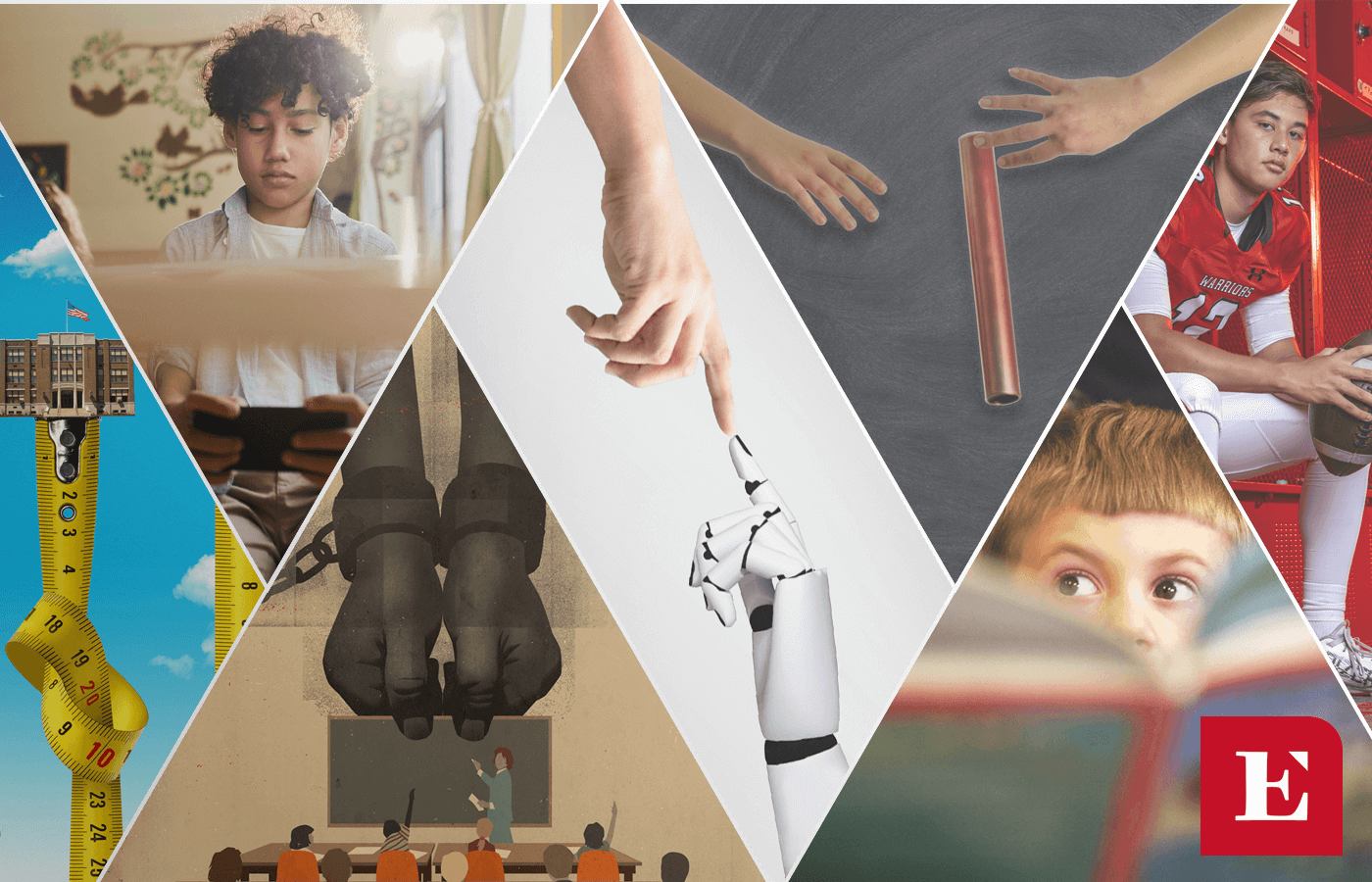
What we can say confidently is that Education Next published a good mix of the classic and the contemporary in 2025, just as it has each year in its quarter century of existence. You can see for yourself below in our annual Top 20 list of most-read articles, which features an assortment of writings by researchers, journalists, academics, and teachers.
Among the traditional fare, readers turned to EdNext to keep apprised of developments in classroom instruction, from reading to literacy to history. They wanted to know if the U.S. might be better off evaluating schools using the European model of inspections rather than, or in addition to, student test scores. Amid ongoing debates about the merits of using standardized tests to gauge student preparation, readers were drawn to the findings of researchers in Missouri that 8th graders’ performance on the state’s MAP test are highly predictive of college readiness. In the realm of teachers and teaching, proponents of merit pay received a boost by an analysis of Dallas ISD’s ACE program, which was shown to improve both student performance and teacher retention in the district.
As for school choice, Education Next followed successes like the expansion of education savings account programs, the proliferation of microschools, and the federal scholarship tax credit passed by Congress as part of the One Big Beautiful Bill Act. But the stumbles of choice had more of a gravitational pull for readers. There were the defeats of private-school voucher measures in three states—continuing a long string of choice failures at the ballot box. There are the enrollment struggles of Catholic schools, which researchers found are impacted by competition from tuition-free charter schools. And just when Catholic and other private religious schools could have gotten a shot in the arm by being allowed to reformulate as religious charters, the Supreme Court deadlocked on the constitutionality of the question, leaving the matter to be relitigated for another day.
There was no shortage of timely topics that exploded onto the scene and captivated readers. American education is still grappling with the fallout from the Covid-era school shutdowns, now five years in the rearview. Many harbor consternation about the politics of pandemic closures, as demonstrated by the enthusiasm over a new book that autopsied the decisions of that era and the subsequent book review that catapulted onto this year’s list (an unusual feat!). And now there’s research to corroborate the disaster closures were for public education. Two Boston University scholars find evidence of diminishing enrollment in public middle schools, an indication that families whose children were in the early grades in 2020 are parting for the more rigorous shores of private choice. But the post-pandemic problems in schooling have not been uniform. In one of the most-read articles this year, founding EdNext editor Paul Peterson and Michael Hartney show how, based on recent NAEP results, learning loss was greater among students in blue states that had more prolonged school shutdowns than in red states that reopened more quickly.
Meanwhile, everyone in education circles continues to grapple with what to do about technology in the classroom. Two writers did so in our own pages, presenting opposite perspectives on Sal Khan’s prediction that AI will soon transform education with the equivalent of a personalized tutor for each student. And one of our favorite cognitive scientists gave readers a different way of thinking about how digital devices affect student attention.
It is perhaps fitting that our most-read article of 2025 was also the cover story of the last print issue of Education Next. (You can read more about our transition to a web-only publication here.) After Donald Trump reassumed the presidency this year and his administration enacted major reductions to the federal bureaucracy, several education-focused programs (and indeed the entire U.S. Department of Education) came under intense scrutiny. One target was Head Start, in part because Project 2025 called to eliminate the program on the grounds it is “fraught with scandal and abuse” and has “little or no long-term academic value for children.” Paul von Hippel, Elise Chor, and Leib Lurie tested those claims against the research and found little basis for them. Yet they also highlight lingering questions about the program’s impact on students’ long-term success—and opportunities to answer them with new research. As of this writing, the nation’s largest early-education program survives, but the sector is still watching and waiting.
And so are we all for what will happen next in education. Some issues captured by Education Next this year will continue into 2026. Some will flame out. And others that are unforeseen will arise. Readers can depend on Education Next to lean into all the twists and turns that come in the year ahead.
The full top 20 list is here:

1. Is Head Start Worth Saving?
Project 2025 proposed to eliminate the 60-year-old program on the grounds it’s ineffective and unsafe. The research tells a different story.
By Paul T. von Hippel and Elise Chor, Leib Lurie
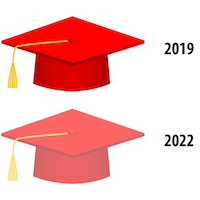
2. Red States Have Seen Less Learning Loss
Post-pandemic scores on Nation’s Report Card slip more in states Kamala Harris won easily
By Michael Hartney and Paul E. Peterson
3. AI Tutors: Hype or Hope for Education?
In a new book, Sal Khan touts the potential of artificial intelligence to address lagging student achievement. Our authors weigh in.
By John Bailey and John Warner

4. Pay Attention, Kid!
Has the use of digital technology impaired students’ ability to focus?
By Daniel T. Willingham
5. The Reading Wars Go to Court
Parents sue authors, publishers, and Columbia over balanced literacy claims
By Joshua Dunn

6. The Marketing of High School Athletes: A Rolling Tide
The expansion of “name, image, and likeness” rules could be both a boon and a burden to secondary schools
By Andrew Perloff
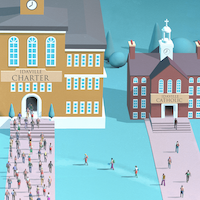
7. Catholic Schools Can’t Compete
Tuition-free charter schools dominate school choice
By Shaun M. Dougherty, Andrew Miller, and Yerin Yoon
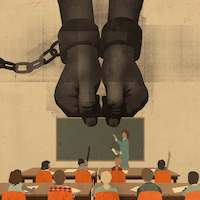
8. Bridging the Divide over Critical Race Theory in America’s Classrooms
New survey data shed light on the debate over “woke” instruction in schools
By Brian Kisida, Gary Ritter, Jennifer Gontram, J. Cameron Anglum, Heidi H. Erickson, Darnell Leatherwood, and Matthew H. Lee
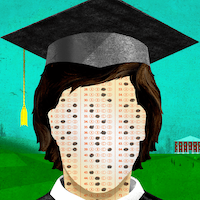
9. The Predictive Power of Standardized Tests
Middle-school scores preview college and career outcomes
By Darrin DeChane, Takako Nomi, and Michael Podgursky
10. School Enrollment Shifts Five Years After the Pandemic
Public education sees shrinking middle schools and an exodus of wealthy, white, and Asian students
By Joshua Goodman and Abigail Francis
EdNext in your inbox
Sign up for the EdNext Weekly newsletter, and stay up to date with the Daily Digest, delivered straight to your inbox.

11. Colleges Are Closing. Who Might Be Next?
How machine learning can fill data gaps and help forecast the future
By Robert Kelchen, Dubravka Ritter, and Douglas Webber
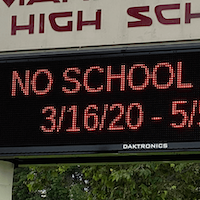
12. The Junk Science of Pandemic School Closure
A new book offers a painstaking look at how researchers, journalists, and policymakers got Covid wrong.
By Frederick Hess
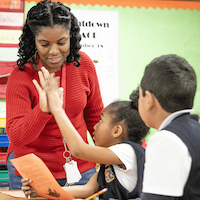
13. The Power of Performance Pay
Smarter teacher retention and accelerated student achievement in Dallas
By Eric A. Hanushek, Minh Nguyen, Ben Ost, and Steven Rivkin
14. “It’s Impossible for Traditional Schools to Get Better”
What a focus group expert learned from three decades of talking to teachers, parents, and administrators about schools
By Terry Ryan
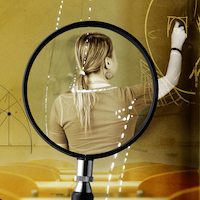
15. The Full Measure of a School
Student test scores tell only part of the story. Observations can round out the narrative.
By Erik W. Robelen
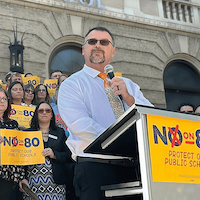
16. Voters Reject Vouchers—Again!
What the defeat of private school choice measures in three states signals for the movement
By Parker Baxter, Michael Hartney, and Vladimir Kogan
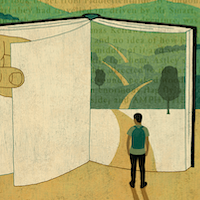
17. Want Better Teaching? Get Better Curricula.
Bringing science-informed instruction to scale requires time, patience, and more research into what works
By Natalie Wexler
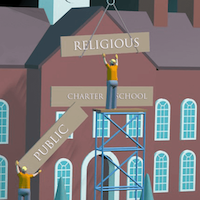
18. What Would Religious Charter Schools Mean for Education Choice?
Longstanding conceptions of secular charter and religious private schools could be upended by an imminent high court decision
By Nicole Stelle Garnett and Derrell Bradford
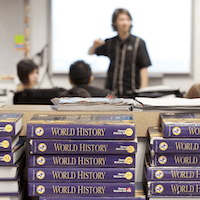
19. A Classroom Without Books Is Not Progress
As schools abandon textbooks for piecemeal and digital alternatives, teaching and learning suffer
By Robert C. Thornett
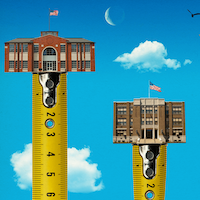
20. Which of the Following Approaches to State Testing Works for U.S. Schools?
Choose the answer that best addresses student learning loss
By Lynn Olson, Thomas Toch, Chad Aldeman, and Dale Chu