


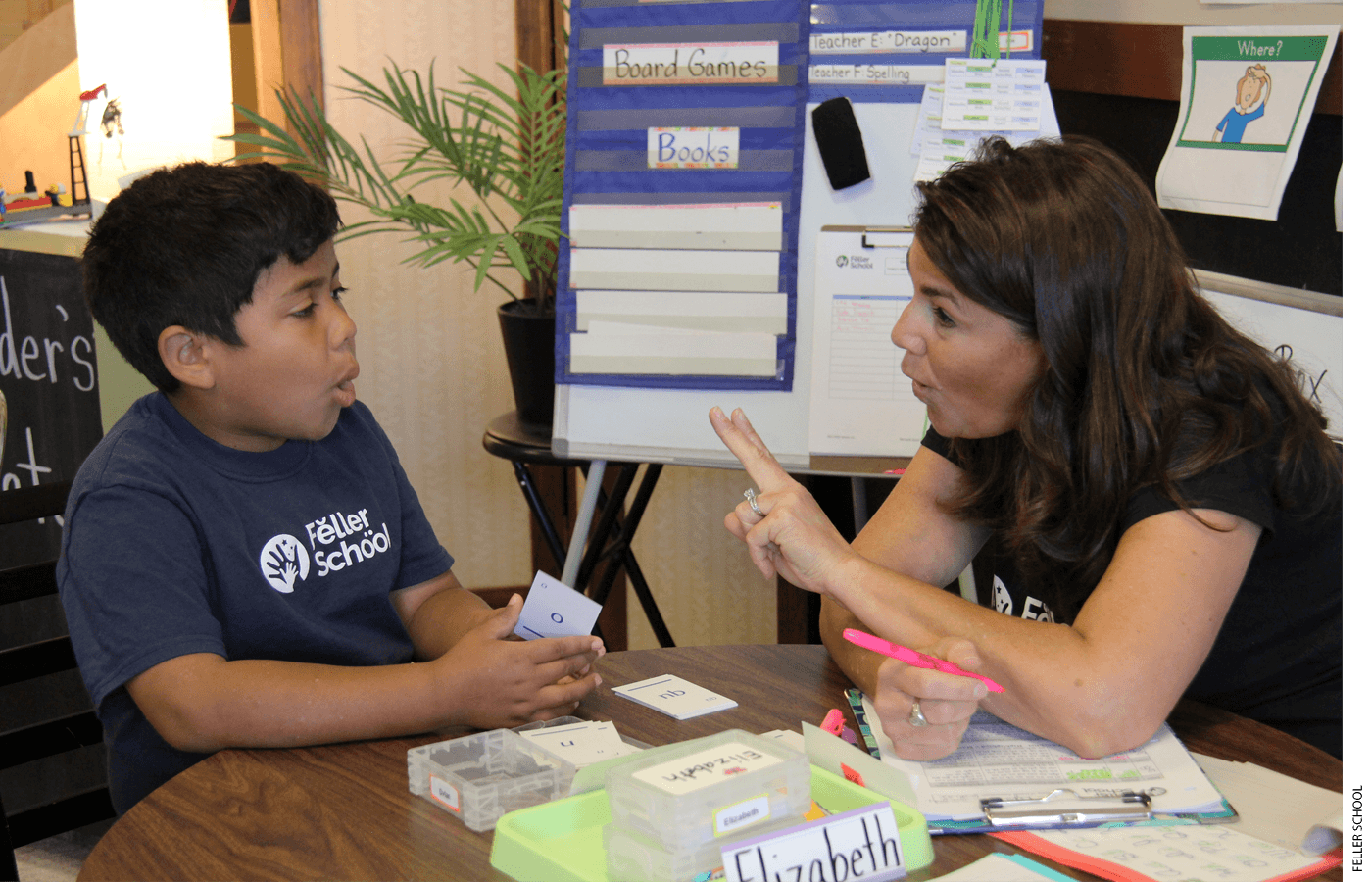
I need to tell you about Jermiah.
He was a scrawny little boy with buzzed hair and more energy than three kids combined. He’d burst into my intervention room like a firecracker, all spunk and spirit, even though his name got called out in class more than anyone else’s. Even though he was falling farther behind every single day.
I was his reading interventionist in a large public elementary school. My job was to take the “lowest of the low”—kids in the bottom 20 percent on standardized tests—and help them catch up.
When Jermiah showed up, I was ready. He stood at my table to see if he was going to like the book I had chosen carefully for his reading level. Our first step was to show him the pictures. “Look at this picture. What do you see? Yes, it looks like a horse, but it’s actually a pony. Remember, pony.”
Next, we would practice the word pattern. I like the dog. I like the cat. I like the pony. He would put his finger beneath each word to read the sentence on each page. It was choppy and rigid. Then, while sweeping his finger beneath the words, he was to practice reading fluently. Unfortunately, his eyes stayed glued to the pictures.
Everyone thought this was good teaching. The principal praised my work. Parents thanked me. Classroom teachers were grateful to get a break from kids who couldn’t keep up and frequently were the same kids who were full of mischief. Jermiah loved coming to see me, and I loved seeing him.
But here’s what I knew in my gut: He wasn’t learning to read.
He couldn’t remember the word “pony” from one day to the next. He’d forget the pattern we practiced yesterday. When the pictures disappeared in third-grade books, he’d be lost. And I’d see him again next year and the year after that, his confidence shrinking a little more each time.
I felt like a fraud.
The System That Wasn’t Working
For years, I did everything I was trained to do. I used the programs in every school I’d ever taught. I followed the three-cueing system while students read aloud to me. That’s the approach that tells kids to figure out unknown words by looking at pictures, using context clues, and thinking about what would make sense in the sentence—instead of sounding the word out.
“Let’s look at the pictures to get an idea of what this story is about.” I would “plant” words into their vocabulary in hopes that they would remember what I said when we went back through the story.
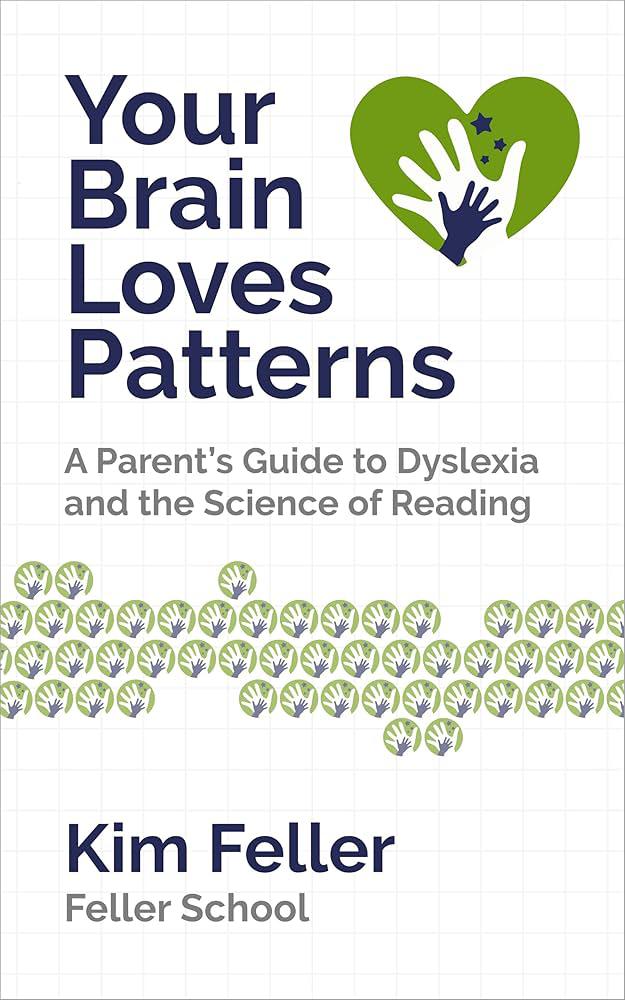
by Kim Feller
Feller School, 2026, $14.99, 106 pages.
As the student guessed at words, I would encourage them to think, Does that make sense? Does that sound right? Does it look right? and then, Get your mouth ready for the first sound. Sounding out words was supposed to be the last resort, not the first tool.
I taught kids how to read through flashcards. “Memorize this word: was. Memorize this word: the.” I never explained why the word “was” didn’t have a Z, or why the E sounds like /ŭ/ in the word “the.” I didn’t know. Nobody knew. We just told kids to memorize those facts.
The books were predictable by design. The patterns helped kids “feel successful.” But success meant guessing the next word based on the picture and the pattern, not actually reading the word.
And every year, I’d see the same kids. First grade, second grade, third grade. Each year their self-esteem plummeted a little lower. Each year they knew deep in their hearts, “I can’t read.” Each year the feelings of frustration and shame would build.
I started asking questions.
I cornered the speech-language pathologist who visited our school twice a week. “If my students are saying /f/ for /th/, can I teach them to stick out their tongues? Is that okay?” Absolutely, she said.
“When should kids be able to say the /r/ sound?” By third grade, definitely.
“If a kid reads a word like ANIMAL and says AMINAL, should I correct them?” It’s cute, I know. But you should correct them.
“Do you teach your students to read words in your speech sessions?” Yes, we teach them to say sounds in isolation and blend sounds together.
Wait. Speech therapists teach kids how to read? Is it possible they knew more about teaching reading than I did?
Speech and language pathologists have known how to teach foundational reading skills for years. As a certified reading interventionist, I needed to learn from the speech and language experts. They knew a lot more about teaching reading than I did! This is when I realized that I should collaborate with speech therapists, and for the first time I learned that reading instruction should begin with manipulating sounds. I wondered if this was the phonics instruction they told us not to teach?
Unfortunately, I didn’t have the training, but I wasn’t alone. So, we kept using the same failing methods, spinning our wheels, blaming parents for not reading enough at home, blaming kids for not trying hard enough.
Meanwhile, the struggling readers kept piling up. Kids in the 30th and 40th percentile started sliding into the 20th. We didn’t have enough interventionists. We didn’t have the right curriculum. We didn’t have the right training, and we most definitely didn’t help our students learn to read. We helped them learn how to be good guessers at words.
The Word We Couldn’t Say
Dyslexia. What did that mean? I didn’t know, but I was taught to avoid this word at all costs. This was around 2010. If you used the word “dyslexia” in our school, you’d get shut down fast. We were told it was a money-making scheme. There was no such thing as dyslexia.
In fact, there was a mother who stalked the local school principal, teachers, and classrooms. She insisted her child had dyslexia and that the teacher needed to change the way they were teaching reading. Staff would literally walk the other way if they saw her coming. Avoiding eye contact was another strategy to steer clear from her lectures about dyslexia. She got a bad rap for being “THAT mom.”
The reasoning went like this: If we acknowledge dyslexia exists, the school would be on the hook for paying for specialized resources. That would be a costly option. Better to pretend it didn’t exist.
A couple of teachers from my school attended a conference on brain research and dyslexia. When they came back, I asked them about it. “Oh, it was really good. Really interesting stuff about the brain.”
That was it. Nothing was shared. Nothing changed.
We kept teaching the same way. Balanced literacy. Whole language. Memorization of whole words. Label everything in your classroom. Immerse kids in books and hope the love of reading would make them readers. We told parents: Read more at home, practice more, get more books. If they just had the right motivation, the light would turn on.
But the light wasn’t turning on for kids like Jermiah.
The Parent Conference that Changed Everything
Both of Jermiah’s parents came to parent-teacher conferences. That mattered. They clearly didn’t have much money. They looked exhausted. But they came because they cared about their son.
His mom thanked me for working with Jermiah. She wanted to know how she could help him at home.
Then she said something that stopped me cold: “I can’t read.”
Jermiah had been trying to teach his mom what he’d memorized at school. She couldn’t verify if he was right, but she knew enough about how language worked to catch when something didn’t make sense. “Jermiah, try that again. That doesn’t say ‘I.’” She tried her best with what she knew.
We can only teach what we know. If you don’t know it, you can’t teach it.
I barely made it to my car before I lost it.
We had been blaming parents this whole time. We told them to read more with their kids, practice more, try harder. But this mother couldn’t read, and her son couldn’t read. I was the trained professional, and I had no idea how to actually teach him.
I couldn’t do this anymore.
Walking Away to Figure it Out
I told my school I wouldn’t be renewing my contract.
My husband wasn’t thrilled—it meant less income. But I told him the truth: “I feel like a fraud. Everybody thinks their kids are making progress, but I know they’re not. And I don’t know what the hell I’m doing.”
I decided to start a tutoring program out of my home. I could make a little money, and somehow I’d figured out how to teach these failing students to read. Before I left the school, I dug through the Fountas and Pinnell manual—the leveled reading system we were trained to use—looking for anything about phonics instruction. I found an example in a lesson. I photocopied it, highlighted the phonics piece, and took it with me to study.
It wasn’t enough. Phonics was supposed to be the “last resort,” remember? There was never time to teach it. It wasn’t prioritized. It wasn’t the answer.
I needed something different. Because I couldn’t afford the big-box programs and knew they weren’t working anyway, I needed to start from scratch.
What I Discovered
That’s when I found The Logic of English.
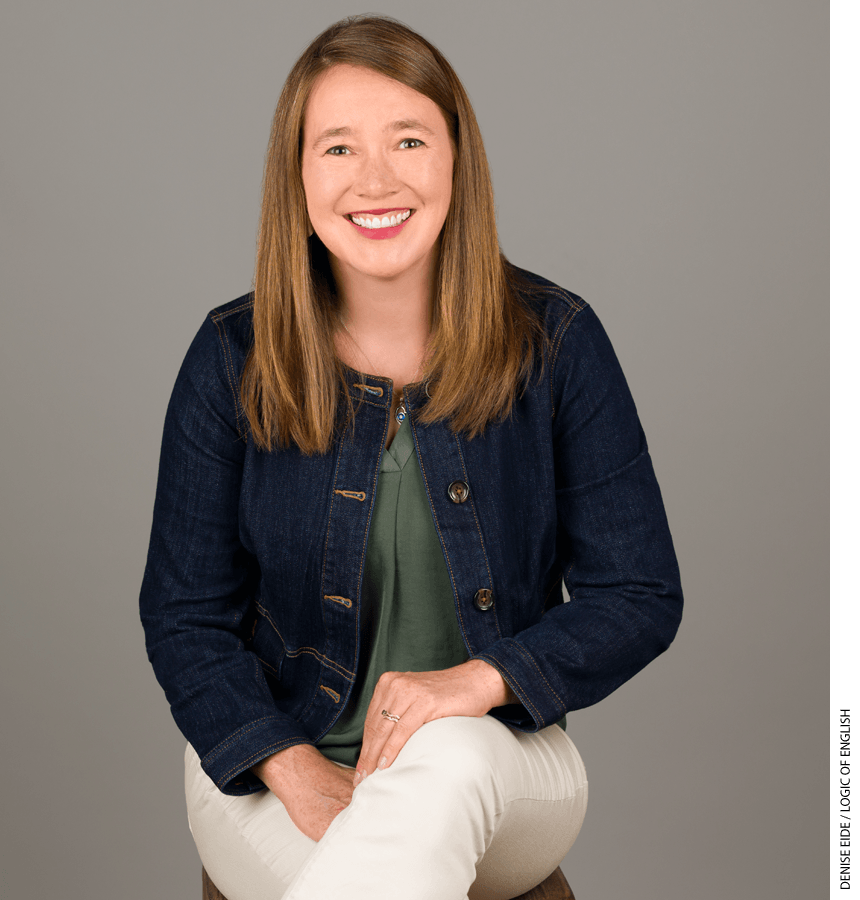
I stumbled onto Denise Eide’s work, and something clicked that had never clicked in all my years of teaching. English isn’t chaotic. It’s not full of exceptions that kids just have to memorize. Ninety-eight percent of our English language follows patterns—predictable, systematic, and logical patterns. This is something I never learned in college.
The problem wasn’t with the kids. The problem was with the untrained and uninformed teacher. The problem was with the method of teaching. Ultimately, the problem fell in the laps of teachers like me. I needed to change. There was so much to learn and then so much more to learn how to teach to children.
I was asking children with logical and rule-following brains to guess when they needed help understanding why words were spelled the way they were. They needed to learn the code to recognize the patterns and words so they could decode them. I was teaching memorization of whole words to kids whose brains craved patterns, rules, and systems. I was showing them pictures and whole words when what they needed was to see the patterns of logic within the words themselves.
Dyslexic brains—the ones we often label as “struggling readers”—are actually systematic thinking machines. They see connections. They visualize in three dimensions. They’re built for pattern recognition. When you teach them the patterns in English, when you give them the systematic rules that govern 98 percent of our language, something incredible happens.
EdNext in your inbox
Sign up for the EdNext Weekly newsletter, and stay up to date with the Daily Digest, delivered straight to your inbox.
They overcome their struggles with reading. They overcome their struggles with spelling. And they excel.
I’ve spent years teaching kids the way their brains actually work. I’ve met with Denise Eide and studied the Logic of English methodology inside and out. I’ve seen kids go from non-readers to confident decoders in six weeks when they get the right instruction. I’ve watched eight-year-olds light up when they finally understand why English words are spelled the way they are. I’ve worked tirelessly with 10-year-olds to undo the poor habits they formed with guessing and skipping words they didn’t know.
And I’ve talked to hundreds of exhausted, worried parents who know something isn’t working but don’t know what to do about it.
Here’s what I want you to know: Your child’s brain isn’t broken. It’s wired differently. And that difference—the same wiring that makes reading hard right now—is actually an advantage waiting to be unlocked.
Your child’s brain craves logic and systems. It’s built for systematic thinking. The tragedy isn’t the brain. The tragedy is that we’ve been asking these kids to guess their way through a systematic and logical language.
Your child’s brain is ready and capable of learning to read. Let’s make sure teachers understand how to maximize learning for a child with dyslexia. It will require proper training and years of experience. We know it’s possible to help children build strong reading pathways so reading becomes easier, more accurate, and less tiring over time.
Let’s stop asking children to guess and start teaching them to decode.
Let’s turn these struggling readers into the strategic thinkers they’re meant to be.

Excerpted from Your Brain Loves Patterns: A Parent’s Guide to Dyslexia and the Science of Reading by Kim Feller. Copyright © 2026 by Kim Feller. Published by Feller School. Reprinted by permission.
Kim Feller is an educator and the founder of Feller School, a specialty K–6 school in Madison, Wisconsin, dedicated to students with dyslexia and related learning differences.
Suggested citation format:
Feller, K. (2026). “The Brain That Sees Patterns: For too long, teachers have been asking struggling readers to guess at words instead of helping them to learn the code.” Education Next, 26(2), 19 May 2026.