



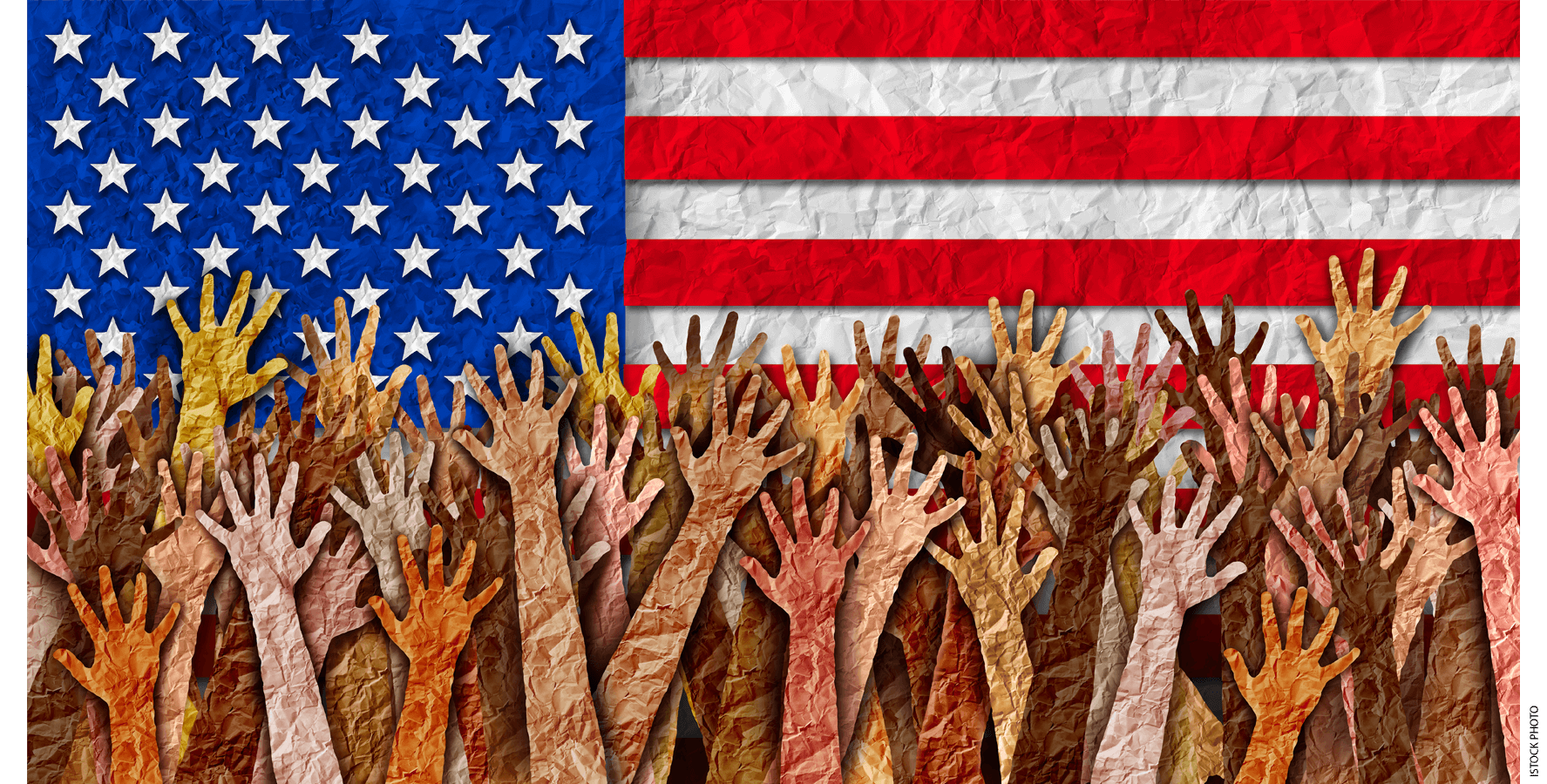
Enjoy a two-for-one this President’s Day. We’re not talking about a holiday sale but a chance to take real civic action and improve civic education in U.S. schools.
The National Assessment Governing Board is now seeking public comments on an update to an assessment that tests the nation’s students on what they know and can do in civics.
With the United States celebrating its 250th birthday this year, the revision to the framework for the Nation’s Report Card in civics, which will guide the content of that assessment, is especially timely. We need to make sure the test, also known as the National Assessment of Educational Progress, or NAEP, reflects the civic knowledge and skills kids need for effective citizenship in the 21st century.
The current NAEP Civics Assessment Framework is three decades old. While it does a good job testing students on citizenship and how government works, it was written, for example, when punch ballots were common at the polls and before social media made its mark on politics.
Students around the country take the assessment every four years, including this year. Testing is underway now for 8th graders.
There are few other opportunities to assess students in civics. Most states don’t require students to take civics assessments during their K–12 years, something we’d like to see change. The next NAEP test will be given to a larger number of students to allow the data to be analyzed and reported out at the state level. States will have to opt into participating separately, rather than just getting NAEP civics data at the national level. We hope they take this opportunity to see how well their students are doing in this vital subject on a gold-standard test.
We currently get Nation’s Report Card results for individual states only in reading and math, something Congress requires. That allows policymakers to see how individual states are helping students progress in those subjects and where there are gaps to be addressed.
This state-specific information, based on a shared benchmark, has motivated many state leaders to enact policies that have advanced student learning. For example, about 15 years ago in Mississippi, state leaders made a pledge to turn around low reading scores by overhauling their literacy standards and practices. The move led to major gains and is commonly referred to as the “Mississippi Miracle.”
It’s now clear that what happened there was not a miracle. The truth is that Mississippi students, educators, and leaders worked hard to achieve that success. We’d like to see states have the data they need to evaluate how they’re doing and drive similar progress in civics.
Even without state-level data now available, we can say unequivocally that improvements in civics education are badly needed. The 2022 NAEP civics results, the most recent ones we have, showed that just 22 percent of students reached the NAEP Proficient level. About a third of kids didn’t even reach the NAEP Basic level, meaning they likely couldn’t describe the structure of our government or explain a way Congress fulfills a constitutional responsibility. On a survey accompanying the test, more than a quarter of students reported spending little to no time learning about how laws are made or studying current political and social issues.
There are real consequences to these low scores and survey findings. Democracy is not self-sustaining. It’s incumbent on us to ensure each new generation can support and strengthen America’s system of governance by understanding how it functions and how to participate in it.
EdNext in your inbox
Sign up for the EdNext Weekly newsletter, and stay up to date with the Daily Digest, delivered straight to your inbox.
In addition to getting actionable data on student achievement in civics, schools need strong coursework and opportunities to apply their civic knowledge in the real world.
Patrick recently took his students to a training for U.S. attorneys in Columbia, South Carolina, where they spent the day as jurors in a mock trial. They left better empowered to serve their civic duty one day and wondering why adults gripe about jury duty.
Marty lives in Massachusetts, which requires students to take a full-year 8th-grade civics course that builds students’ civic knowledge about topics like the foundations of the U.S. political system, governmental institutions, and the rights and responsibilities of citizens. Massachusetts also tests 8th graders in civics, making it possible to identify and learn from districts and schools that excel in building the skills and knowledge students need to be effective citizens.
We love seeing kids light up when they get these kinds of educational experiences and adults across the political spectrum championing improvements in civics education. We’ve gotten support from Republican and Democratic lawmakers for our plans to update the Nation’s Report Card in civics and our call for state-level reporting of results. The general public also shares the view that robust civics education is vital, and that schools need to do more to prepare today’s youth for citizenship.
So, while Americans may be divided over which policies and politicians they support, they’re united in their desire to build a civic culture that ensures all Americans know how government works and are equipped to engage with it effectively.
A quote attributed to Ben Franklin described the government that our founding fathers created at the 1787 Constitutional Convention as “A republic, if you can keep it.”
Well, keeping it starts with teaching it in schools.
Patrick Kelly teaches AP U.S. Government at Blythewood High School outside Columbia, South Carolina, and is a member of the National Assessment Governing Board where he chairs the Assessment Development Committee. Martin R. West is Academic Dean and the Henry Lee Shattuck Professor of Education at the Harvard Graduate School of Education and editor-in-chief of Education Next. He is a member and vice chair of the National Assessment Governing Board.