


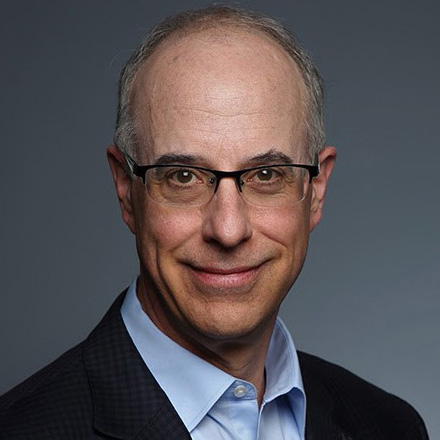
Greg Richmond recently stepped down as superintendent of schools for the Archdiocese of Chicago after five years in the role. Previously he had worked for a decade at Chicago Public Schools, where he launched the district’s Charter Schools Office. He also co-founded the National Association of Charter School Authorizers and served as its chief executive officer from 2005 to 2019. Education Next caught up with Richmond to get his perspective as a rare education reformer who has led in three school sectors: district, charter, and private.
Education Next: What did your experiences working across all three sectors teach you about the conditions under which schools actually improve?
Greg Richmond: I have long believed that the school—more than the classroom or system—is the unit of change in reform and that school culture is a critical driver of improvement. An individual teacher might be a great instructor, but if her school’s culture doesn’t expect ambitious instruction for all students or support collaboration among all teachers, then that teacher is going to be an outlier in her school, and the school will not improve.
Whether you’re talking about a district school, charter school, or private school, it is the adults inside who determine that school’s expectations and norms. It is the adults who determine whether students feel known and supported. It is the adults who deliver quality instruction or not.
EN: How much do governance, autonomy, accountability, mission, leadership, regulation, and market pressure matter?
Richmond: As with any organization, I believe leadership is what matters most in a school. A strong school leader can rally her school community around a shared vision of excellence, ambitious instruction, collaborative teaching, and behavioral norms that support growth. Governance, autonomy, accountability, regulation, and market pressure can be either a headwind or a tailwind for that leader. Those are forces external to the day-to-day life of the school, and they can either make success easier or harder. Tailwinds alone cannot produce an excellent school in the absence of a strong leader. But a strong leader can often, but not always, overcome headwinds.
EN: Where does each sector (district, charter, private) have advantages, and where does each struggle?
Richmond: In most cases, the big advantage of the district sector is funding. My friends in school districts continually say they do not have enough money, but they have four or five times what my Catholic schools had. I think the bigger problem in districts is the over-politicization and over-regulation that gets in the way of good instruction.
Charter schools have a little less money than district schools but also a little less politics and regulation. So, they have better conditions for teaching and learning, but fewer resources than the district.
Among private schools, you have to differentiate. All private schools have less politics and regulation than district and charter schools. Some elite private schools have just as much money, or more, while other private schools have much less.
In general, money comes with strings attached—the more money, the more strings. Personally, having worked in all three sectors, I preferred the environment with less money, less politics, and less regulation because it’s what best empowered our educators.
EN: Can you provide two or three concrete examples of things your Catholic schools or principals could do that would have been difficult or impossible in a district or charter school?
Richmond: During my time as superintendent, the most vivid example of this occurred during the pandemic. Catholic schools in Chicago were open for in-person instruction throughout the 2020–21 and 2021–22 school years, while the public schools were not for most of that time. Same city, same neighborhoods, same virus, and same public health requirements—but politics shut down the public schools.
Catholic schools also have more flexibility with time and talent. Regarding time, each Catholic school in our system set its own calendar and its own schedule based on the needs and preferences of that community. It isn’t one-size-fits-all. And when it comes to talent, while most Catholic school teachers have come through traditional teacher preparation programs, it is not uncommon to run into teachers—especially in middle and high school math and science—who started in non-education private sector careers and made mid- or late-career shifts into teaching.
EN: How did your views change when you were actually running schools as opposed to overseeing or regulating them?
Richmond: As a superintendent, I became more sensitive to the administrative and compliance demands placed on our schools, especially on principals. The more such demands you place on a principal, the less time she has to be an instructional leader. And if a principal can’t act as an instructional leader, teachers tend to withdraw into their classrooms and close their doors. If that happens, alignment among teachers erodes, rigor erodes, school culture erodes.
Here’s the paradox: Schools can’t exist without administration and compliance. It’s not an on/off switch. As superintendent, I felt a big part of my job was making judgement calls about what level of administration and compliance was required and when it was too much. Sometimes—perhaps many times—I felt I needed to decide in favor of easing the administrative burden on principals even though it upset some who worked in the central administration of the archdiocese. One of the constant tensions of my job was balancing what was perceived to be good for the institution of the archdiocese, as defined by the central administration, with what was good for schools.
EN: What is an example where you deliberately protected principals from the central administration’s demands?
Richmond: During my first year as superintendent, I learned that all our teachers were required to watch a series of 70 online videos about the Catechism of the Catholic Church. This was an initiative administered by a different office in the archdiocese, not under my control as superintendent, that employed a couple of people solely for the purpose of monitoring compliance with this requirement.
The videos were boring, the platform was old, and principals were required to monitor the teachers’ progress and report it to the office that administered this requirement. It took many hours every school year and was universally disliked by principals and teachers. One principal said to me, “I guarantee you that no child has ever found Jesus because of those videos.” Through several months of meetings, I was able to persuade others in the archdiocese, including our bishops, to drop this requirement and allow us to replace it with something less burdensome and more effective. The office that administered the program was not happy with me, but our principals, teachers, and schools were better off.
EN: Reformers today seem more focused on curriculum and instruction, or technology, than on governance structures. Is this a good thing or a bad thing?
Richmond: Mostly a good thing because that’s how teaching and learning actually happen. Governance is a means to that end, not the end itself. That does not mean governance is not important. It is tremendously important. Governance can support good instruction, but it can also ruin it by intruding too much into the operation of the school or by not expecting enough.
EN: Do you see the Catholic, charter, and district sectors as converging or diverging lately?
Richmond: I have been out of public education for five years, so I don’t have recent data points on district and charter school convergence. Based on what I read over that time, I did not see much. I can speak more recently about the Catholic school space and say confidently that there is little or no convergence happening between Catholic schools and public education.
When I started as the superintendent of Catholic schools in Chicago, I was surprised by how disconnected the Catholic system was from the ideas, issues, and organizations that were prominent in public education. There were major players and organizations in Catholic education that I had never heard of during my time in public education, and vice versa. I felt like I had gone down a wormhole into a parallel dimension. That’s a real loss for everybody, because there are positive things happening in all three sectors that the others could learn from.
EN: What was the Catholic sector doing well that you had never encountered in 25 years in district and charter schools? And, conversely, what did you think Catholic educators were missing because they were so disconnected from the district and charter worlds?
Richmond: Let me give a few examples while acknowledging that there is great variation among schools in all these sectors.
In Catholic schools, I saw much higher levels of parent engagement than I saw in my years in district and charter schools. Parents were volunteering in classrooms, in lunchrooms and libraries, in the office, as crossing guards. They were running fundraisers. They were contributing their time and expertise. This creates stronger connections between educators and parents, and a better school overall. These things happen in district and charter schools, too, but usually not with the same breadth and depth.
Catholic schools are also much more cost conscious. They think long and hard about a purchase of $500 when many public schools would consider such an expense almost immaterial. If district and charter schools could engage families at similar levels and manage finances as closely, they would be better off.
On the other hand, I think most charter schools have a more clearly defined vision and mission than many Catholic schools. Charters know why they exist and why they are working so hard. That lifts the performance of the entire school community, which is important for any organization. Many Catholic schools have trouble articulating this beyond, “We’re Catholic.”
Among district schools, I have to applaud their greater willingness and ability to serve all students, particularly those in special education and English Language Learners. Now, partly that’s because they are required to do so and get additional resources for it, but they do it. Just about every Catholic school will enroll ELLs or students with disabilities, but only those with moderate needs. I saw Catholic schools that were too quick to tell some of these families they didn’t have the resources to serve their child. That’s an opportunity for Catholic schools to learn from district schools.
EN: People seem really concerned about student achievement and student mental health. Are any of the sectors doing more solid work than the others to address these issues? What specifically are they doing?
EdNext in your inbox
Sign up for the EdNext Weekly newsletter, and stay up to date with the Daily Digest, delivered straight to your inbox.
Richmond: I can’t speak with authority about which sector is doing the best work in terms of student mental health, but I can share two things.
First, as superintendent, I came to emphasize the importance of mental health more with each passing year. Because of social media, it is very hard to be a young person in society these days, and I would see that in our students’ lives. No child is immune from feelings of inadequacy, isolation, and anxiety. During my last year as superintendent, we developed a goal to improve students’ feelings of belonging in school and specific metrics to measure that and capture progress. Our principals were very supportive of this and eager to develop ways to improve belonging within their school.
Creating that strong sense of belonging strengthens academic achievement. Students are more likely to do better academically if they feel safe in school, if they have positive relationships with peers, and if they experience their teachers knowing them and caring about them.
A story from my days in the Chicago Public Schools: I once needed to attend a meeting at one of our high schools at 9:00 a.m. I arrived shortly before 9:00 and three boys were walking through the front door at the same time as me, late for class. Immediately, the security guard started yelling at the boys, telling them to take their hats and coats off and to go through the metal detector. The same security guard spoke to me calmly and respectfully and told me there was no need for me to go through the metal detector. That seemed to be a culture where students were viewed as a problem and a menace. How well do you think those boys were learning?
So, this isn’t about teaching a class about belonging, although there are curricular resources out there that can help. Rather, every school has a culture and norms about how people treat each other. The adults in the school create that culture, either positively and on purpose, or negatively through lack of attention.
Second, I do feel that being a Catholic school gave us the ability to talk about an important dimension of human development, well-being, and mental health: spirituality. There have been a number of research studies showing a positive connection between faith and mental health. Of course, public schools can’t tap into faith to address student mental health, so I think that gave our Catholic schools something the public schools can’t offer.
EN: Which sector do you see doing solid work to address the challenges facing American democracy? What specifically are they doing?
Richmond: I don’t see one sector doing better at this than another. Rather, I see some schools and organizations in each sector promoting views that seem to undermine democracy—from the right and from the left.
I have seen some schools that emphasize the sins of America while dismissing its virtues, and other schools fixated on America’s virtues but ignoring its sins. Both of those approaches are a tremendous disservice to students and our country. We cannot long endure if our schools teach overly simplistic or one-sided history.
EN: Is parental choice alone a strong enough force to create and sustain excellent schools?
Richmond: No. I am a firm believer in parental choice. I exercised it myself for my children and believe every parent should be able to do so, regardless of income. I am offended by the patronizing voices of some public education advocates who believe low-income parents must be told what school their child attends. But choice is one of those external factors I mentioned earlier. It is a good tailwind that enables high-quality instruction, but choice itself does not deliver high-quality instruction. It is the adults in the school who do that.
This conversation has been edited for length and clarity.