



The Trump administration’s proposal to transfer the Department of Education’s Office for Civil Rights (OCR) to the Department of Justice has generated predictable opposition. Critics argue that the move would weaken civil rights enforcement by divorcing it from the education expertise that has long distinguished the office.
These concerns deserve respectful consideration. OCR has protected the rights of millions of students. Its attorneys and investigators have specialized knowledge of schools, colleges, disability law, Title VI, Title IX, and the practical realities of educational institutions. The office has often succeeded through voluntary resolution rather than litigation, helping schools comply with federal law while preserving productive relationships with students and families.
The critics, however, are reacting to the wrong question. The right question is not whether OCR has performed valuable work but whether the Education Department is the best institutional home for the federal government’s civil rights enforcement responsibilities. That is, how can we best deploy the U.S. government’s time, talent, and authority toward enforcing federal civil rights laws?
Increasingly, OCR confronts institution-wide compliance issues, complex questions of statutory interpretation, and allegations involving systemic practices rather than isolated misunderstandings. Those matters remain educational in their consequences, but they are fundamentally legal in character. They require precisely the investigative discipline, litigation strategy, and enforcement credibility that constitute DOJ’s comparative advantage.
Viewed from that perspective, the proposed transfer is not a retreat from civil rights enforcement. It is instead an effort to consolidate that enforcement within the federal government’s principal law enforcement agency.
The Department of Education and the Department of Justice have different institutional missions, and those missions shape how each approaches civil rights.
Education officials understandably seek solutions that enable schools to continue educating students while complying with federal law. Justice Department lawyers ask a different question: Has federal law been violated, and if so, what is required to vindicate the rights that Congress has guaranteed?
Neither perspective is inherently superior. Each reflects the mission of its institution. And in every era, we must ask which demands priority.
OCR’s education orientation has long been one of its greatest strengths. It has proven particularly effective at resolving disputes involving students with disabilities and their families, where misunderstandings, resource constraints, and competing education judgments often matter as much as legal doctrine. In thousands of cases, OCR has helped anxious parents and well-intentioned educators reach practical solutions without the expense of litigation.
But every institutional strength carries a corresponding limitation.
Education specialists naturally seek to preserve relationships and institutional stability. Most schools deserve that opportunity. Disputes should be resolved cooperatively rather than punitively whenever possible.
The difficulty arises when institutions refuse to comply voluntarily or when the issues become systemic, legally complex, or politically contentious. In those circumstances, the instincts that make an education agency an effective mediator can become poorly suited to vigorous law enforcement.
One of OCR’s persistent structural challenges has been that educational institutions have often had insufficient reason to fear it. OCR possesses important investigative authority, but everyone understands that the office itself almost never carries cases through to judicial resolution. That understanding weakens the credibility of enforcement from the outset.
The Justice Department begins where OCR traditionally has ended. DOJ can investigate and, when necessary, litigate within a single institutional framework. Its lawyers can develop the case from soup to nuts, rather than inheriting it after years of administrative proceedings. Schools know that the same officials conducting an investigation may ultimately appear in federal court if voluntary compliance proves impossible. That reality changes incentives long before any complaint is filed.
Put differently, a call from OCR may command attention, even respect. But a call from the Justice Department commands urgency, even crisis-level priority.
This is not simply because DOJ possesses a “bigger hammer,” although it undoubtedly does. It is because its enforcement authority is immediately credible. Administrators understand that DOJ has both the legal tools and the institutional mission to promptly pursue litigation to its conclusion if necessary. That credibility encourages earlier settlements, stronger compliance, and more meaningful negotiations.
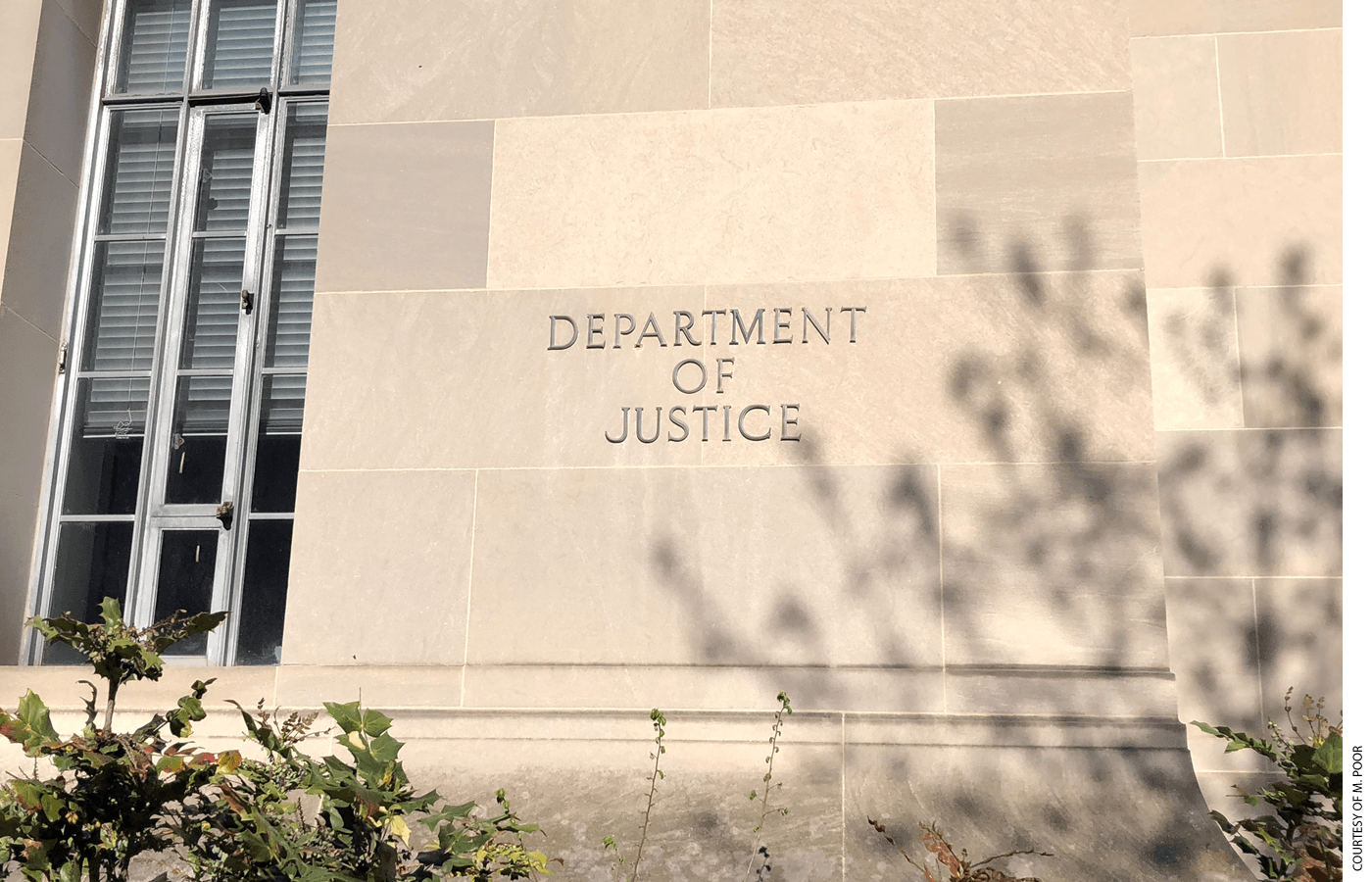
The current arrangement also imposes unnecessary duplication of effort. Difficult cases frequently require one federal agency to investigate a complaint and negotiate with parties before litigation proceeds, at which point another federal agency becomes involved.
Consider a complaint from a parent whose child has diabetes. The parent alleges that a school district refuses to permit the student to carry necessary medication, excludes her from field trips, or repeatedly sends her home rather than providing the accommodations required by federal disability law. Today, the parent may file the complaint with OCR. A regional office first determines whether the allegations fall within its jurisdiction, were filed on time, and contain enough factual detail to warrant further processing. It may then offer mediation or open an investigation, develop a case plan, request school records, interview witnesses, and determine whether the district violated Section 504 of the Rehabilitation Act or Title II of the Americans with Disabilities Act.
Most cases do not proceed through every stage. The family and district may reach an agreement through mediation. The district may also enter into a voluntary resolution agreement while the investigation is underway. If OCR ultimately finds noncompliance, it must again try to secure voluntary compliance and give the district notice and an opportunity to correct the violation.
But suppose OCR finds noncompliance and the district is unwilling to correct the violation. OCR may initiate administrative proceedings that could eventually terminate federal funding, or it may refer the matter to DOJ for judicial enforcement. Such referrals are rare. By the time one occurs, OCR may already have spent years evaluating, investigating, and negotiating the case. DOJ must then make its own litigation judgment, evaluate the evidence, develop a court-ready case, and, if warranted, file suit in federal district court.
EdNext in your inbox
Sign up for the EdNext Weekly newsletter, and stay up to date with the Daily Digest, delivered straight to your inbox.
Under the new agreement between the Education and Justice Departments, the family would still file a complaint with OCR, and its personnel would still evaluate it, offer mediation, and seek voluntary resolution. But only one investigation would be needed, and it would be conducted by DOJ on OCR’s behalf. If the district remained recalcitrant, the agency responsible for judicial enforcement would already know the facts, the applicable law, and the parties. The case would not encounter an institutional handoff just when the family most needs decisive action.
If executed properly, bringing investigators and litigators together from the beginning could reduce duplication, ameliorate long waits, and produce faster resolutions for students and families whose educational opportunities cannot wait for bureaucratic handoffs.
The Justice Department need not, and should not, simply absorb OCR and proceed as though it were another litigation unit. DOJ’s comparative advantage is law enforcement, not education administration. The success of this reform will depend on whether DOJ builds upon OCR’s strengths rather than replacing them.
OCR should continue to manage its mediation process as well as voluntary resolution efforts, two areas in which it has been strong. It should also leverage its subject-matter expertise by continuing to oversee its regulatory and guidance functions. Similarly, it would make sense for OCR to monitor compliance with its agreements, an area that deserves increased attention.
OCR has traditionally maintained a comprehensive complaint process. Families whose children believed they had been denied equal education opportunity could file complaints with the expectation that someone would review them. Under the current regulatory regime, DOJ should inherit not only OCR’s authority but also its obligation to fully evaluate the broad range of complaints that federal law entrusts to the government.
The difference should lie in how complaints are handled, not in which ones are heard. DOJ should retain OCR’s commitment to prompt intake (which has been honored, admittedly, sometimes in the breach) and individualized attention whenever appropriate. At the same time, it should bring to bear its own institutional strengths: more sophisticated investigations, greater coordination with federal litigators, and the ability to move seamlessly from negotiation to enforcement when voluntary compliance proves unattainable.
Moving enforcement to DOJ may also reduce other institutional risks. It would be unfair to conclude that the Education Department has been subject to regulatory capture but naive to disregard the topic entirely. OCR’s lawyers understandably work closely with school districts, colleges, universities, and their counsel. Many move between government service and higher education or K–12 education over the course of their careers. Those professional relationships may promote mutual understanding and constructive compliance, but they can also reinforce an institutional culture that often identifies more with the concerns of education administrators. A law enforcement agency begins from a different premise. Its client is not the regulated institution but the people, and its primary commitment is to the Constitution and laws.
Regardless of outcome, the proposed transfer may not represent the final stage of federal education reform. If the administration’s broader objective is to bring education closer to students, families, states, and local communities, then transferring OCR to DOJ may ultimately prove to be an intermediate step rather than the final destination.
Whether such a system would improve civil rights enforcement in education is a question for another day. The immediate issue is more modest but no less important. If the federal government is going to enforce civil rights laws in education, it should do so through the institution whose mission, culture, and capabilities are most closely aligned with law enforcement, especially as the Education Department faces the prospect of sunsetting.
Civil rights enforcement is law enforcement. Housing that responsibility within the Department of Justice recognizes that reality. If implemented thoughtfully, the transfer could preserve what OCR has long done best while giving students and families something they too often have lacked: an enforcement system that combines understanding of education with the credibility and power of the nation’s principal law enforcement agency.
Kenneth L. Marcus is the founder, chairman, and CEO of The Louis D. Brandeis Center for Human Rights Under Law in Washington, D.C.