

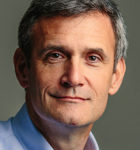

Chris Reynolds thought he would spend his career where it started, or a place much like it: at a public high school in a Colorado exurb, teaching history and philosophy the way he’d learned it in college. Armed with undergraduate degrees in both subjects and later a master’s in economics, he imagined introducing teenagers to the events that shape civilizations, the institutions that sustain them, and the texts that have survived them.
For a time, that’s exactly what he did. He lectured and led discussions. His U.S. Government students arrived in his classroom with enough background knowledge to handle challenging readings. At the end of every unit, they produced five-paragraph essays that required them to marshal evidence, form an argument, and write clearly.
But over time, Reynolds felt his enthusiasm for the work beginning to erode. Students no longer seemed to possess the basic facts that make history intelligible and rewarding to teach. “I’m supposed to start U.S. history from Reconstruction,” he recalled in an interview, “and they don’t know the combatants in the Civil War. I had to back-teach a ton of content knowledge they just didn’t have.”
Standards and expectations were similarly lowered. School leaders quietly discouraged the demanding five-paragraph essays. He found himself asking what had changed so dramatically in the years since he’d started teaching. “Either we are failing them, or human nature has altered,” Reynolds concluded. “And I can tell you which of those it is.”
The day-to-day work of teaching also seemed to drift away from knowledge and intellect. “We basically took on every single role as teachers,” he said. “We were counselors. We were doing everything other than teaching content. And I remember sitting in meetings where I’d often say, ‘When do I actually get to teach history?’”
The breaking point came the day Reynolds observed a high school colleague’s “gallery walk,” a classroom exercise where students move from station to station responding to displays, artifacts, and prompts. A photograph of Michelangelo’s Sistine Chapel ceiling hung with a thumbnail explanation and a prompt: Have you ever worked really hard on something that you were proud of? How did that make you feel? Nothing about Michelangelo’s work, its place in the history of art and culture, or why it’s still worth visiting or studying today. “That was the moment I thought, ‘We’re just teaching a generation of narcissists. All of human history is ultimately a question about you,’” Reynolds recalled. He did not blame his colleague but rather pointed to a school administration that urged faculty at every staff meeting to make assignments “relevant” and “student-centered.” Soon after, he applied to teach at Liberty Common School, a classically oriented charter school in Fort Collins.
A friend had already planted the seed. Hearing Reynolds vent his frustrations with his district school job, she stopped him mid-sentence: You just described classical education. When his own son was accepted to Liberty Common through its admissions lottery, the fit suddenly felt obvious. Liberty hired him—as the school’s athletic director. Reynolds jokes that it’s “the only place that would hire an athletic director because he had a philosophy degree.” He soon became Liberty’s assistant principal and its AP Microeconomics teacher.
Talking with Reynolds, you get the sense he didn’t change jobs so much as reclaim the one he thought he was hired to do in the first place. He may be part of a growing cohort. Last summer, we reported on the struggle of classical schools to find enough qualified teachers. In their advent, classical schools recruited heavily from undergraduate “great books” programs like St. John’s and Thomas Aquinas College, but as the sector grows, this is no longer a large enough talent pool. Increasingly, classical schools are hiring teachers like Reynolds: veteran educators in traditional district schools who are looking for a change.
These teachers often feel pushed to the margins by bureaucratic demands, ideological conflicts, shallow instructional trends, behavioral breakdowns, or simply the sense that traditional district schools no longer allow them to do the job they set out to do. They are not fleeing the work of teaching but searching for a place where the work still feels possible. Michael Rose, headmaster of Cincinnati Classical Academy, calls them “refugee teachers.”
Their soul-searching and exit come at an opportune moment. The explosive growth of classical schools, microschools, and other alternatives, fueled by the rapid expansion of school choice and a renewed appetite for fresh school models, is creating new professional frontiers. Amid headlines about student learning loss and handwringing about teacher attrition (see “Are Teachers Abandoning Teaching,” features, Vol. 25 No. 4), another story may be unfolding in the shadows: teachers who are leaving not because they’ve given up, but because they are unwilling to abandon the intellectual and moral commitments that drew them to the profession in the first place.
The movement of these teachers into the classical sector is sowing the seeds of a pedagogical and cultural renewal. Refugee teachers are helping schools with strong academic identities scale, stabilize, and deepen their commitments. In other words, the flight from traditional schools may be a bleed in one place—but it is the potential lifeblood of another.

Why Teachers Leave Traditional District Schools
Reynolds is not alone. In interviews we conducted with a dozen teachers who decamped from district to classical schools, a striking pattern emerged: The conditions that drove Reynolds out are not idiosyncratic but common.
These teachers’ stories also align with national data showing a sustained collapse in professional satisfaction. In 2024, a Pew Research Center survey found that a third of teachers described themselves as “extremely or very” satisfied with their work, compared with more than half of U.S. workers overall. More ominously, less than half said they would recommend the profession to a young person starting his or her career. In a five-decade review of teaching prestige, preparation, and morale, Brown University economist Matthew Kraft and political scientist Melissa Lyon of SUNY Albany found that interest in teaching among high school seniors and college freshmen has fallen by nearly half since the 1990s, and teacher satisfaction has declined 26 percent in just the last decade. Kraft and Lyon concluded that “the current state of the teaching profession is at or near its lowest levels in 50 years.”
While it is common to hear laments about teacher pay, hours, or burnout, the teachers we interviewed don’t fit these familiar narratives. They spoke of a slow erosion of purpose, the sense that their craft was being hollowed out by incoherent curricula, ineffective instructional orthodoxies, politicization, and ever-shifting priorities and pedagogical fads.
Teachers who once imagined themselves as stewards of literature, history, science, and mathematics described feeling instead like troubleshooters, counselors, compliance officers, or test-prep technicians. Many still loved children—fiercely—but increasingly questioned whether their schools still loved learning.
Repeatedly, the refugee teachers we interviewed described a misalignment between their belief in knowledge as the foundation of learning and the district schools in which they worked. “We were changing curriculum every three or four years,” recalled Sammi Knigge, a kindergarten teacher at Liberty Common. This relentless curriculum churn made it nearly impossible to build mastery or give students a sequenced education across grade levels.
Sometimes, there was no curriculum at all, especially in history and science. First-grade teacher Jen Brown, also at Liberty Common, described being handed “big plastic bins with science materials” at her former school with no guidance or expectations on what to do with them. “There was a box of rocks—literally a box of rocks—and then there was a box of flashcards with planets,” she recalled. And a pacing guide? “I was told so many times, ‘That’s a great idea. Feel free to make a pacing guide!’” she said.
In other words, curriculum was something for teachers to assemble, not a body of knowledge to be mastered. Course content was fungible, even optional.
Other teachers pointed to problems with pedagogy. The dominant instructional assumptions they encountered and were expected to use—discovery learning, group-based tasks, “equity grading”—ran counter to what they believed made learning possible.
Deanna Randle, now a grammar, history, and physical education teacher at the classical Thales Academy in Raleigh, North Carolina, reflected on teaching 2nd grade in an affluent school district in the area. “There just hasn’t been enough direct instruction—not enough phonics, not enough basics,” she said. Her school used the widely discredited Fountas & Pinnell leveled-reading approach and pushed student-led group projects. Randle could see her students becoming frustrated and impatient with these methods.
For math teacher Craig Kompelien, now at the classical Christian Veritas School in Richmond, Virginia, “equity grading” undermined seriousness and accountability: “I started having to do things I didn’t believe, like if a kid turns in nothing, I’ve still got to give him a 50. Or everything I put in the grade book, it’s implied a kid is going to get a redo,” he recalled. “And so I’m grading 150 tests twice because nobody studied the first time. My whole career, I had never done that. I had told kids on day one: Retakes are off the table. And when kids know that, believe it or not, they study.”
Math teacher Torgun Lovely, now a department chair at Liberty Common, explained, “I continually found myself saying, ‘That’s a nice sentiment. It would be nice if the world worked that way, but it doesn’t.’ . . . I don’t know why we’re basing our policies and procedures on how we wished children would behave and not on how they actually behave.”
These refugee teachers did not claim that students lacked the ability to succeed. Their argument was simpler: If schools lower expectations in the name of compassion or convenience, students will meet those standards—with lower performance. And when demanding instruction is replaced with dubious pedagogy, teachers trained to cultivate knowledge begin to feel compromised and complicit rather than effective.
Some number of teachers pointed not to pedagogy and curriculum but to culture clash and mission creep—pressure to embrace political symbolism, conversations, or activism that conflicted with their view of the teacher’s role or their values.
“I had a student who didn’t identify as he or she, and there were conversations I was supposed to be having with the student surrounding their gender,” explained one early childhood elementary school teacher. “That was not something I was comfortable with as an educator. I think that is more the role of a parent.” Similarly, math teacher Kompelien recalled that his son, who attended school in the same district where he was teaching, “started coming home from 3rd grade asking questions that were super politically charged.” Kompelien wondered, “You’re supposed to be learning how to add and subtract and read and write at eight years old. Why are we talking about this?”
To be clear, none of the teachers we spoke with argued that schools should avoid civic formation or social awareness. Rather, their concern was that instruction had become laden with political overtones while the foundational academic lift grew lighter by the year. Furthermore, though not all refugee teachers are politically conservative, many do hold traditional values that can lead to tension with progressive school districts.
The most poignant theme to emerge among refugee teachers leaving district schools for classical academies was a feeling of professional diminishment—the sense that teaching had been redefined as therapeutic caretaking rather than intellectual stewardship. Latin teacher Lori Brown, now at Veritas School, captured this shift vividly. Over time, she said, her duties expanded to include mediating social conflict, managing students’ emotional needs, and implementing a steady stream of training agendas: “There was always this ‘You can do this, it’ll only take 15 minutes. You can add this,’” she remembered. “Every year Virginia would get a bugaboo about something it wanted kids to learn that wasn’t academic.” She also recalled a school culture that didn’t take ideas seriously: “There was a lack of intellectual rigor even among the teachers. . . . So many of the teachers were almost anti-intellectual.” She felt like “the weird geek and the weird Christian” and was dismayed as the school increasingly removed books from the curriculum.
Taken together, these voices reveal a clear consensus: The refugee teachers who left traditional district schools have not abandoned teaching, nor do they recoil from challenge or change. They left because they believed that the core work—instruction in rich content, high academic standards, and the cultivation of intellectual virtues and character—was increasingly incompatible with the policies, expectations, and priorities of the systems in which they worked. Their circumstances are certainly not common to all public schools, but their stories do track with recent research on the deteriorating workplace conditions many teachers face due to mismanaged schools, classroom disorder, leadership churn, and poor preparation.
If Reynolds’s hallway epiphany marked the precise instant when his disillusionment crystallized, the teachers we interviewed lived out versions of that same realization over months or years. And when they walked away, they left not with a feeling of cynicism but with conviction—the belief that somewhere the craft still mattered.
Why Classical Schools Appeal
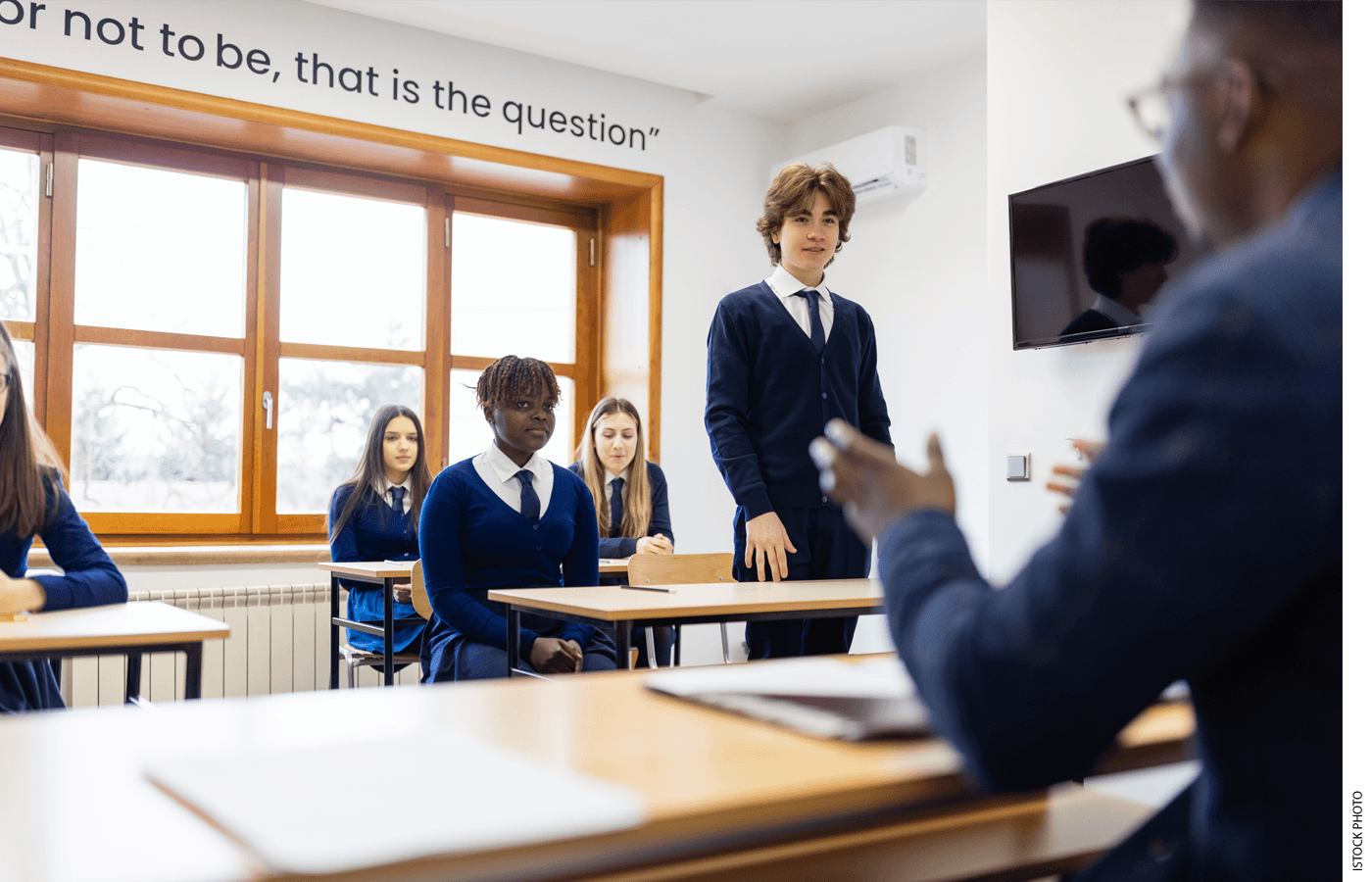
The term “classical education” is often applied broadly, but there are a few defining characteristics: a liberal arts curriculum centered on enduring classics of the Western world (think Plato, Dante, and Shakespeare); instruction in classical languages, typically Latin and Greek; an emphasis on history and the fine arts; distinctive pedagogical techniques like Socratic questioning and seminars; and a focus on moral and character development.
The education model, which is found in charter and private schools in all 50 states, has proven highly attractive to families. According to an analysis by Arcadia Education, 1,551 classical schools were operating in the United States during the 2023–24 school year. Nearly one-third of those schools opened in the past decade. Arcadia projects that by 2035, there will be at least 2,575 classical schools serving over 1.4 million students, which will require between 70,000 and 117,000 teachers. Refugee teachers will almost unavoidably be key to meeting that demand.
The teachers we interviewed described a few principal reasons why they chose to make the switch to classical education—and why they decided to stay. Among them was improved student behavior. Before coming to Cincinnati Classical Academy, math teacher Laura Priede taught at district schools for 30 years and a private Catholic school for 11 years. Asked about the biggest differences between Cincinnati Classical and her former schools, she said, “They want me to be free to do my job and be a professional, not the disciplinarian.” Other teachers echoed this idea: In their new schools, classroom management feels like a lighter lift.
This is not, however, because student behavior is perfect in classical schools. First-grade teacher Jen Brown reflected that she has a knack for classroom management and actually enjoys helping kids with behavioral issues. One of her first teaching jobs was at a Title I school near the California-Mexico border, and she felt like she was making a big difference in her students’ lives. When she switched to Liberty Common, she was worried those skills would be wasted. A district school colleague even warned her that “those are not your people.” But Brown discovered that her new 1st graders were ordinary kids: They still acted out and threw tantrums.
Brown explained that classroom management is easier not because the students are different, but because she has more bandwidth. Liberty Common, with its consistent Core Knowledge curriculum and committed faculty, weathers less administrative chaos, so teachers have more time and energy to perfect their craft.
Classical schools’ emphasis on moral formation might also explain the difference. PE teacher Deanna Randle recalled admonishing a boy who was taunting a classmate after she lost a relay race. “I said to the young man, ‘Do you think that was a nice thing to say to someone?’ And his whole face just dropped,” she remembered. Randle thinks that if she’d asked the same question at the nearby district high school, where she coaches track, the students might have responded that they didn’t care. Her rebuke was meaningful to the Thales student, she posits, because he was steeped in a school culture that prizes character and virtue.
Other teachers explained that they were drawn to the rich intellectual culture in classical schools. Math teacher Craig Kompelien recalled when Veritas School asked all of its teachers to read Jane Eyre over the summer and come prepared to discuss it. He’s always preferred nonfiction over novels, but the book captured his imagination: “I just remember getting several pages in and going, ‘Holy smokes. This is a beautiful use of the English language,’” he said. His previous school had often exhorted teachers to be “lifelong learners,” but it felt like an empty catchphrase. The genuine intellectual community at Veritas has been a welcome change.
It’s not just Veritas. Several classical school leaders told us that faculty seminars on literature, philosophy, and education theory are a common practice. They describe them as an effective form of professional development, exposing teachers to classic books, developing good habits for seminar discussions with students, and fostering a rich faculty culture. Sheldon Dance, academic dean at John Adams Academy in Northern California, reflected, “I learned more, just personally, my first semester working at this school than I did in my two years at graduate school, just because the people here are so intellectually curious and so knowledgeable.” He quipped that a good litmus test for whether a teacher will thrive at John Adams is if he or she would want to stay after school for a seminar on the Iliad with colleagues.
Latin teacher Lori Brown observed that this focus on intellectual community leads to a more uplifting school climate. “There’s a coarseness in the discourse in public school,” she said. When teachers at her previous school discussed students, she recalled, it was often “mean and gossipy and degrading.” At Veritas School, she’s more likely to hear colleagues discussing Augustine’s City of God than venting about the kids. She finds that this environment is better for teacher morale. “You’re still tired at the end of the day, but it’s not that utter emotional exhaustion of not having had anything fill your soul and your psyche during the day,” she explained.
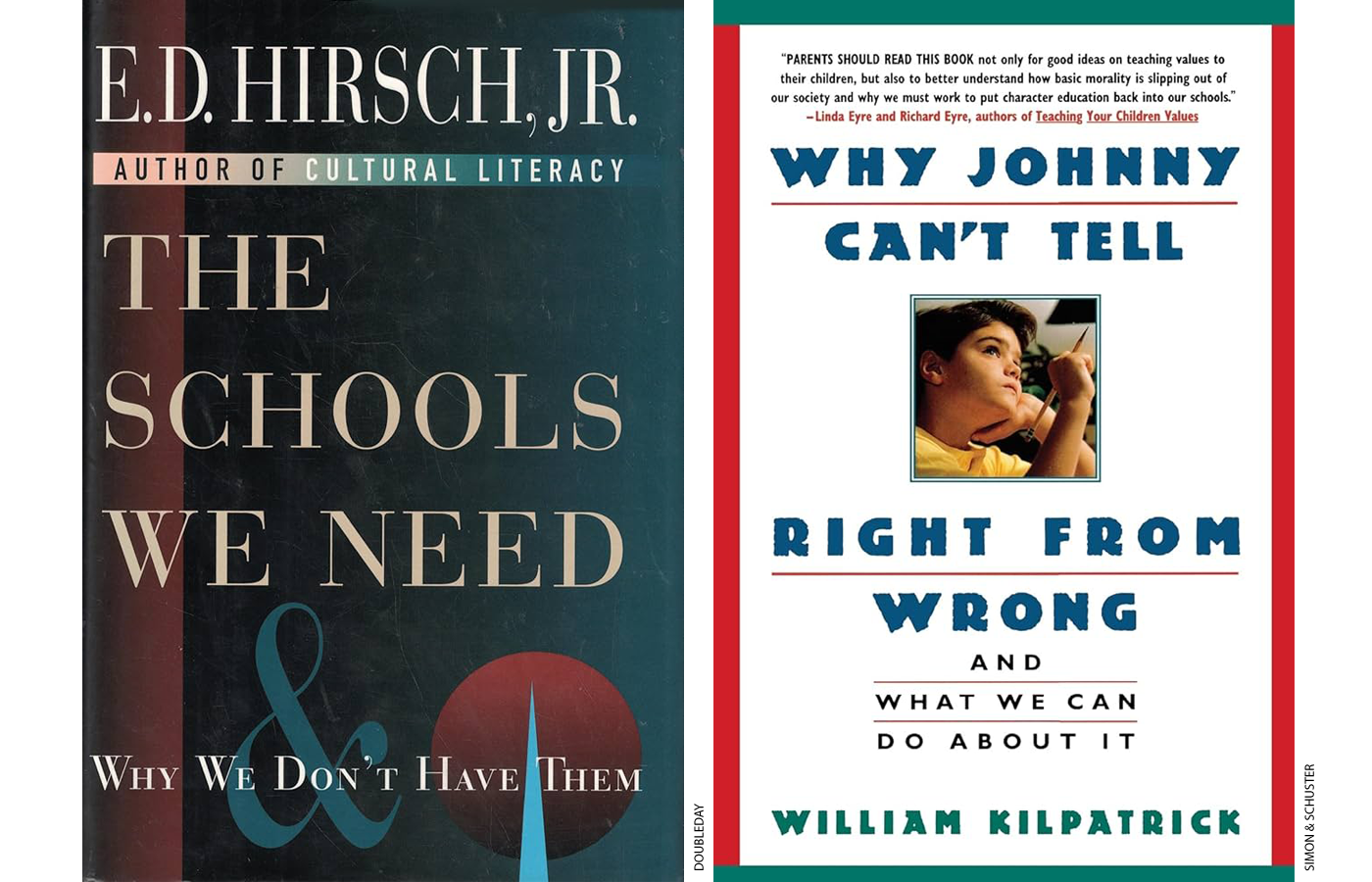
Many teachers also expressed that they were drawn to classical education not because of high-minded ideas about education philosophy, but simply because the schools seem to be doing things that work. Thales Academy’s Deanna Randle put it succinctly, explaining, “Classical education is what I would consider traditional. Traditional for someone of my years of age. Thales looks a lot like school looked when I was a girl.” Math teacher Torgun Lovely was sold on Liberty Common when he received two book recommendations at an information session: The Schools We Need by E. D. Hirsch Jr. and Why Johnny Can’t Tell Right from Wrong by William Kilpatrick. The books argued for knowledge-rich curriculum and moral formation, and Lovely recognized in them his own latent philosophy of education. “I couldn’t put those books down,” he recalled. He found Liberty’s approach to pedagogy, which emphasizes direct instruction and firm grading policies, clear-minded and pragmatic.
Cincinnati Classical’s Michael Rose finds that many teaching candidates are impressed by all of the books in the curriculum. Coming from district schools where many of the reading assignments are contemporary “YA” novels or excerpts, they tell him in the interview, “I can’t believe you guys. You read, at every grade, these wonderful classic books that I’ve heard of.”
In brief, the refugee teachers we spoke to articulated a sense of intellectual and professional homecoming. When Rose interviews district school teachers for openings at Cincinnati Classical, they often tell him, “This is what I’ve been looking for. I didn’t know a school like this existed.”
Tensions and Challenges: An Administrator Perspective
For all their enthusiasm, classical school leaders are quick to warn that would-be refugee teachers should not mistake their schools for an escape hatch—or a soft landing. Jeffrey Brown, head of Hunter Classical Christian School in Richmond, pushed back, gently but firmly, on the very term “refugee teacher.” A refugee, he noted, is defined by what he is fleeing. Hunter Classical is “looking for people who are coming to us for a reason.” That requires at least a basic understanding of what classical education entails—and a willingness to be challenged by it.
Brown was more skeptical of refugee teachers as a source of talent than the other school leaders we spoke to, explaining that he rarely recruits from education schools or traditional public systems at all. “An ed school graduate . . . is almost untrainable at a place like Hunter,” he said. District school teachers sometimes resist the classical philosophy of education, and the intellectual demands are high. “Especially if you are a high school teacher. It’s just the amount of Shakespeare, Aristotle that you have to have in order to show up here to succeed,” explained Brown, who said his record is “fifty-fifty” at successfully retraining district school veterans to fit at his school.
EdNext in your inbox
Sign up for the EdNext Weekly newsletter, and stay up to date with the Daily Digest, delivered straight to your inbox.
Other classical school leaders we spoke with were more open to hiring district school teachers but expressed similar cautions. At Liberty Common, Chris Reynolds often acts as an interpreter for candidates who have internalized the language of district schools without necessarily believing in it. “In an interview they’re like, ‘Well, I’ve got to say ‘differentiation.’ You’ve got to say all these educational buzzwords,” he quipped. “They’re actually pretty close to our philosophical commitments. They’re just not used to being able to say what they think.” Helping them translate—and sometimes unlearn—habits acquired in traditional district schools is part of the work.
Even when the philosophical fit is strong, the transition can be jarring. Cincinnati Classical’s Michael Rose emphasized that classical schools demand more content knowledge, preparation, and intellectual stamina than many teachers might expect. He recounted hiring a recently retired district-school geometry teacher who quit after four weeks, overwhelmed by the challenge of teaching Euclid’s Elements. In his resignation letter, the teacher said that he was too stressed out, had lost 12 pounds, and would wake up in the middle of the night worrying about geometric proofs. “There is a downside. Someone can realize, ‘I’ve gotten myself into a lot more than I thought,’” Rose reflected.
In sum, classical schools are not ready-made havens for disaffected teachers. They are proving grounds. Those drawn to them are seeking not lighter expectations but higher ones: deeper subject-matter knowledge, clearer classroom norms, moral seriousness, and an unapologetic commitment to an intellectual tradition. Teachers who flourish in these settings tend to say the experience prompts not a feeling of relief but of renewal.
Of course, the question of compensation is also unavoidable. In many cases, moving from a public school district to a charter or private school means taking a salary cut, especially for a teacher nearing the top of the pay scale. It could also mean losing accrued pension wealth. For these reasons, the move may be realistic only for relatively new teachers, who are still on the lower rungs of the pay scale, and for teachers who have reached their contractual retirement age but wish to continue working. Many of the teachers we interviewed fit one of these two profiles. On the other hand, some are willing to make the sacrifice. “I flushed a lot of state pension retirement money down the toilet,” conceded one teacher, who moved to another city with his wife so he could teach at a classical private school. “We were leaving grandparents and free babysitting. . . . I don’t know that any financial adviser would’ve told us, ‘Yeah, you should go ahead and do that.’” He and his wife decided it was worth the sacrifice for him to teach at a school he loved.
A Profession on the Cusp of Transformation
The exodus of refugee teachers should not be read merely as a critique of district schools, nor solely as a boost to classical education. It may be an early indicator of something larger: the emergence of teaching as a more pluralistic, entrepreneurial profession—less defined by a single institutional or career pathway and more by fit, craft, and conviction. The rapid rise of education savings accounts in over a dozen U.S. states is already giving teachers an opportunity to reinvent themselves, whether through running microschools, teaching online, or offering services directly to families—all of it with public dollars, but outside the structure of traditional public school districts. Journalism underwent a similar transformation with the rise of the Internet and social media and the diminished impact of legacy media outlets and their gatekeeping role. Frustration and fragmentation followed, but so did innovation and renewal. Teaching may be entering a comparable evolution.
The irony is that a reform movement long framed around student and family choice may ultimately help restore something equally important: teacher choice. As Reynolds observed, “I guarantee you there are more [refugee teachers] out there. A guy just sent me a text the other day that said, ‘You made the right choice. It’s getting worse.’” Whether those teachers find new purpose in classical schools, microschools, tutoring, or models yet to be developed, their decisions suggest that the teaching profession still has life in it—if the schooling infrastructure can keep pace. If it does, the quiet migration of refugee teachers may come to be seen not as a symptom of decline, but as an early sign of a long-overdue renewal for a beleaguered profession.
Annika Hernandez is a research associate in education policy studies at the American Enterprise Institute. Robert Pondiscio is a senior fellow and affiliate of the James Q. Wilson Program in K–12 Education Studies at the American Enterprise Institute.
Suggested citation format:
Hernandez, A. and Pondiscio, R. (2026). “The Battle Hymn of the Refugee Teacher: The explosive growth of classical education is luring teachers from traditional district schools—and reminding them why they became teachers in the first place.” Education Next, 26(2), 14 April 2026.