



In April, Yale University released a report on the state of public trust in higher education. A year in the making, the report is a comprehensive document analyzing why trust in institutions of higher education has declined so precipitously and how Yale, as one such institution, should combat it. It identifies three factors behind this erosion of trust: the price of higher education, an opaque admissions system, and the campus environment for free speech. Underlying all of these is “widespread uncertainty about the fundamental purpose and mission of higher education,” a much more fundamental challenge. “Trust,” the report says, “is earned by doing what you say you’re going to do—and ideally, doing it well.”
What is it that colleges and universities are supposed to be doing? For most students (not to mention the families and taxpayers who often subsidize their education) the answer is preparing them for a good career that ideally makes the time and money spent in study worth the investment. Yet the report’s authors acknowledge that, “for many students, the economic return on higher education has become uncertain at best.” Combine the questionable ROI and uncertain job prospects with campus controversies and the larger political environment, and it is a recipe that sooner or later will turn the public perception of higher education sour.
Questioning the return on investment for a college degree is certainly something we’ve encountered in our own research. In a survey conducted last May, we found that 76 percent of voters said colleges and universities charge more than what a degree is worth. More recently, a 54 percent majority of voters said they did not believe most college graduates today are ready to enter the workforce (only 36 percent did). Baked into voters’ concerns about the cost are the job graduates can get after college, the salary it commands relative to what they have to pay for the degree, and the earnings lost by attending college rather than entering the workforce.
At first glance, the Yale report does not really address this half of the cost equation. It does not talk about ensuring its graduates are ready for the workforce, creating employment pipelines, or aligning its course offerings with employer needs. In large part, it doesn’t have to. College Scorecard data indicates that the median yearly earnings for Yale graduates are $112,971—more than double the median earnings of graduates who attended other four-year institutions. Yale’s Office of Career Strategy reports that over 95 percent of the class of 2025 was employed or in graduate school six months after graduation. Sixty-four percent reported starting salaries exceeding $70,000. As the report itself notes, “an Ivy League education also opens doors to prestigious careers and opportunities.” On balance, the Yale grads are likely going to be OK.
But as stated in the report, employment and earnings are not all that matter. “Educational value cannot be reduced to a future paycheck. The value of higher education also includes the public contributions of graduates in public health, nonprofit administration, secondary teaching, the arts, local journalism, government service, and basic scientific research, among other fields.” What’s more, the impact of technological changes on the job market means it will be impossible to identify which discrete skills will be the most lucrative or employable. As the report argues:
The evolving nature of the job market is also an argument for the broad, flexible, and time-tested form of education known as the liberal arts. A liberal arts education—which includes the sciences and social sciences as well as the arts and humanities—equips students with foundational wisdom and critical skills that will serve them throughout their lives. (emphasis added)
This is an incredibly important concept the report surfaces. A broad-based education—a liberal arts education—equips students with high-order cognitive skills like critical thinking that are indispensable for leading a rich, full life.
EdNext in your inbox
Sign up for the EdNext Weekly newsletter, and stay up to date with the Daily Digest, delivered straight to your inbox.
Critical thinking is the prized outcome of a good education. It is the ability not just to solve problems but to identify them, especially in situations where others might simply accept problematic circumstances as the nature of things.
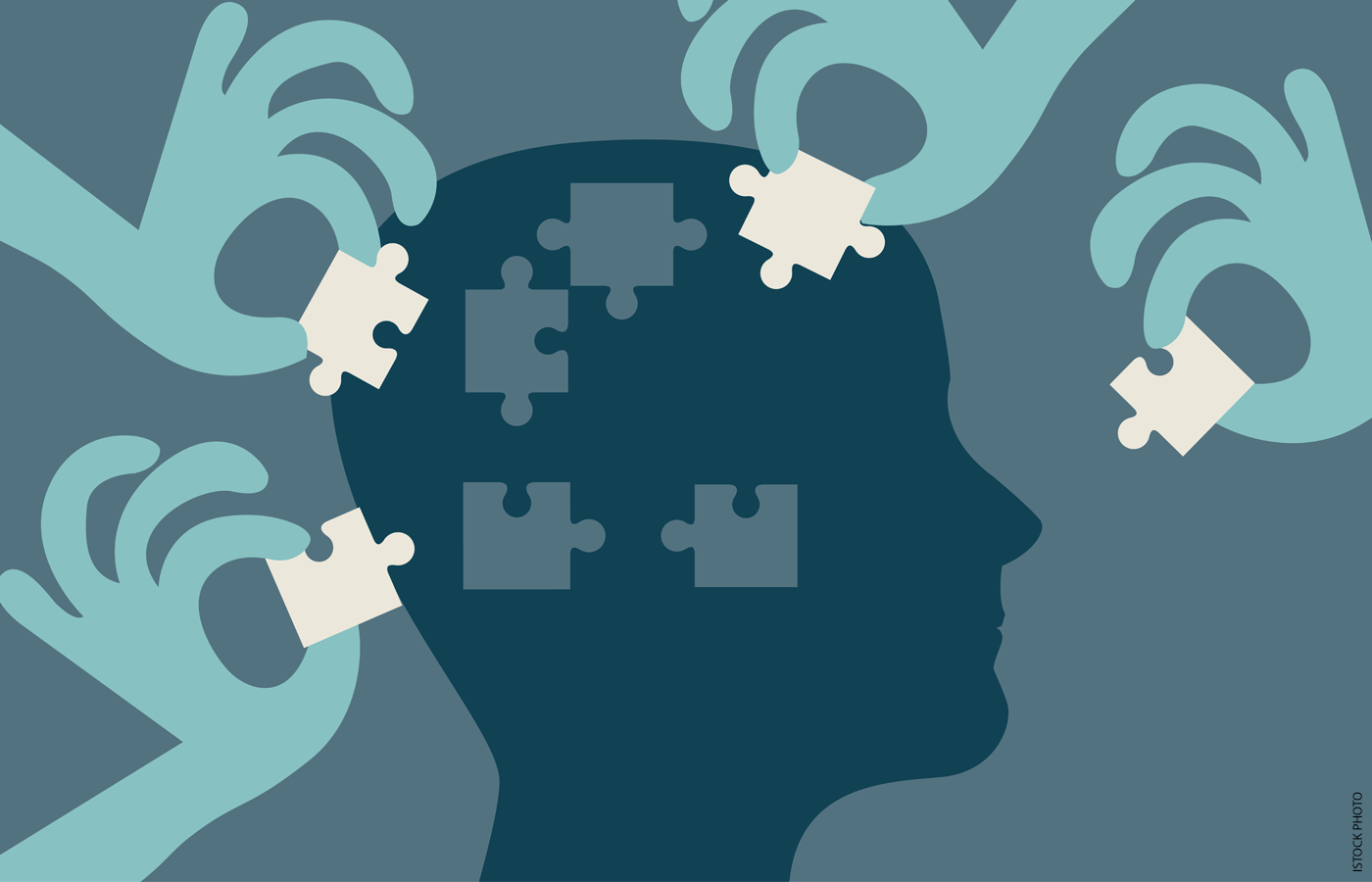
As American Enterprise Institute scholar Robert Pondiscio has described, critical thinking is often mistaken for a discrete skill that can be explicitly taught. In reality, “thinking itself is inextricably linked to the content of thought. A robust foundation of knowledge is not merely the raw material for thought, it is the scaffolding that makes higher-order thinking possible.” (emphasis added). Critical thinking cannot happen in a vacuum. The ability to think critically is the outcome of sustained study over a full breadth of subjects—exactly the broad-based, liberal arts education that Yale describes. Put another way, critical thinking is the ability to see meaningful relationships between pieces of knowledge—a way of connecting the dots.
One example of an outcome that results from seeing a relationship others might miss comes from science. CRISPR—clustered regularly interspaced short palindromic repeats—is the technology behind a revolutionary gene editing technique that allows scientists to modify the DNA of living things. It gives them the ability to correct gene mutations that can lead to diseases like sickle cell anemia, or potentially even cancer. CRISPR is not a human invention. Bacteria have been using the technique as a way to defend against invading viruses for hundreds of thousands of years. But our understanding of the technique is new. As Time senior health correspondent Alice Park summarized in her 2016 essay about the scientists pioneering CRISPR as a disease therapy in humans, the initial spark of insight required making the connection between biology and a dairy product:
[I]t wasn’t until the early 2000s that food scientists at a Danish yogurt company realized just how clever the bacterial system was when they noticed that their cultures were turning too sour. They discovered that the cultures were CRISPRing invaders, altering the taste considerably. It made for bad dairy, but the scientific discovery was immediately recognized as a big one.
This was the critical insight that led to a revolutionary way to fight disease: a conception of the body not just as hardware—bones, muscles, and tissues to be repaired when something went wrong—but also as software whose problems could be fixed simply by adjusting their code. But in order to connect the dots between sour yogurt and treating genetic diseases, everyone involved needed a deep understanding of subject-specific knowledge: DNA and RNA and the mechanisms by which our genetic code is written; how bacteria differ from viruses and how the former defends itself against the latter; what it means when a yogurt is too sour.
This is not to say that students can only develop critical thinking skills at schools like Yale, or only within a traditional, liberal, liberal arts curriculum. Nor is it to downplay the importance of employment-oriented postsecondary education. Critical thinking can be, and quite often is, gained in the deep study and practice of applied knowledge just as much as it is in the liberal arts. But it is to point out that the breadth of the liberal arts is what makes it such a good training ground for gaining the high-order cognitive skills students will use on the job and throughout their careers—to give students a generous breadth of “dots” from across a wide variety of subjects to be able to see meaningful connections. Yet the connection between the liberal arts and critical thinking is opaque for many Americans. Arguably, it is the responsibility of institutions like Yale, which are largely buffered from concerns about graduates’ employability, to explain and defend the importance of a traditional liberal arts education. The brief nod given in the Yale report is a good start, but more work is needed to produce a full-throated defense of—and explanation for—the value of the liberal arts.
Caitlin Peartree is vice president for policy research for The Winston Group, a strategic planning, consulting, and survey research firm based in Washington, DC, where David Winston is president.