


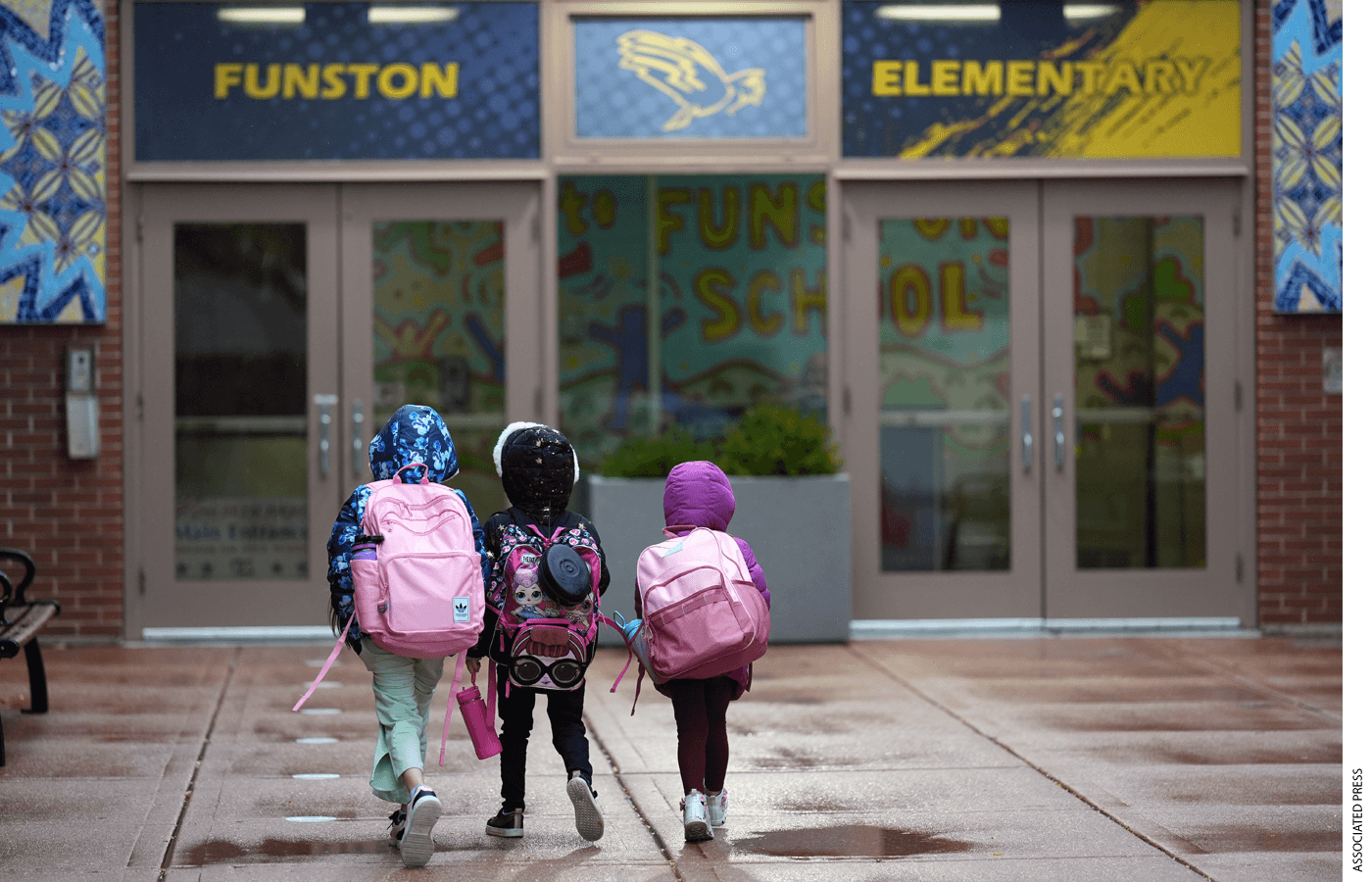
On the morning after immigration raids swept through California’s Central Valley on January 7, 2025, classrooms sat half empty. Daily absences among immigrant students spiked by 22 percent—the equivalent of 725,000 lost learning days in just the first two months of 2025 alone. Similar effects reverberated across the country, with teachers reporting increased absenteeism, slipping grades, and visible anxiety among immigrant children. America’s ongoing immigration crisis had finally broken through the schoolhouse gate.
The disruptions to learning that follow immigration raids constitute a new, de facto form of educational exclusion, where fear, xenophobia, and aggressive immigration enforcement converge to deter Hispanic children from attending school. Across the nation, anxieties about detention have turned the routine act of attending school into a risk many immigrant families are no longer willing to take. Each missed day of school worsens academic outcomes, as students fall behind on their coursework, perform worse on standardized tests, and face declining graduation rates.
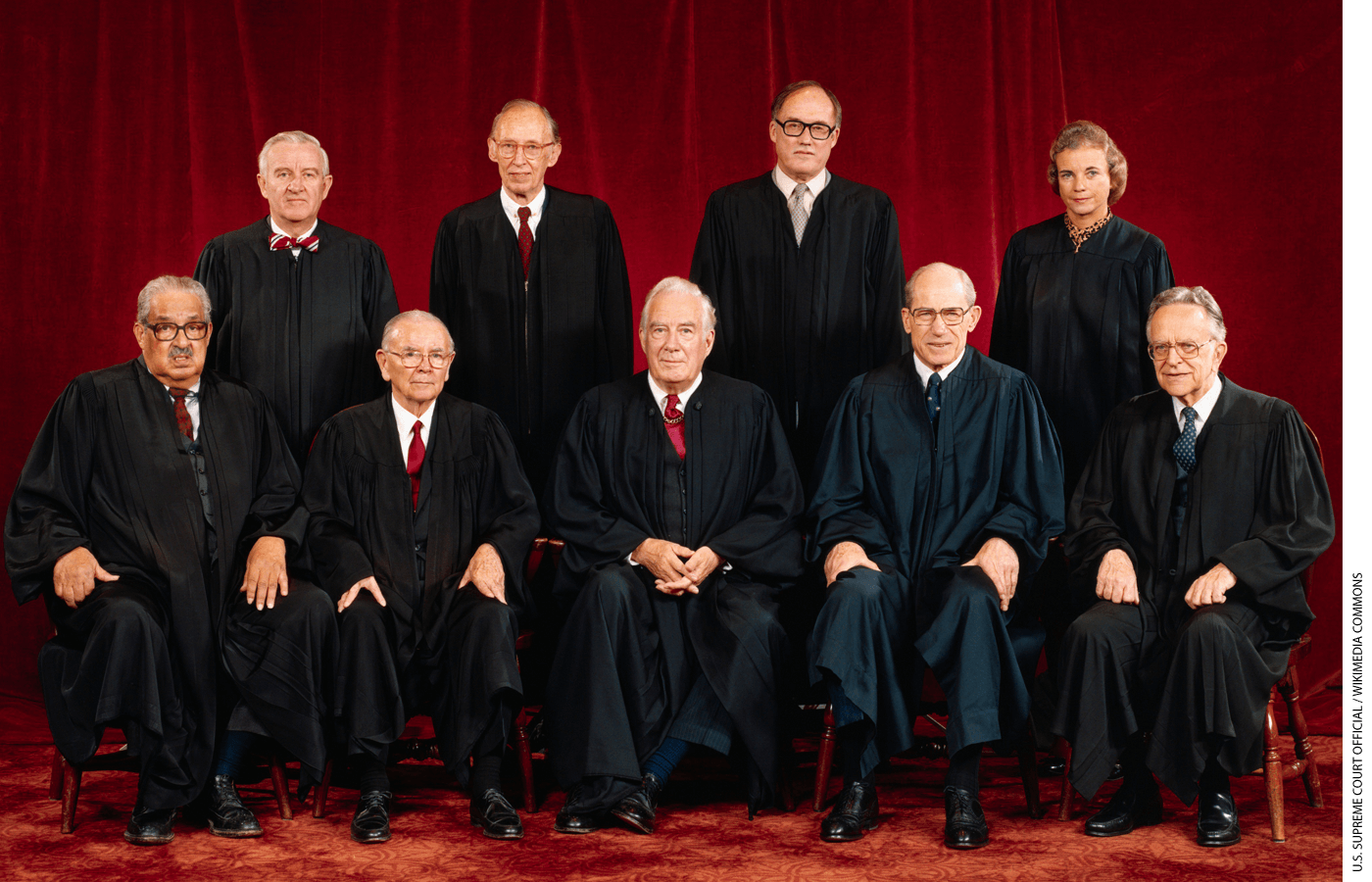
More than forty years ago, the Supreme Court presciently sought to prevent precisely this kind of exclusion from educational opportunity. In Plyler v. Doe (1982), the Court struck down a 1975 Texas statute that had permitted public schools to charge tuition to the parents of undocumented children, ruling that, by conditioning access to education on a family’s ability to pay, such practices violated the Equal Protection Clause of the Fourteenth Amendment. In doing so, the Court held that states cannot deny students a free public education based on their immigration status.
Writing for the majority, Justice William J. Brennan Jr. recognized that preferential tuition requirements turned economic disadvantage and documentation status into barriers to learning. He warned that without access to free public education, undocumented children would face a “lifetime hardship” and risk being relegated to a permanent illiterate underclass. “By denying these children a basic education,” he explained, “we deny them the ability to live within the structure of our civic institutions, and foreclose any realistic possibility that they will contribute in even the smallest way to the progress of our Nation.” Importantly, Brennan emphasized that deprivation of education was unlike deprivation of any other public good, as it “takes an inestimable toll on the social, economic, intellectual, and psychological well-being of the individual.”
By tying education to the very essence of equal citizenship, the Court underscored that education is not a privilege reserved only for the wealthy or U.S. citizens, but rather something that must be made available to all children on equal terms. Thus, it made clear the Constitution’s promise of equal protection extends to all children who live within America’s borders, regardless of income or immigration status.
The U.S. has consistently fallen short of Plyler’s promise, however. Since the decision, school districts have pursued a variety of efforts to thwart undocumented children’s access to the classroom. Measures range from requiring proof of a green card, Social Security number, or visa status at school registration to legislative proposals mandating that school districts track and report the number of undocumented students in their classrooms. Recently, several state legislatures have even considered bills to reintroduce tuition or enrollment requirements that mirror the restrictions struck down in Plyler.
The push to undermine Plyler is now coming from the federal level, too. The Trump administration has mounted its own initiative to curtail educational access for immigrant children, attempting to bar undocumented children from participating in Head Start programs and to withhold federal funding for English Language Learners.
With each new restriction, Plyler’s fragile promise erodes further. The Court’s ruling may appear intact on paper, but, in practice, fear and political hostility have created new barriers to access, with striking costs to American education.
Empirical evidence from across the United States in the past decade confirms a concerning pattern: Immigration enforcement measurably depresses attendance and academic performance among immigrant students.
Throughout the country, fear of deportation tied to immigration raids has prompted a surge in absenteeism, not only for immigrant students, but for Hispanic children as a whole. In school districts located within 25 miles of areas where mass deportations were carried out from 2009 to 2015, chronic absenteeism among Hispanic students increased, and math test-score gaps between Hispanic and white students grew modestly (by 0.08 standard deviations).
Likewise, in a study spanning seven large school districts in California, a standard deviation increase in county-level immigration arrests from 2014 to 2018 corresponded to a 5 percentage point increase in student absenteeism for Hispanic students. This relationship was even more pronounced among Hispanic high school students who were English language learners, whose absenteeism rates rose by up to 8 percentage points. And the negative consequences of the deportations didn’t end when the raids did. School attendance remained low for weeks and, in some cases, months after an immigration raid.
The costs of missing school, even for a brief period, are often irrevocable. Absenteeism has been consistently linked to reductions in standardized test scores, lower grade point average, and increased chances of dropping out of high school. Students who frequently miss class are also more likely to experience health challenges.
These harms are unfolding in real time. As a study analyzing data from 2014 to 2018 revealed, for every one standard deviation increase in immigration arrests, Hispanic secondary students’ math achievement dropped by 0.17 standard deviations. Similarly, between 2000 and 2013, heightened immigration enforcement contributed to a 14 percent increase in the likelihood that younger elementary and middle school students would be held back a grade and, for older students, raised the risk of high school dropout by 18 percent.
In communities directly impacted by immigration raids, students’ test scores have plunged. As a study examining schools in Texas found, in the 40 days following a workplace raid in 2019, Hispanic students’ math and reading passing rates fell by 7 to 10 percentage points, and their overall standardized test scores dropped by as much as 44 points.
Immigration hardliners may contend that these findings reinforce their arguments that undocumented families should not be within the borders of the United States in the first place. After all, without undocumented immigrants, there would be no immigration raids, and without raids, there would be no deportation anxiety affecting student attendance and performance. Couldn’t this be solved by securing the border and mitigating the deleterious effects on education that immigration has wrought?
Even conceding that immigration policy in the U.S. is broken and in need of reform, this posture does not account for the reality of immigrants living in the United States, and it betrays the very spirit with which the Supreme Court rendered the Plyler decision. Indeed, the Court confronted—and rejected—the assumption that undocumented children disrupt the learning of American students.
EdNext in your inbox
Sign up for the EdNext Weekly newsletter, and stay up to date with the Daily Digest, delivered straight to your inbox.
Responding to concerns raised by Texas state officials that the presence of undocumented students would strain school resources, Justice Brennan underscored that “barring undocumented children from local schools would not necessarily improve the quality of education provided in these schools.” Moreover, the Court emphasized that undocumented children are “basically indistinguishable” in terms of educational cost and need from “legally resident alien children.” A lower federal district court likewise found no “credible supporting evidence” that educating undocumented students would significantly dilute state resources or harm instruction for other children.
Even if marginal differences could somehow be shown, the state would have to justify why this particular group of children—who have no control over their parents’ decision to immigrate illegally nor their own immigration status—should be singled out and excluded from academic opportunity. In short, punishing children for circumstances that were chosen for them does nothing to strengthen American schools; it merely imposes harms that the Constitution has long recognized as unjust and counterproductive.
Ultimately, as long as the Trump administration’s campaign of mass deportation persists, the pattern of rising absenteeism and worsening academic outcomes among immigrant children can only be expected to grow, pushing them closer to the future Justice Brennan warned against more than four decades ago. Denying undocumented children equal access to a free public education strips them of the tools they need to survive and thrive as meaningful participants in our democracy, subjugating an entire generation of children to lives of economic precarity and diminished opportunity.
But this harm doesn’t fall on immigrant families alone. Withholding education from any group of children weakens the social and civic fabric that sustains the nation. As Brennan aptly put it, “We cannot ignore the significant social costs borne by our Nation when select groups are denied the means to absorb the values and skills upon which our social order rests.” To abandon the promise of Plyler v. Doe means forsaking not only the rights of undocumented children, but the very ideals of equality and democracy that form the bedrock of our nation, leaving everyone worse off.
Liliana Florencia Falcone is a student at Harvard College concentrating in government and educational studies.