


In today’s economy, what you know still matters, but who you know—and who knows you—matters just as much.
Young people from affluent, well-connected families often inherit a quiet advantage that includes access to mentors, family friends, alumni networks, and managers who can offer advice, open doors, and vouch for them. Their peers from low-income or first-generation immigrant families are more likely to graduate socially impoverished. They earn their diploma but lack the relationships that turn credentials into opportunity.
Call it America’s social wealth gap.
We talk endlessly about the deficits K–12 and college students have in learning, skills, and finances. We talk much less about the missing ingredient that converts credentials into a career: social capital. If education leaders and policymakers want to expand opportunity and strengthen the talent pipeline, they have to treat students’ relationships—not just their diplomas and resumes—as critical infrastructure.
Strong Ties, Weak Ties, and a New Divide
Relationships do not need to be strong to be effective. Half a century ago, sociologist Mark Granovetter showed that people often find jobs not through close friends and family but through loose acquaintances. He called these “weak ties”—people who move in different circles and see opportunities that close friends and family members would otherwise miss. Strong ties provide emotional support. Weak ties can function as bridges to new information and jobs.
But those bridges are not distributed evenly. Harvard economist Raj Chetty and colleagues, using data on billions of social media connections, found that cross-class friendships—relationships between people of lower and higher income—are among the strongest predictors of upward mobility. A low-income child who grows up in a community rich in cross-class ties can see an earnings boost of roughly 20 percent in adulthood, comparable to the payoff from two extra years of schooling.
The mechanism isn’t mysterious. A teenager with friends whose parents are engineers or nurses learns—in conversation, by osmosis—how those careers work, which colleges and credentials matter, how to apply for internships, and what employers look for. Acquiring this information can cause aspirations to shift from “People like me don’t do that” to “I might be able to do that, too.”
But many young Americans grow up in network deserts. Their contacts almost entirely comprise people whose lives look like their own. That isolation is especially acute for first-generation college students. As higher-education journalist Ben Wildavsky notes, these students can leave campus with the same degree as their wealthier classmates but without the informal web of contacts that helps insiders find the first job and the second chance.
Imagine two graduates with identical grade point averages. One can send her resume to an aunt’s colleague, a former internship supervisor, and three alumni she met at networking events. The other uploads his resume to anonymous online portals, with no internal referral attached. The first is socially wealthy. The second is socially poor.
Social Capital and the Opportunity Equation
Think of opportunity as an equation: knowledge + networks + identity = opportunity. We have built elaborate systems to deliver knowledge but done far less to ensure that young people develop the networks and sense of identity that tell them, “I belong in this world of work, and I know how to navigate it.”
The cost of getting this wrong shows up long before a job search begins. The Gallup Student Poll, which has long tracked engagement and hope among students in grades 5–12, finds that disengagement spikes in high school. By the 11th and 12th grades, roughly two-thirds of students feel discouraged or disconnected from school. Only about one in five non-college-bound students says they feel prepared for life after graduation.
What distinguishes the hopeful minority from the discouraged majority? Relationships. Students who can point to at least one adult at school—a teacher, coach, or advisor who knows them, believes in them, and talks with them about the future—are far more engaged and optimistic. An engaged student is more than four times as likely as a disengaged peer to say they are hopeful about the future.
The late Gallup psychologist Shane Lopez framed hope as a learnable skill. Young people, he argued, need three mental habits: (1) goals thinking, a clear picture of the future; (2) pathways thinking, a realistic plan to get there; and (3) agency thinking, the confidence and energy to pursue that plan. Adults help students build those habits—not just with advice about majors and occupations but by offering encouragement, feedback, introductions, and examples. That is social capital in action.

America’s Hidden Guidance Gap
If relationships are so central to opportunity, you might expect our schools to cultivate them intentionally. In fact, they often don’t.
An Organisation for Economic Co-operation and Development study across more than 80 countries finds that teens who participate in “career development activities”—career talks with employers, workplace visits, job shadowing, internships—enjoy better employment outcomes in young adulthood: lower unemployment, higher wages. Yet only about one in five U.S. students reports having any such experience, placing the United States near the bottom of the pack.
Meanwhile, surveys of recent U.S. high school graduates reveal a stark readiness gap. In YouScience’s 2025 Post-Graduation Readiness Report, 72 percent of graduates say they feel only slightly or moderately prepared for life beyond high school. More than three-quarters say they would have engaged more in school had they better understood their strengths or career options. A separate survey from Gallup, the Walton Family Foundation, and Jobs for the Future finds that fewer than 30 percent of 16- to 18-year-olds feel “very prepared” for any of eight postsecondary pathways, from the workforce to job training to college.
This isn’t just an information problem. It’s a social-capital problem, where the requisite relationship-building is not happening. Students from professional families learn informally how people land jobs, what internships matter, how networking works, and why a coach or supervisor’s recommendation can be decisive. Too many of their peers never get that briefing. They are thrown into a game whose rules are never explained.
Social Wealth and Poverty at Work
The social wealth gap persists after graduation into the workforce. The workplace is one of the few remaining places in American life where adults routinely form friendships. An American Enterprise Institute survey of more than 5,000 adults finds that work is the single most common source of close friends; more than half of Americans report making a close friend at their workplace or a partner’s workplace. Yet here, too, education level shapes who benefits.
College graduates are more likely than workers without college experience to have close friends at work, to say they talk with a supervisor about their career trajectory, and to report having had a mentor in their field. Roughly 57 percent of college-educated workers say they have a mentor; only about a third of workers with a high school diploma can say the same. Workers with close friends at work are far more likely to be satisfied with their jobs, feel engaged, and stay with their employer longer. Companionship, it turns out, is a far better predictor of job satisfaction than many traditional benefits.
At the same time, Gallup reports that employee engagement in the U.S. has fallen to its lowest level in a decade. Only about three in 10 workers now describe themselves as engaged. The share who strongly agree that “someone at work cares about me as a person” or “encourages my development” has dropped sharply since before the pandemic. Young workers, especially Gen Z, show the steepest declines. Remote and hybrid work have brought flexibility—but they have also eroded casual connections, mentorship, and a sense of belonging.
For employers, the implications are as economic as they are human. A workforce marked by social poverty—few friendships, little guidance, weak attachment to mission—is less productive, less innovative, and more likely to churn.
Opportunity Pluralism: Many Paths, Many Networks
The common thread through all of this is that we have treated social capital as a private good, doled out by family background and blind chance, rather than as a public priority. That mindset is slowly changing. A more realistic and inclusive framework is what might be called opportunity pluralism: acknowledging that there are multiple worthy pathways from classroom to career and that every high-quality pathway should deliberately build both skills and social capital.
For decades, “college for all” was the default ambition. The assumption was that a four-year degree would reliably deliver both knowledge and networks. For many students, it does. But college completion rates remain troublingly low. Too many students leave with debt and no degree, and even among graduates, the networking benefits often flow disproportionately to those who already arrived socially wealthy.
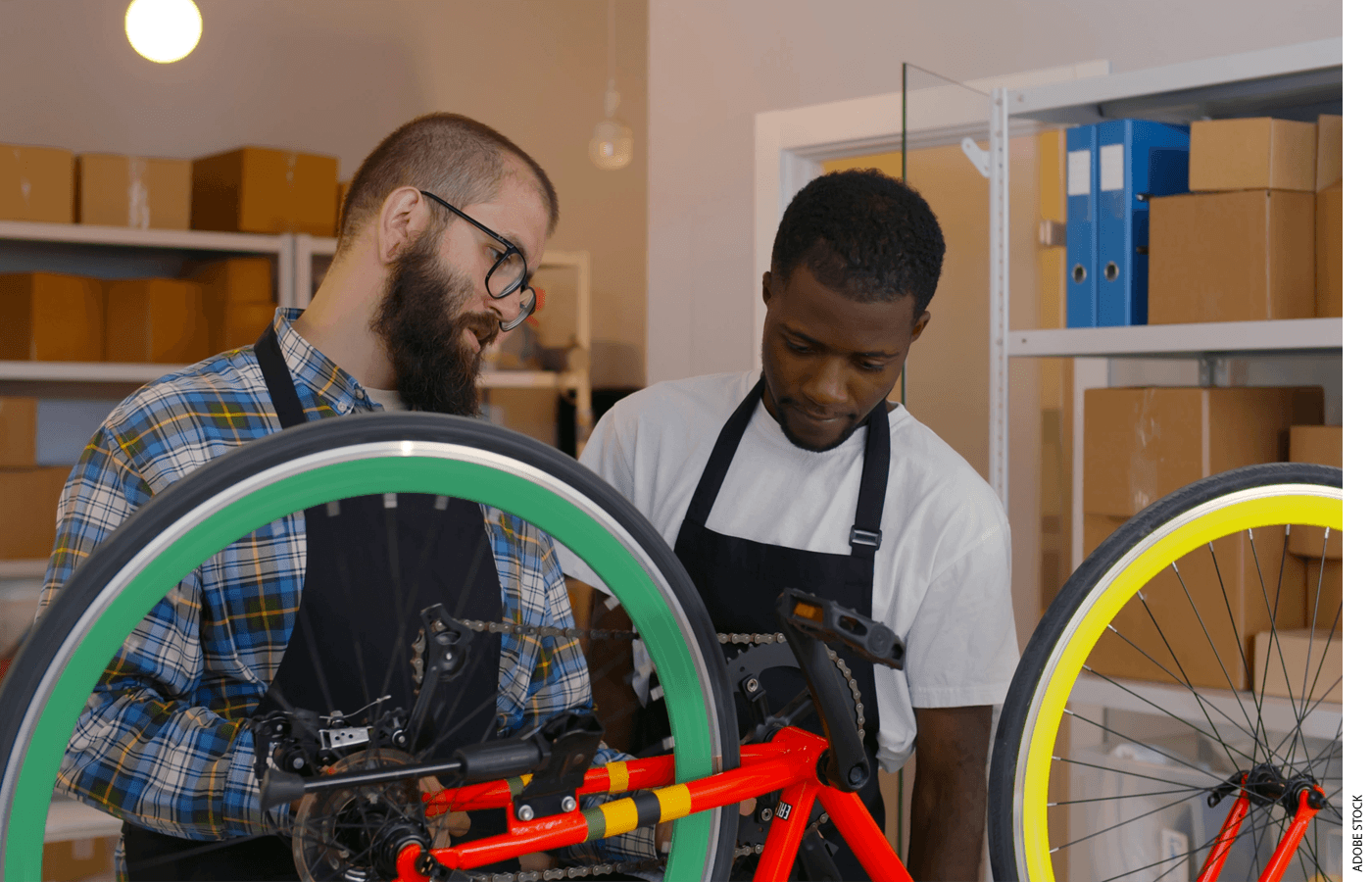
Opportunity pluralism keeps four-year colleges in the mix but elevates other routes—career and technical education, youth and adult apprenticeships, industry-recognized certificates, early college and career-academy high schools—as first-class options. Done well, these pathways are embedded in real workplaces, with mentors and supervisors who introduce young people to industry norms and contacts.
EdNext in your inbox
Sign up for the EdNext Weekly newsletter, and stay up to date with the Daily Digest, delivered straight to your inbox.
Consider the Cristo Rey network of Catholic high schools, which serves low-income students through a work-study model in which they work one day a week in entry-level jobs at partner companies. By graduation, a Cristo Rey student has a resume, workplace experience, and a network of professional contacts—assets many affluent students gain only through family connections. Or take Delaware Pathways, which connects high school students to coursework, paid internships, and industry mentors in fields from manufacturing to healthcare. These models don’t just teach; they build social wealth.
Apprenticeships—traditional and modern—may be the purest expression of opportunity pluralism. They embed learning within a relationship between novice and expert, providing a clear wage-earning role and a built-in network. The National Governors Association has documented how states are expanding apprenticeship programs, including those that allow students to split time between school and paid work, often graduating with both credentials and job offers. Public opinion is catching up: large majorities of Americans now say they view apprenticeships favorably and believe they can be more valuable for employability than a traditional degree.
What Leaders Can Do Now
If social capital is as central as the research suggests, then cultivating it can no longer be left to chance. There are concrete steps that educators, employers, and policymakers can take.
1. Treat relationships as outcomes, not accidents. Schools and colleges should ask every student, explicitly: “Who are the adults inside and outside this institution who know your goals and will help you pursue them?” They can then design to fill the gaps through advisory systems, structured mentoring, alumni networks, career-connected learning, and partnerships with local employers. A simple metric—such as whether each graduate can name at least three non-family adults they could call for career advice or a reference—would force institutions to track what they currently ignore.
2. Build social capital into every pathway. From certificate programs to community colleges to coding boot camps, programs should be judged not only on completion rates and earnings but also on whether they expand students’ networks. That means more internships and clinical placements, employer-led projects, meet-and-greets with industry professionals, and structured alumni engagement.
3. Require mentorship at work. Research suggests that when mentorship programs are voluntary, those who need them most are least likely to opt in. Companies that automatically assign mentors or “buddies” to new hires—and that invest in training mentors, not just naming them—see gains in productivity and retention. Leaders should also recognize and reward the employees who do the invisible work of facilitating these connections.
4. Invest in community “bridge builders”. Public-private partnerships can support organizations—youth clubs, faith-based programs, community colleges, libraries—that connect young people from lower-income backgrounds to professionals in other walks of life. Chetty’s research shows that regions with more cross-class ties enjoy greater economic mobility. Policy can make it easier for those ties to form, whether through mixed-income schools and housing, better transportation to extracurriculars, or deliberate cross-community programs.
From Accident of Birth to Deliberate Endowment
We rightly worry that a child’s zip code still predicts too much about their future. But the geography of opportunity is not just about school quality or job proximity. It is also about the density and diversity of relationships that surround a young person.
Social capital is a classic public good. When more people have it, everyone benefits from a more innovative, inclusive, and cohesive society. The risk today is that social wealth and social poverty harden into separate worlds—one in which opportunity flows through networks of trust and recommendation, and another in which talent goes unseen, unknown, and untapped.
We have the tools to change that: better-designed schools and pathways, smarter workplace practices, and community institutions that build bridges across social divides. The remaining questions are whether we will prioritize this work, and whether we can reframe students’ success based not only on what they know but also on who is willing to answer when they call.

Bruno V. Manno is a senior advisor at the Progressive Policy Institute and is a former U.S. Assistant Secretary of Education for Policy.
Suggested citation format:
Manno, B. (2026). “The Social Wealth Gap: Many students lack the social connections that lead to better outcomes. Schools can help make them.” Education Next, 26(1), 17 March 2026.