


The past few years have featured a lot of hand-wringing about chronic absenteeism and the insanity of extended pandemic school closures. Most everyone now agrees that academic growth, social development, and mental health call for kids to be in school and that it was the height of idiocy to keep schools closed while reopening coffee shops, bars, and salons.
I’m on board. Far too many students got out of the habit of regular attendance, and schools now need to work with parents to reestablish expectations and set things right. Just last week, my colleague Nat Malkus, perhaps the nation’s foremost crusader against chronic absenteeism, implored of state leaders, “Durable and dramatic reductions in absences will require a sustained pressure campaign to encourage students to attend school.”
Such a campaign requires education leaders to show they’ve taken to heart the hard lessons of the pandemic: prioritize learning, rebuild trust, and leave no doubt that schools are damn well going to be there for students and parents.
Well.

It’s hard to square the earnest concern with recent events around Washington, D.C., when deep-pocketed, acclaimed school systems locked a half-million kids out of school for over a week because a 12-hour snowstorm dropped six or seven inches of snow. Especially when Starbucks, local bars, and nail salons in those same communities were open and busy within a day or two.
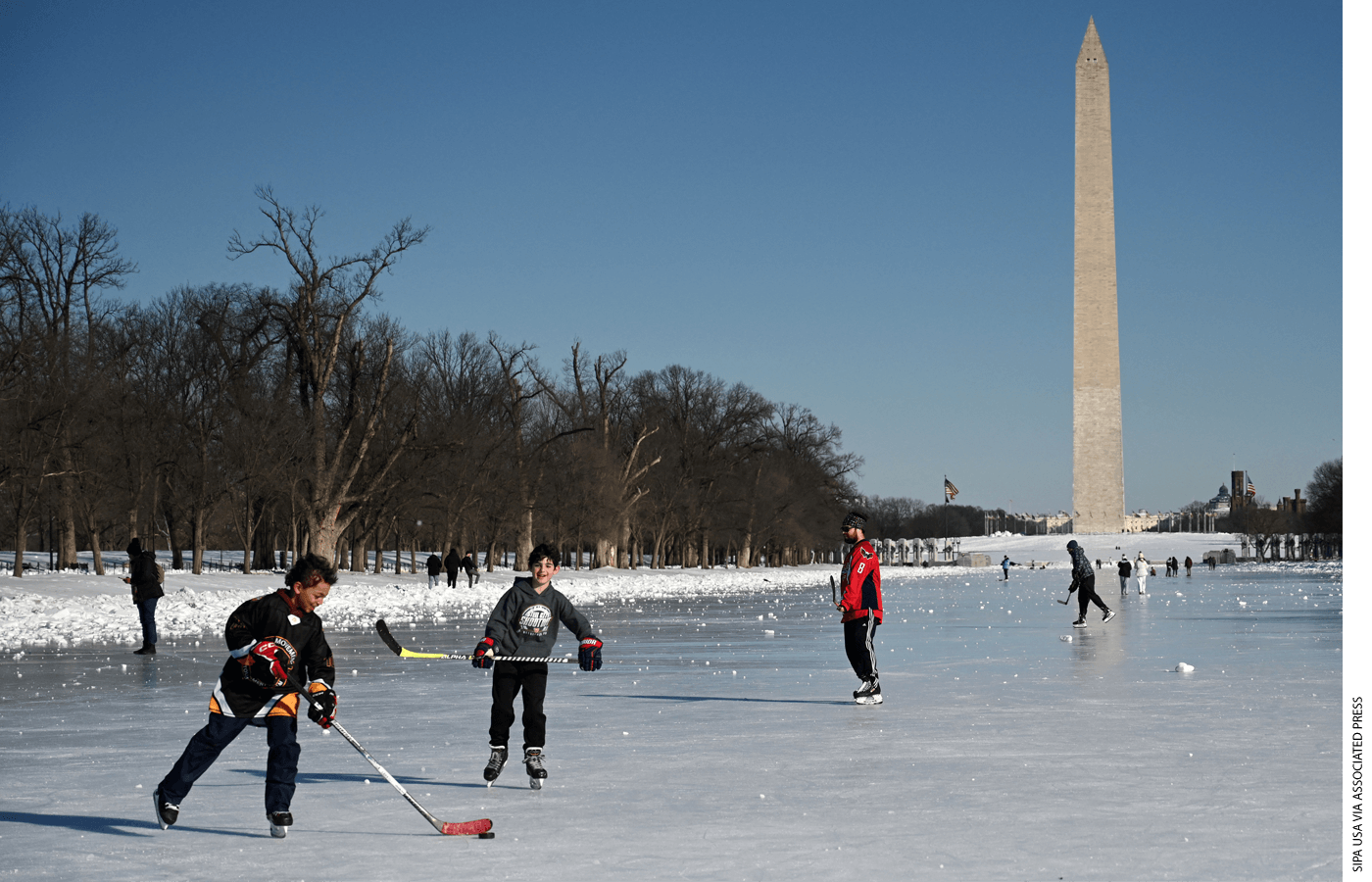
When the anticipated big snowstorm arrived to the East Coast on Sunday, January 25, it was expected to drop about a foot on the Washington region. It ultimately dumped about half that. But everyone expected schools would be closed on Monday. A blast of icy temperatures then raised doubts as to whether schools would reopen on Tuesday morning, 36 hours after the snow and sleet stopped. Schools remained closed. Then they kept kids out on Wednesday as well, even after the federal government and most local businesses had resumed operations.
By Thursday, most private schools in the area had reopened—but not the prestigious suburban school systems. In northern Virginia, Fairfax County had teacher workdays on Thursday and Friday, so 180,000 students were done for the week. (If you want to convince people you’re a clueless yokel, ask why Fairfax couldn’t have moved those teacher workdays to earlier in the week during the snow days, which would have allowed schools to reopen Thursday and Friday. The response is a look that roughly translates to, “Yeah, we value our students and all, but you can’t mess with teacher workdays!”). Arlington County, Virginia, kept the schools for its 28,000 students closed on Thursday and then had a teacher grading day on Friday. (Only a loon would suggest teachers might’ve been asked to do their grading on one of the four snow days that week).
The weekend arrived. Residents bustled to errands and activities, including gyms and indoor pools located inside several “closed” schools.
The next Monday rolled around. For those keeping track at home, we are now Big Snowstorm +8. Well, these nationally renowned school systems, including Fairfax, Arlington, and Montgomery County, Maryland, remained closed.
On Tuesday, day nine, the schools finally reopened . . . with a two-hour delay. But that wasn’t the end—no, not by a long shot. Loudon County, Virginia, opened two hours late on days 10, 11, and 12 as well, to allow for “improved visibility and slightly warmer temperatures as students travel to school.” Fairfax County followed suit. Montgomery County opened two hours late on day 10, given the modest possibility that a dusting of snow might fall. (Narrator: No snow fell.)
The message to students and parents was clear: When you need us, we may (or may not) be here for you. As education analyst Chad Aldeman, a frustrated resident of Fairfax County, put it:
In the wake of a snowstorm, some people were back at work almost immediately. Some parts of society continued to function normally. Starbucks was open, but the schools were closed. It reminded me of COVID all over again, when the truly essential industries had to find a way to keep operating. And public schools, despite all protestations otherwise, continued to act as if they are not essential to our daily lives.
What did district leaders have to say for themselves?
Well, in the early going, plenty of superintendents had great fun seizing upon snow day announcements as (cringe-worthy) opportunities to strut their TikTok stuff. Then, once public patience started to wear thin, district officials shrugged that there was nothing they could do.
Fairfax County superintendent Michelle Reid explained that the district has something like 45,000 bus stops, and it just wasn’t possible to clear them all in a week. “Could Fairfax have temporarily moved to a consolidated or streamlined route schedule?” asked no one.
Arlington County’s parks and rec crew did an impressive job of expeditiously clearing trails and community centers early in the week, but they don’t do school lots or bus pick-up points. Arlington superintendent Francisco Durán, whose motto is “Meet every student by name, strength, and need” and whose district covers only 25 square miles, didn’t appear to consider working across agency lines to get kids in school so that their strengths and needs could be met. I mean, with enough purpose, gumption, and urgency, remarkable things can be accomplished in the span of a week. Needless to say, these qualities were not on display.
Subscribe to Old School with Rick Hess
Get the latest from Rick, delivered straight to your inbox.
Lest we attribute this to tight budgets and scant resources, these are not cash-strapped school systems. Fairfax County is spending about $4 billion this year, or close to $23,000 per student. Arlington County is spending $26,000 per pupil; Loudon County, $25,000; and Montgomery County close to $21,000. Meanwhile, private schools around the area were bringing kids back on Thursday, after three days out.
More than one wag noted how oddly familiar it felt to see private schools finding ways to open their doors while local public schools remained closed.
While parents were furious, the folks who reliably thunder about chronic absenteeism seemed oddly untroubled. Indeed, some experts had great fun wading deep into wonky discussions of whether or not the pro forma bit of virtual schooling that some districts offered was wholly useless.
What did we hear from those educators who lambaste parents for letting kids miss school for sports tournaments or pull them out the Monday and Tuesday of Thanksgiving week?
Crickets.
Now, I’ll concede all the usual provisos regarding safety, liability, second-guessing, and all the rest. That’s all legit.
But this is a two-way street. Officials can’t insist that parents bend over backwards to conform to the school district’s schedule and then perform like this. Just last fall, Fairfax County superintendent Reid was bragging that “more than half of our schools are focused on attendance in their School Improvement and Innovation Plans.” Arlington County superintendent Durán sagely advises that the challenge of chronic absenteeism requires “a partnership between our schools, our families, and our students.”
You know what? All that rhetoric about putting students first and partnering with families was just put to the test, and the schools failed, big time. When schools shut their doors, working parents are left to their own devices. Students, too, are left to their devices—isolated and glued to phones and screens.
When it was time to put up or shut up, the highly paid leaders of some of our nation’s most prominent school districts just messed up.
Frederick Hess is an executive editor of Education Next and the author of the blog “Old School with Rick Hess.”