

The Covid-19 pandemic led to an unprecedented disruption to schooling worldwide, causing learning losses that students in many places have yet to overcome. The setbacks children experienced could damage their future job prospects and earning power and hamper their successful integration into complex contemporary societies. If educators and policymakers hope to get students back on track, they will need a full and accurate understanding of the causes of pandemic-era learning loss.
So far, most analyses of this learning crisis have focused on the duration of school closures. The length of the shutdowns varied enormously from country to country and, in the United States, from state to state, and one might well predict that the extent of learning loss would rise in proportion to the duration of school closures. However, the set of causal factors in play is actually much more complex, and a close look at testing data reveals that pandemic learning declines are not highly correlated with closure length. Analyses conducted at a more granular level reveal that many policies enacted in response to the pandemic not only aggravated learning losses during the shutdowns, but also in fact extended the impact after schools reopened.
Policymakers mostly tried to justify these policies as measures that would preserve equity and student wellbeing under the challenging circumstances of remote learning. In practice, these priorities often served to reinforce progressive approaches to education that treat equity as the main goal, decry student assessments as discriminatory, and downplay the importance of acquiring academic knowledge and skills in favor of so-called competencies. Critics of this approach, including this author, charge that these policies lead to a lowering of standards that ultimately hampers the success of all students and even widens achievement gaps.
These patterns were already evident in the 2022 Programme for International Student Assessment (PISA) results, which are the focus of this essay. They became even more pronounced in PISA 2025, which showed scores continuing to fall globally, with countries that have pursued these more progressive policies dropping the farthest.
If we are to overcome the delays in learning that students still suffer, we need to understand how these policies contributed to learning loss in the pandemic era and identify which of them are still in place.
An International Perspective
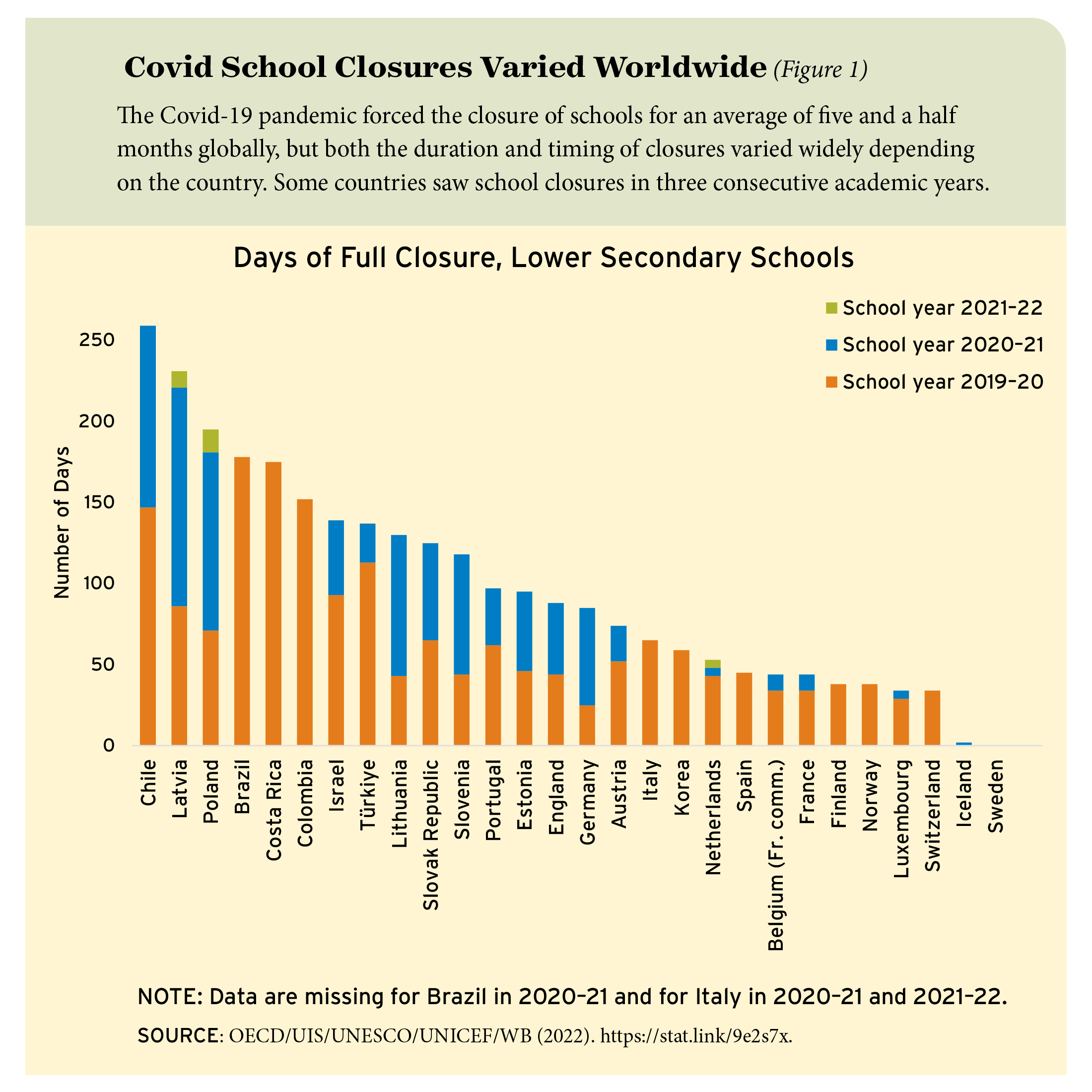
School closures began in March 2020, when the World Health Organization declared Covid-19 a global pandemic. While some countries reopened schools at the beginning of the next academic year, others kept them closed much longer. UNESCO data show that schools around the world were closed for an average of five and a half months—equivalent to two-thirds of an academic year. But the length of time varied widely; in many countries in Latin America and the Caribbean, for instance, nationwide closures lasted between six and eight months, while in other regions, such as Europe, schools in most nations closed for shorter periods (two and a half months, on average). In some countries, successive lockdowns resulted in school closures in three consecutive academic years (see Figure 1).
Cross-national standardized tests allow researchers to compare student performance among countries and observe trends over time. These assessments include the Progress in International Reading Literacy Study (PIRLS), which gauges the reading achievement of 4th graders; the PISA, which tests 15-year-olds in reading, math, and science; and the Trends in International Mathematics and Science Study (TIMSS), administered to 4th and 8th graders. Post-Covid results from the 2021 PIRLS, the 2022 PISA, and the 2023 TIMSS document broad learning losses over the course of the pandemic, generally ranging from the equivalent of half to a full year of schooling. Disadvantaged students, immigrants, and linguistic minorities were disproportionally affected by the disruption because, among other reasons, many of these students had limited access to computers and the Internet at home and more difficulty than their peers in accessing online learning.
Why School Closures Don’t Tell the Whole Story
Students in countries with more prolonged school closures did lose more ground, on average, but the relationship between closure duration and declines in average student performance as measured by international surveys is quite modest. Other factors appear to have played a part in either magnifying or reducing the impact of the shutdowns.
Looking country by country reveals that, although most implemented nationwide school closures, not all saw drops in performance. On the 2021 PIRLS (testing reading among 4th graders), two-thirds of participating countries experienced statistically significant declines; in the TIMSS 2023 cycle (science and math in 4th and 8th grades), about a quarter of the countries did; and on the 2022 PISA, roughly half of the countries saw falloffs in reading and math (the focal domain in that testing cycle), while science performance did not drop significantly.
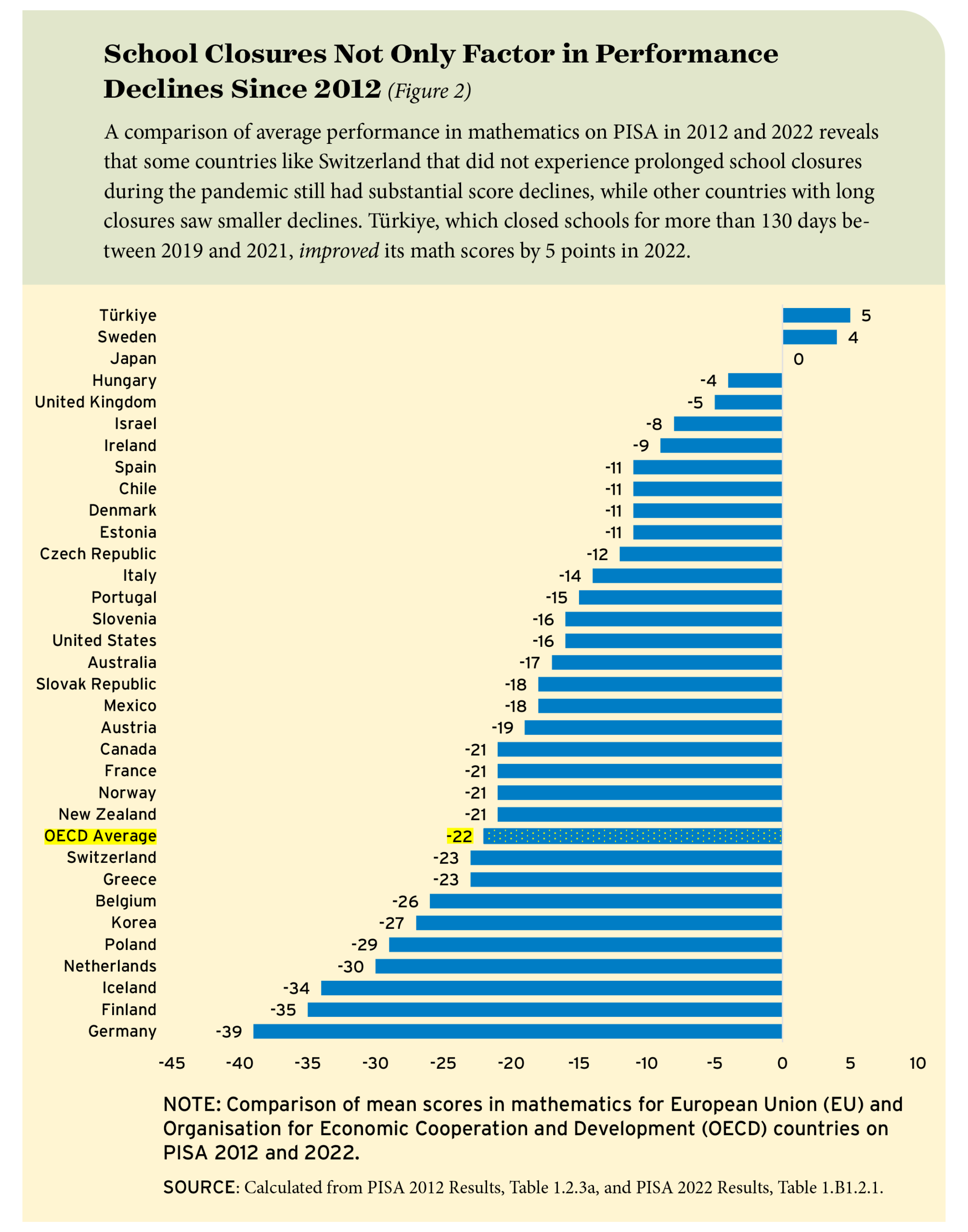
When we consider only European Union and Organisation for Economic Cooperation and Development (OECD) countries and examine the changes between PISA in 2012 (the latest previous cycle in which math was the focal subject) and 2022, we observe unexpected findings (see Figure 2).
Some countries that closed schools for the shortest periods of time (fewer than 50 days), such as Finland and Switzerland, underwent some of the greatest performance drops. In contrast, Chile did not undergo great losses despite closing schools for over eight months, and England did not see significant declines despite school closures taking place over two academic years and amounting to almost 100 days. To understand why some countries fared better than others over the past decade, we need to examine other policies governments implemented.
Differences Between Countries: Readiness and Responsiveness to Covid
Most countries transitioned to distance learning at home by activating online learning; its success varied enormously both between and within countries due to differences in preparedness. Key factors included the extent to which teachers and students had been trained to integrate technology into the learning process and students’ access to computers and the Internet at home.
As schools remained closed through spring 2020, many governments canceled national student assessments. According to UNESCO, only 20 percent of countries maintained high-stakes exams in upper secondary school (where they are most common), though this figure increased to 50 percent in the 2020–21 academic year. Typically, schools replaced standardized high-stakes exams with subjective assessment by teachers, which tended to be more lenient. Many school systems also reduced the amount of curricular content they expected students to learn, in an effort to help them adjust to and minimize the potential stress of remote learning.
After schools reopened, other problems emerged. In countries such as the United States and the UK, rates of chronic absenteeism increased markedly and remain a serious problem. Schools faced the challenges of identifying which students had incurred the greatest losses and implementing measures to bring them up to speed. Some countries offered tutoring to those lagging behind and reinstated standardized external exams as a check against the rampant grade inflation that had resulted from teachers’ evaluations.
In contrast, policymakers in other countries used the crisis as an opportunity to accelerate policies which, in theory, were aimed at preserving equity and student wellbeing. Such policies backfired because they lowered standards for all students and enabled governments to default on their responsibility to rectify learning losses. In these countries, the delays in learning were not overcome after Covid; in some cases, they became more profound.
No study to date has sought to analyze how government policy choices worldwide after the school closures have either prevented and overcome pandemic-era learning losses or magnified them. Here I take a first step toward that goal by looking in detail at the policies implemented by two categories of outliers—countries that closed schools for short periods of time yet experienced major losses and those where no major learning losses occurred despite long closures.
Viral Policies: How Progressive Ideology Made the Learning Crisis Worse
Before Covid-19, many countries were already experiencing stagnation or declines in student performance. The pandemic’s disruption exacerbated these problems. This seems to be the case with Finland, a country hailed as a top performer when PISA was first administered in 2000, and one that observers have continued to regard as an education superpower despite the declines revealed by ensuing testing cycles there. The math performance of Finnish 15-year-olds has been deteriorating since 2006, with the proportion of low-performing students swelling from 7 percent in 2000 to 25 percent in 2022. According to PISA estimates from 2012 to 2022, students’ performance declined by the equivalent of an entire school year in all three tested subjects—reading, math, and science.
Finnish policymakers and OECD analysts have been puzzled by the long-term decline in performance and the major drop during Covid. At the PISA 2022 launch, the Finnish Ministry of Education and Culture called the downward trend “extremely disconcerting.” Meanwhile, OECD’s director for education and skills Andreas Schleicher, who is widely regarded as the architect of PISA, said in an interview with the Financial Times that “when [PISA] first came out, we thought Finland was the recipe for success, but 20 years later we do not know whether those things have been part of the solution or part of the problem.” These statements reveal a lack of understanding about the real causes of the country’s ongoing decline. This is worrying, mainly because during most of this time the OECD and others have continued to praise Finland as an example for other countries. In the same interview, Schleicher did identify one common mistake: “The lesson for me is that we have to achieve student wellbeing not at the expense of academic success, but through academic success,” he wrote.
Some authors, including myself, have warned of the dangers of ignoring Finland’s decline over time, pointing to several contributing factors: maintaining a very “inclusive” model (that is, treating all students equally) as inequalities in Finnish society have increased; relying on weak accountability systems (no national standardized exams except at the end of secondary school); allowing extensive school autonomy despite clear signs this approach was producing increasingly poor results; and narrowing the content knowledge of the curriculum. It should come as no surprise that, when the Covid disruption hit such a flimsy structure, achievement fell sharply despite short school closures.
Portugal had relatively short school closures in 2020, although a second lockdown led to a new wave of shutdowns in 2021. In both reading and math, Portugal saw learning losses twice as large as those in Ireland and Estonia, countries with similarly brief school closures. Recent achievement trends in Portugal differ sharply from those in Finland. In Portugal, a series of reforms that implemented national standardized exams, improved teacher training, and reinforced the content knowledge of the curriculum led to clear improvements in student performance between 2006 and 2015. However, after the government changed from a conservative to a progressive coalition in 2015, these reforms were reversed, and the 2018 PISA test results showed achievement declines. The new government also implemented a measure limiting grade retention to “exceptional circumstances.” During and after Covid, standards were further relaxed while students’ grades were inflated, creating a distorted picture of rising student performance contradicted by results on international assessments.
Spain, my own country, merits a more detailed examination since it provides a vivid example of policies intended “to leave no one behind” that in practice failed everyone. Spain is among the countries that closed schools for fewer than 50 days and, within this group of nations, it suffered the second-largest drop in performance, after Finland. The magnitude of the decline in Spain rivals countries that closed schools for much longer.
Before Covid, all international surveys showed that student achievement levels in Spain were below the OECD average and had been stagnant for decades. Improvements began around 2015–16 during the implementation of an education reform law, Ley Orgánica para la Mejora de la Calidad Educativa, or LOMCE, that mandated changes similar to the contemporaneous reforms in Portugal. When the conservative government lost power in 2018, the new left-wing coalition undid the reforms. This reversal coincided with a pre-Covid decline in student outcomes on international tests that continued during and after the pandemic. Déjà vu.
But the Spanish system also contains some unique features that cast light on the exacerbated impact of Covid when progressive policies were already in place or implemented in response to the pandemic. Spain decentralized its education system in the ’80s and ’90s after the nation’s transition to democracy and, as a result, regions became responsible for the management of schools. However, no national or regional examinations with common standards were established, despite the fact that degrees are issued by the national Ministry of Education. LOMCE was the first effort to implement national standardized tests. This legislation faced fierce criticism: Regional authorities argued that it represented an attempt to recentralize education, unions refused to accept assessments that could indirectly serve to evaluate teachers, and political parties on the left argued that the tests discriminated against students from disadvantaged backgrounds, who tended to perform poorly. After two years of implementation, and despite evidence of improvement on international assessments, the national exams were scrapped.
During Covid, the central government declared a state of emergency, which empowered it to make uniform decisions for all 17 Spanish regions. The government’s stated priorities in education were “leaving no one behind” and enhancing student wellbeing. To achieve these goals, policymakers lowered standards for all students rather than providing more support for those who were struggling. Curricular content shrank, students progressed to the next grade level even if their grades in specific courses were unsatisfactory, and those who failed several subjects still obtained the national education degree at the end of lower and upper secondary education. (In most of Europe, lower secondary education runs from ages 11 to 15, while upper secondary covers ages 16 to 18.)
What was meant to be a temporary measure turned into “the new normal” with the approval of a new education law, LOMLOE, at the end of 2020. This reform made grade repetition exceptional, not because it spurred measures to ensure that all students reached high standards, but rather because students who failed several subjects (according to their teachers’ criteria) could move on to the next grade and eventually obtain the national degree.
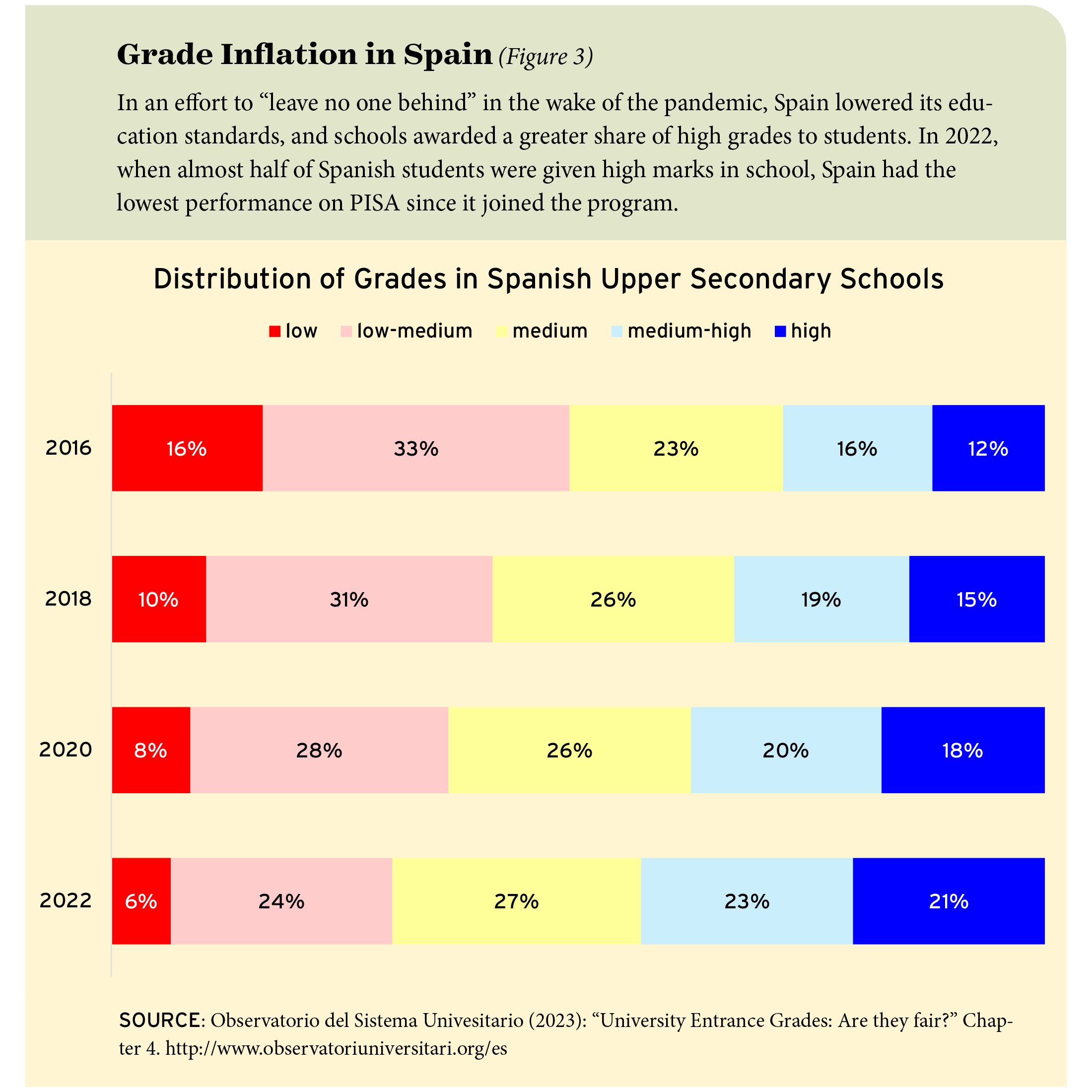
Widespread grade inflation ensued. As student performance declined on international exams conducted between 2021 and 2023, teachers in Spain handed out increasingly lofty grades (see Figure 3). The proportion of students earning low grades steadily decreased, reaching its lowest level—6.5 percent—in 2022. Meanwhile, the proportion of students receiving the highest two grades swelled from 27 percent in 2016 to over 40 percent in 2022. That same year, Spanish students logged their lowest performance on PISA since the country joined the program in 2000.
Now, under the new rules, the gap between teachers’ assessments and students’ performance on international assessments has widened as never before. The disconnect between actual student knowledge and teachers’ evaluations will harm students who underperform—those who need support to catch up. Unfortunately, the denial of underperformance creates a mirage that prevents implementation of policies to address the problem. This self-inflicted blindness affects students throughout the education system, but it hurts disadvantaged students the most. The belief in education as an engine of social mobility in Spanish society has become a dangerous delusion.
Since all 17 regions closed schools for the same length of time, they present a “natural experiment”: The uniform duration of school closures eliminates a confounding factor, making it easier to sort out which policies may have contributed to the varying degrees of decline from region to region.
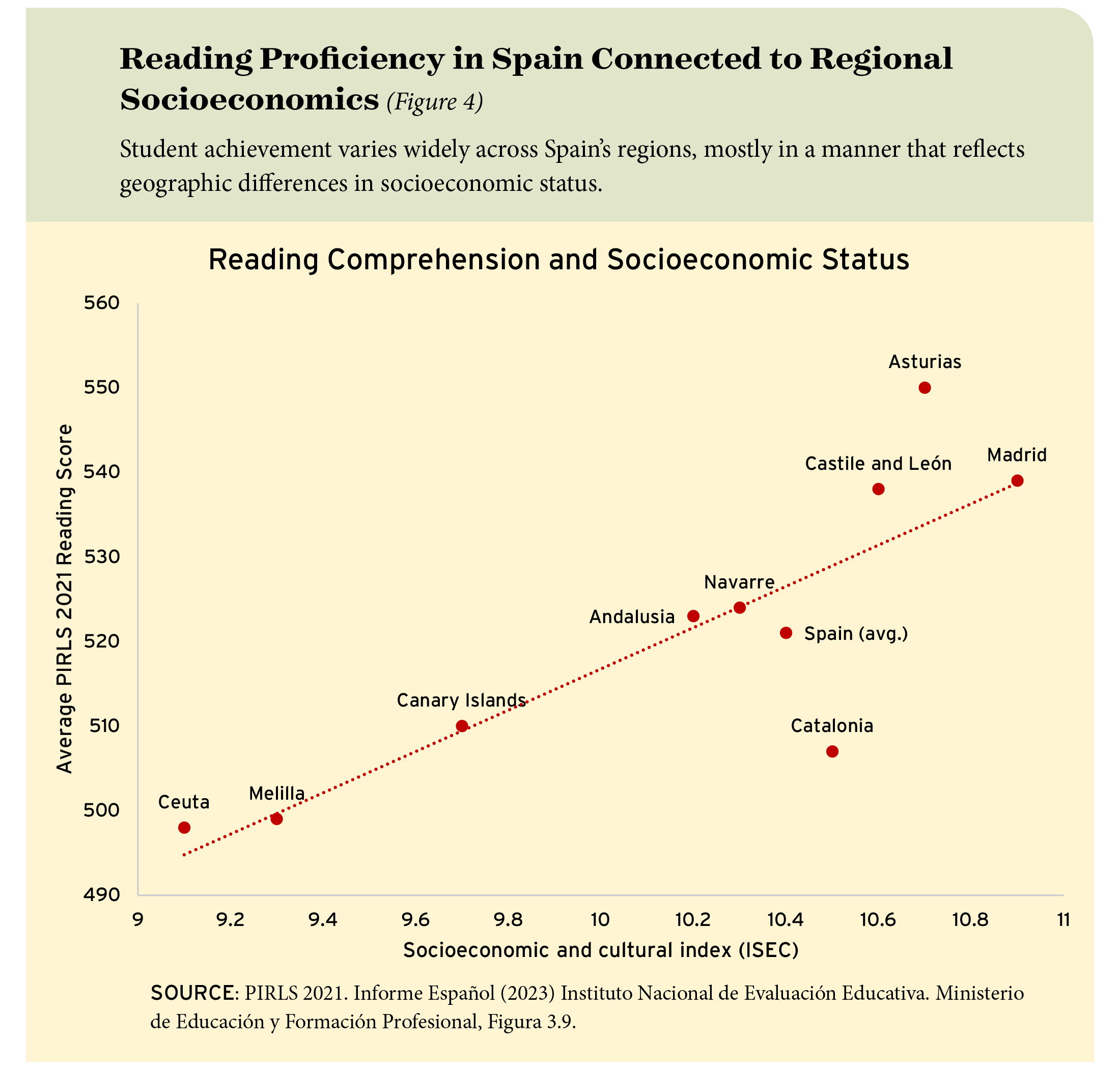
International assessments show that differences in socioeconomic levels explain much of the variation in student performance across regions (see Figure 4). However, students in some regions within Spain (such as Asturias and Castile and León) score consistently above expectations, and students in other regions score below. The main outliers are the Basque Country and Catalonia, affluent regions that showed unexpectedly low performance in recent testing cycles.
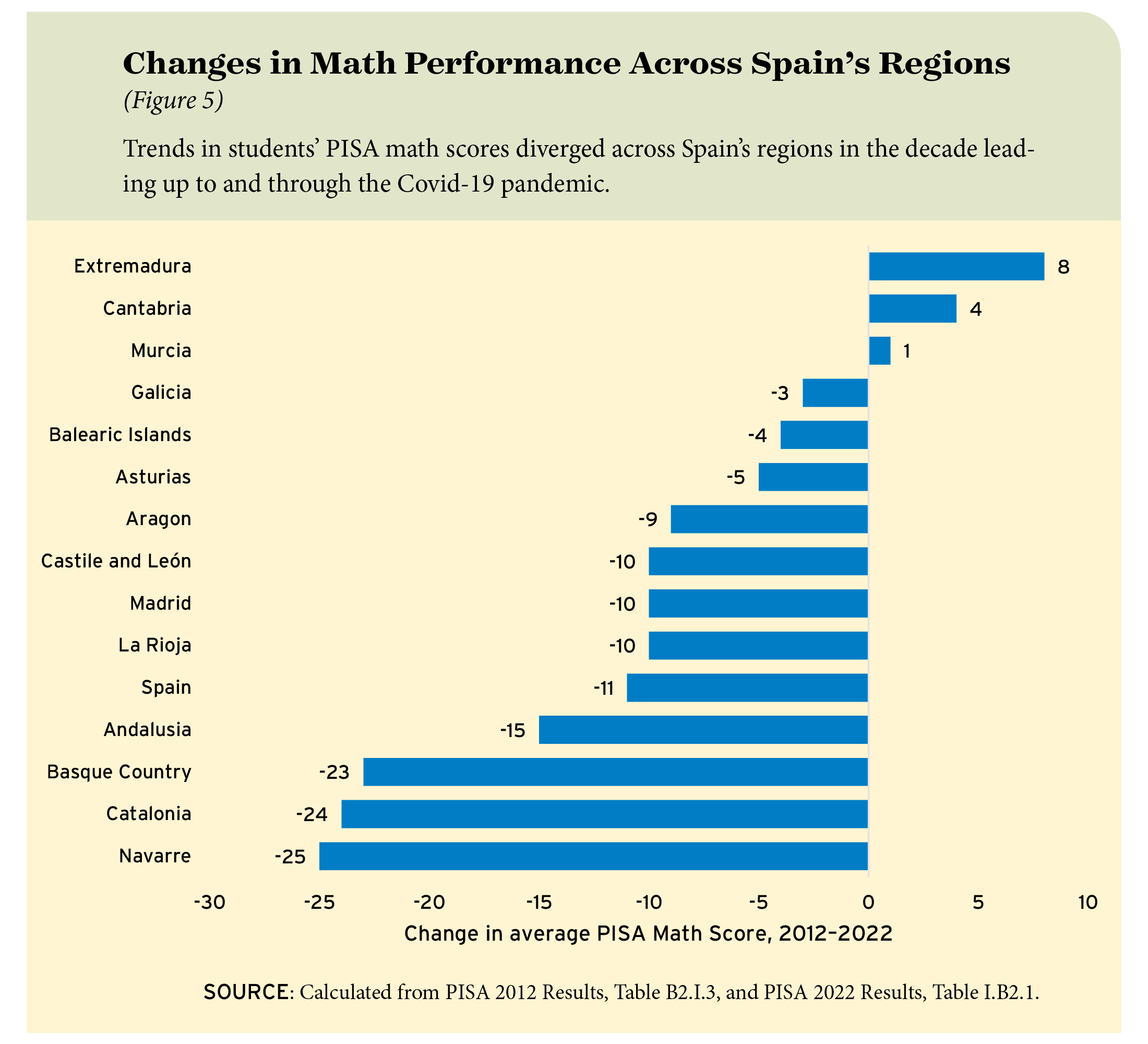
In the case of PISA, if we compare the 2022 results with those in 2012 (the most recent previous cycle in which math was the main domain), the results show that eight regions experienced no significant changes over those 10 years, while eight saw substantial declines. The Basque Country, Catalonia, and Navarre showed the largest falloffs (see Figure 5).
In short, although all regions closed schools for the same length of time, some regions suffered learning losses while others did not. The lack of national exams allows regions to set their own standards rather than adhering to a common set. In this context, regions differed in the extent of grade inflation and by how much they reduced curriculum content.
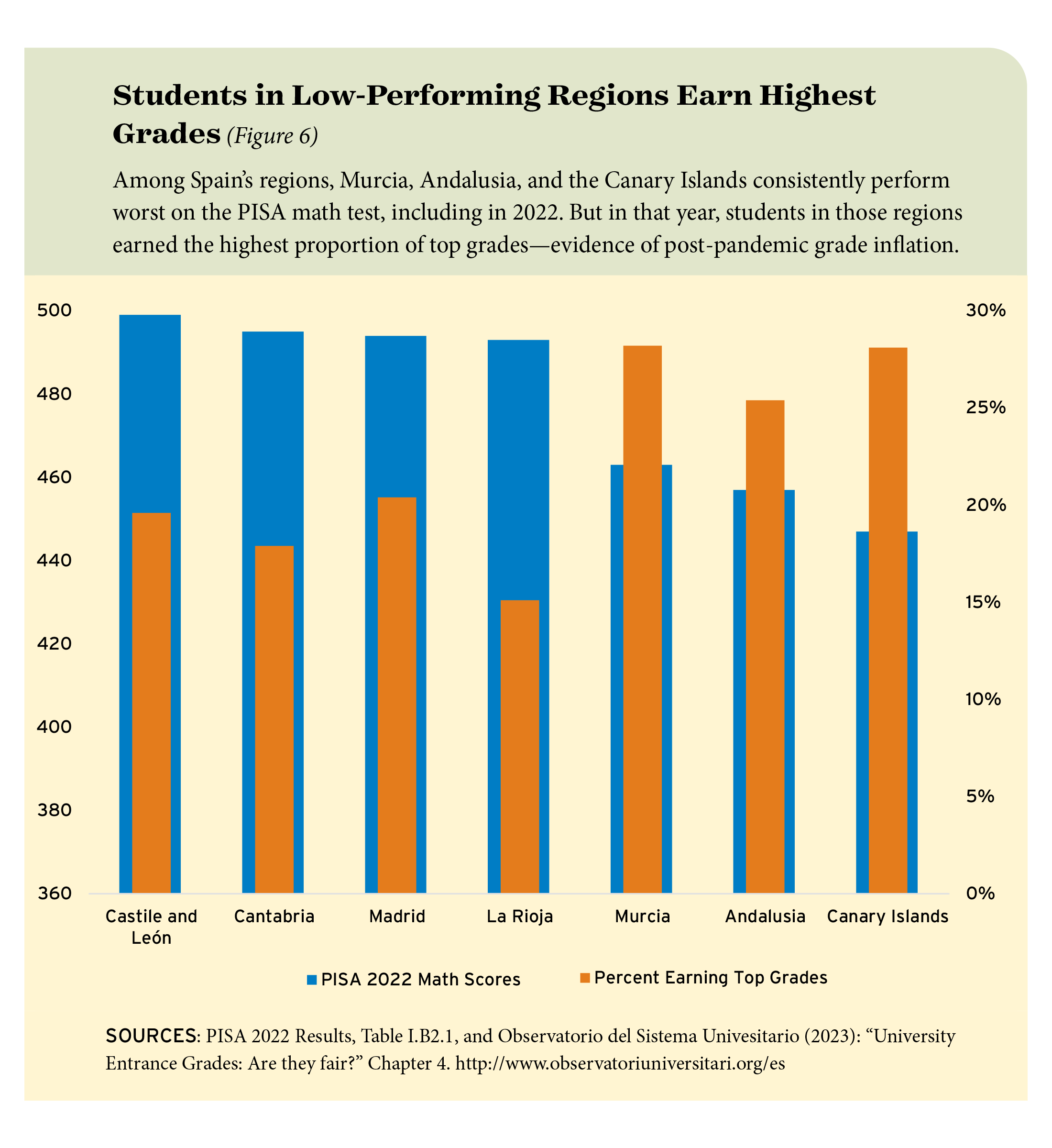
One can identify two distinct groups of low-performing regions. The first includes regions in southern Spain—such as the Canary Islands, Murcia, and Andalusia—that have consistently recorded low results on international assessments, reflecting their lower socioeconomic levels. In these regions, grade inflation has risen sharply since the latest reform law: About 30 percent of students receive top grades in upper secondary school, compared to 15 percent in high-performing regions. Clearly, schools in lower-performing regions responded to the pandemic by giving students higher grades, while those in higher-performing regions did not (see Figure 6).
The second group shows a different pattern. It includes two wealthy regions—the Basque Country and Catalonia—former top performers that have experienced sharp declines in the latest testing cycles. Both regions have strong pro-independence movements and have used education, particularly language policy, as a lever to strengthen regional identity. Regional governments have recently enforced rules mandating that instruction take place mainly in Catalan or Basque, while Spanish is treated as a secondary language. Navarre has followed similar linguistic policies recently and also shows a sharp decline.
As noted earlier, members of linguistic minorities tended to incur greater learning losses during the school closures. In these regions, this dynamic took a distinctive form: Spanish-speaking students struggle to learn in a school language different from the one they speak at home. These difficulties are more pronounced with the Basque language, which differs markedly from Spanish. Research shows that Spanish-speaking students (who represent a substantial share of the student population in these regions) suffer disproportionately under this policy but that, as the model expanded, overall performance declined as well. The school shutdowns magnified the impact since Spanish-speaking students struggled to learn remotely in Catalan or Basque, and their families often could not support them as they worked in these less-familiar languages. Thus, regional language policies seem to have harmed student performance.
Vaccines Against Learning Losses: Policies That Enabled Students to Overcome Crisis
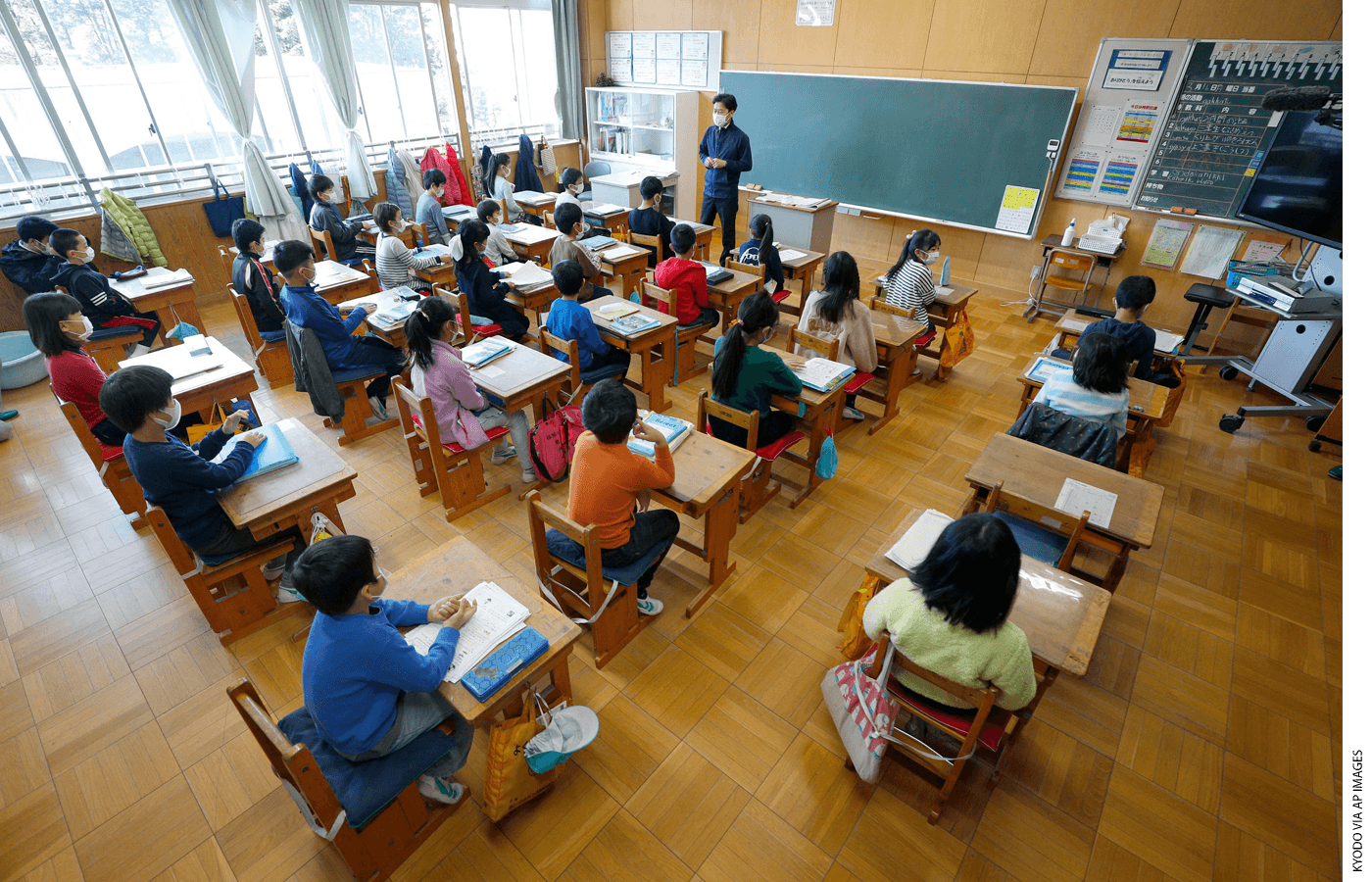
Countries that that either improved student outcomes (Singapore), experienced minimal losses (Japan), or remained top performers despite the declines (South Korea) did so despite school closures lasting two to three months. These systems were already high performing, with strong teachers, content-rich curricula, and robust school accountability. During and after Covid, their policies contrasted sharply with those described earlier: Schools maintained high standards and high expectations for all, and families played an active role in supporting learning. Teachers and students were already familiar with online tools, and national e-learning platforms enabled an early shift to hybrid instruction. These societies also share a strong cultural belief that success requires hard work, so rigorous curricula were maintained, strong accountability systems stayed in place, and students were accustomed to taking high-stakes exams. Singapore and Japan did not cancel their high-stakes exams, viewing this as the fairest policy for students. In Singapore, lower secondary schools group students according to their academic performance, thus reducing classroom heterogeneity and facilitating learning progress. This tracking strategy became even more important after the Covid-induced school closures widened achievement gaps.
EdNext in your inbox
Sign up for the EdNext Weekly newsletter, and stay up to date with the Daily Digest, delivered straight to your inbox.
England underwent successive lockdowns during the pandemic, causing extended disruptions to school operations yet no major effects on student learning. The country implemented a set of targeted policies after Covid, including assessment of students to identify those lagging behind and establishing effective tutoring programs to support them. As schools reopened and national evaluations were reinstated, the government aimed to reduce grade inflation by setting increasingly demanding targets for schools until they reached pre-Covid grading standards. English secondary school students showed no losses on the PISA math assessment between 2012 and 2022, and 4th-grade readers also held steady on the 2021 PIRLS, even though school closures lasted a long time by European standards.
In the United States, the duration of school closures varied widely among states. U.S. Education Secretary Linda McMahon remarked that the scores on the 2024 National Assessment of Educational Progress (NAEP) reflected a “devastating trend” of “historic lows,” noting that nearly half of high school seniors had tested below basic levels in reading and math. Exceptions included states such as Mississippi, Alabama, Louisiana, and Tennessee, where student performance on the NAEP improved. These states’ post-Covid policies echoed those of the countries that managed to avoid learning losses during the pandemic. They implemented evidence-based teacher training, curricula rich in content, standardized assessments linked to student promotion or interventions (including the possibility of grade retention), and more-demanding school-accountability systems. These accountability regimes include consequences for districts that don’t meet targets: States reduce the autonomy of such districts and impose mandatory plans to overcome the delays in student learning.
What Works and What Doesn’t
The PISA 2025 results released earlier this month revealed the same patterns of performance for all countries surveyed in this essay, with some becoming even more pronounced. When comparing national mean scores to those of 2015—the last year when, like 2025, science was the main testing domain—we see more troubling signs for the countries that have retained their progressive education policies. Finland declined 27 score points in science and 52 in reading (the equivalent of more than two years of schooling, according to OECD estimates). For Portugal, the declines were 19 points in science and 36 in reading (nearly two years of schooling), and Spain saw drops of 16 points in science and 45 in reading (over two years of schooling). Conversely, Singapore, South Korea, and Japan remained among the top 10 performers globally in science, reading, and math, with England joining their ranks in 2025.
It is increasingly clear that the progressive policies implemented to “leave no one behind” hurt disadvantaged students and poor regions the most and have sapped the power of education as an engine of social mobility. Covid and the resulting school closures generated a disruption that magnified the impact of these policies. However, mounting evidence shows that other policy choices, though harder to implement and often criticized as unfair, actually benefit students: content-rich curricula, strong accountability mechanisms, effective teacher training, and standardized external exams that define common goals and expectations for all students. These policies commonly face strong opposition from unions and sometimes from parents. But operating on the notion that equity and student wellbeing can and should be achieved at the expense of academic performance will hurt future generations, who will suffer dire consequences.
Montse Gomendio is a research professor at the Spanish Research Council. Formerly, she served as Spain’s secretary of state for education, vocational education and training, and universities and was deputy director for education at the OECD. Her latest book is Dire Straits—Education Reforms: Ideology, Vested Interests and Evidence, co-authored with José Ignacio Wert.
Suggested citation format:
Gomendio, M. (2026). “How Viral Education Policies Have Extended the Pandemic’s Impact: Some countries managed to avoid the worst of the global student achievement crisis. The rest of the world should learn from them.” Education Next, 26(3), 29 September 2026.