


America’s higher education system is going through a wrenching period right now, one that is not likely to end anytime soon. While the Trump administration’s actions against elite institutions capture most of the headlines, there are much bigger and broader issues roiling the sector as a whole. Number one on the list: the “demographic cliff” enrollment crisis that is predictably leading some schools to close.
The next decade looks to be very difficult for institutions already teetering on the edge, starting but probably not ending with liberal arts colleges in the Northeast (see “Colleges Are Closing. Who Might Be Next?” research, Vol. 25 No. 4). That’s mostly because of the baby bust that started in the wake of the Great Recession of 2008 and has only accelerated since. The Class of 2029—today’s college freshmen—are part of the largest birth cohort in American history. But every cohort born after them gets smaller. Just look at recent enrollment data, which indicates there are about 15 percent fewer kindergarteners in America’s public schools today than high-school seniors. This problem isn’t going away.
So, what’s a college president to do? Downsize, or simply close up shop? Here’s another thought: Expand—and bring in the trades.
College-Career Connections
In recent years, the public opinion pendulum has swung hard against the “College for All” mindset the country embraced in the Bush-Obama era (see “Career and Technical Education for All,” What Next, Winter 2025). Young people are getting the message that the college wage premium mainly flows to the two-thirds of students who actually graduate, and that certain majors and schools aren’t worth all that much more than a high school diploma. As a new paper by Joshua Goodman and Joseph Winkelmann illustrates, students who likely would have struggled academically in college are increasingly, and wisely, choosing to work instead.
Our populist era has produced a lot of nonsense, but one positive aspect is a newfound respect for people who work in the skilled trades and other fields that don’t require four-year degrees. While that shift should certainly make higher education administrators nervous, it need not be an existential threat—if leaders are willing to think creatively.
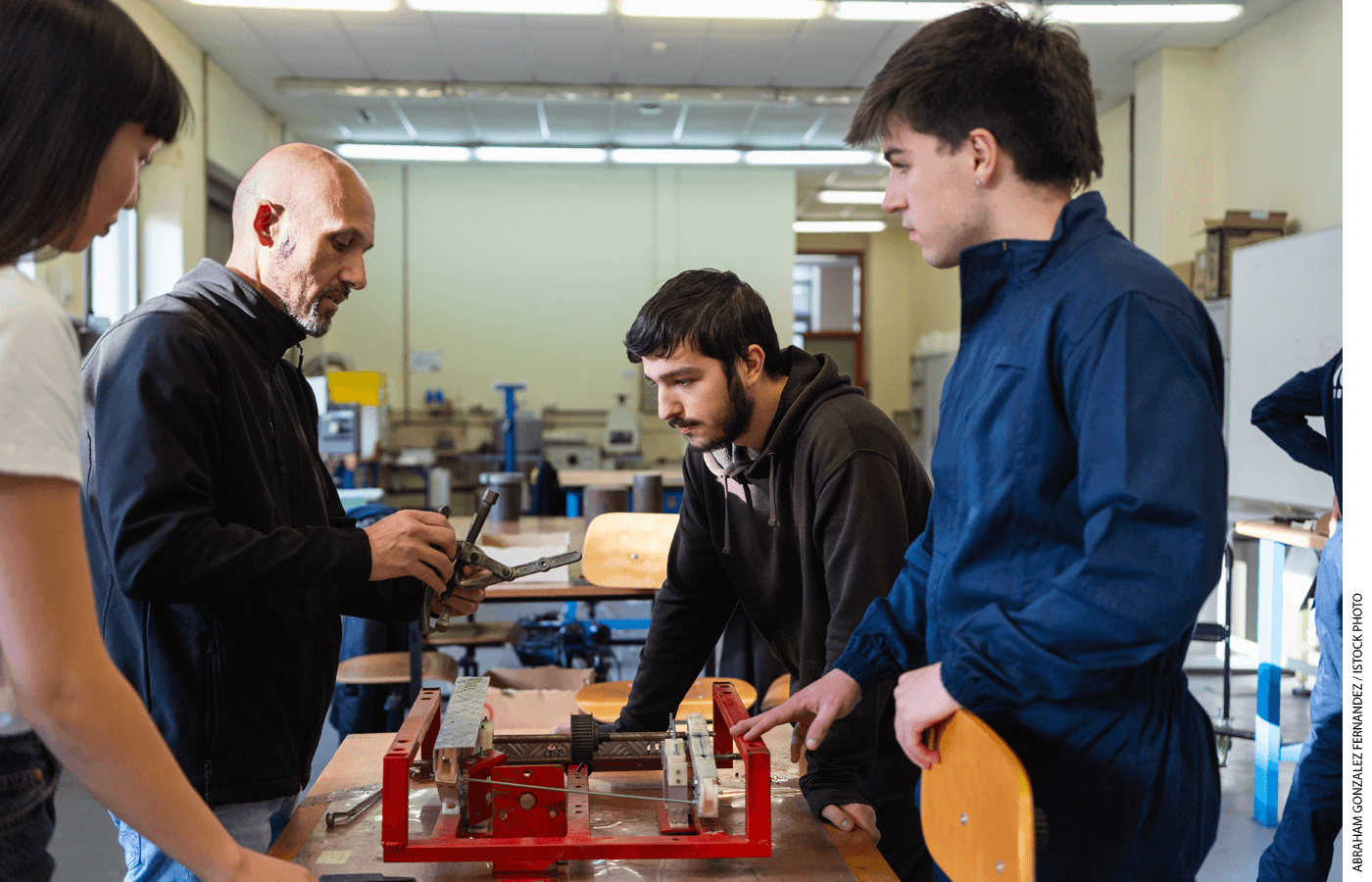
Specifically, how about creating residential colleges that focus on the trades? Or why not expand the offerings of four-year colleges and universities to include career and technical training, with programs that result in two-year degrees or even certificates as part of their offerings?
The conventional wisdom is that few students would choose such programs because they would be more expensive than training locally and living at home. That might be true. But cost is only one factor for young people making decisions about what they want to do with their lives after high school. And there are plenty of families with the means to pay for room and board.
America is an extraordinarily rich country, with a third of families making $150,000 or more, and most in this upper-middle-class category aspire to send their sons and daughters off to college. But some of those children are either not interested in traditional academic programs or not particularly well suited for them. Those who go to college anyway often end up dropping out for lack of academic preparation or motivation—which means starting their life feeling like a failure, back home in their childhood bedrooms or parents’ basements.
What if these kids had another option—namely, a traditional college experience, with football games and all the rest, but to study a trade instead of history, business, or anthropology? In some places, these programs already exist—and they’re growing.
EdNext in your inbox
Sign up for the EdNext Weekly newsletter, and stay up to date with the Daily Digest, delivered straight to your inbox.
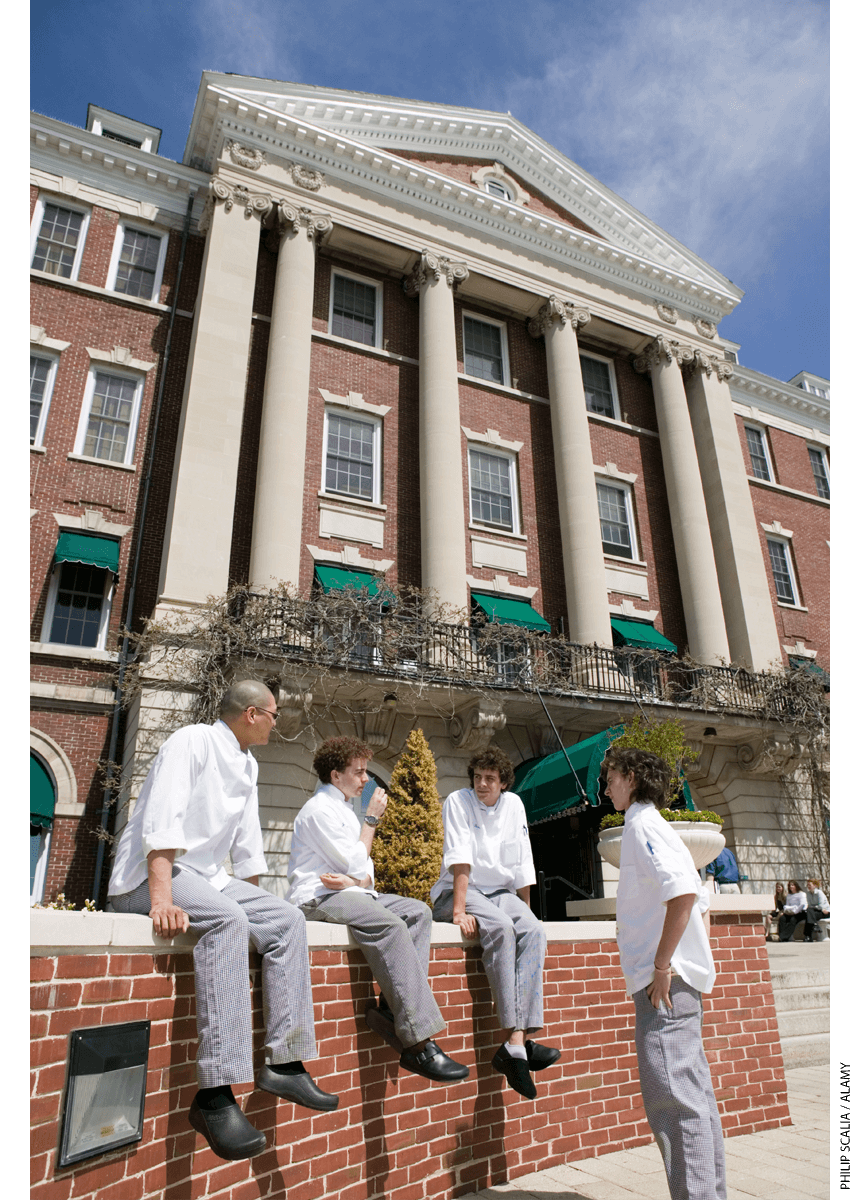
A handful of institutions have embraced the “residential trade school” idea, including Champlain College in Vermont, Alfred State College in New York, and Williamson College in Pennsylvania. There’s also the Culinary Institute of America, the nation’s most prestigious cooking school. While it’s true that you can get a bachelor’s degree there, you certainly don’t have to. Either way you can live on its Hyde Park campus while learning cooking techniques. Or consider the nation’s maritime academies, which teach young people how to serve as officers on commercial ships.
This is somewhat related to the successful co-op model long offered by Northeastern University in Boston but now available at dozens of other institutions, including the University of Cincinnati, Drexel University in Philadelphia, and Berea College in Kentucky. The growth in such programs represents a response to market signals, as students, families, and employers all seek job skills that are best learned through work.
Opportunity Ahead
This idea is not without its challenges. First off, accreditation looks at whether sufficient shares of instructors hold terminal degrees, which could be a challenge when drawing from the workforce. In addition, for students to be eligible for federal Pell Grants and other student aid, programs traditionally need to last at least 600 hours. However, rules for new “Workforce Pell Grants” for shorter programs are currently under discussion and anticipated to debut in July 2026. And under the One Big Beautiful Bill of 2025, families now can use funds in 529 accounts to pay for “qualified postsecondary credential expenses,” such as trades certification.
The upsides are considerable. Picture, for example, a campus with a more diverse mix of students—those pursuing traditional academic routes along with young people interested in skilled trades. It would bring a richness of experience that fellow students, and faculty too, would otherwise miss. And students pursuing a trade may benefit from the opportunity to take an elective or two in fields like business, history, or even philosophy.
I’m not arguing, of course, that every college and university should embrace technical training. Nor am I suggesting that most people studying for a trade do so on a residential campus. But within America’s vast higher education and workforce training sectors, surely there is room for more than the dozen or so institutions that offer preparation in the trades along with the full college experience. As institutions struggle to put butts in seats and kids in dorms, residential trade programs deserve a fresh look.
Michael J. Petrilli is president of the Thomas B. Fordham Institute and an executive editor of Education Next.
Suggested citation format:
Petrilli, M. (2026). “The Case for Residential Trade Schools: Why colleges should embrace vocational education.” Education Next, 26(1), 21 January 2026.