


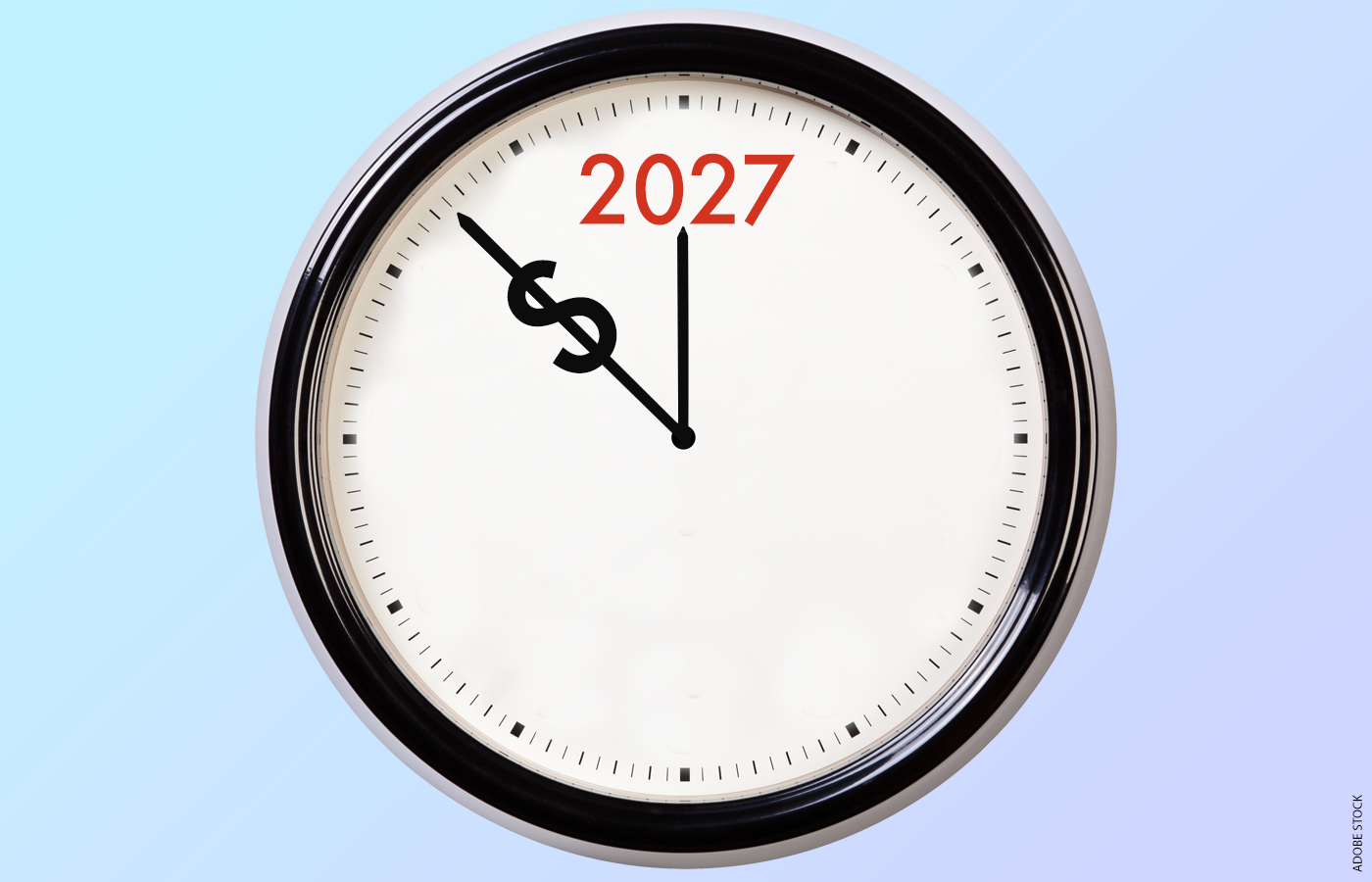
The new Federal Scholarship Tax Credit lifts off on January 1, when taxpayers can start donating to approved scholarship-granting organizations (SGOs) and claiming the dollar-for-dollar credit up to $1,700. SGOs can then use those donations to fund scholarships for public and private school programs. Yet before the first contribution gets made, the future of the FSTC is in question.
Most congressional Democrats have called to eliminate it, along with the National Education Association, American Federation of Teachers, and Education Trust. Just the other week, Virginia Governor Abigail Spanberger, a self-styled centrist, said she was reversing former Gov. Glenn Youngkin’s decision to opt into the FSTC for 2027. The imminent, sizable Democratic majorities in Congress may try to eliminate the FSTC (and dare an Oval Office veto), seek a deal with Trump to zero it out, or put it in the crosshairs for a potential Democratic White House in 2029.
This all means January 1 will fire the starting pistol on a race against time to determine the FSTC’s future.
Now, I should be upfront about my bias. I like the FSTC; I don’t love it. I’m concerned about self-dealing and fraud, think it’s a dubious way to use the tax code (just wait till the Dems use this strategy to subsidize abortion), and hate adding tax breaks in a time of staggering federal deficits. That said, given the largesse our pols shower on the over-65 set, I can’t begrudge a break that’ll expand options for kids (you know, the ones getting stuck with our $40 trillion debt). And, given that prickly politics and thorny bureaucracies hinder much K–12 improvement, I see promise in this push to cultivate an ecosystem of options.
So, that’s where I’m at as a preface to what follows, which is neither a strategy memo nor a critique. It’s a stab at thinking through what’s ahead.
To start with, we should appreciate the FSTC’s strengths. Crucially, the credit is enshrined in federal law. It was enacted by Congress as part of the massive (and embarrassingly named) “One Big Beautiful Bill Act” reconciliation in 2025. The provision cannot be undone without revising federal tax law, which means it will take an act of Congress to put it on the chopping block. Moreover, tax breaks tend to be sticky. The beneficiaries get angry at politicians who take them away (and no one else pays much attention).
That means the FSTC should be safe, right? Well, not necessarily. It has at least three major vulnerabilities.
First, the FSTC doesn’t put money in taxpayers’ pockets the way other tax breaks do. Ending the home mortgage interest deduction would take money away from millions of homeowners. That’s why it’s safe. The FSTC is different; it lets taxpayers redirect taxes to an SGO but doesn’t actually save them any money. That means the FSTC’s political muscle will rest on efforts to mobilize the families, schools, and programs that benefit directly.
Second, the FSTC is coded as partisan. It was enacted as part of a party-line GOP tax-cut bill after emerging from a private school choice proposal initially crafted during Trump’s first term. Politically, it’s viewed less like tax breaks for 529 plans and more like Biden’s tax credits for electric vehicles—remember how ardently Republicans went after those “clean energy” breaks? Indeed, some Democrats who want to kill the FSTC say they’re fine with OBBBA’s less ideologically freighted breaks for tipped income or Social Security. Proponents are working to rebrand the FSTC as bipartisan, but they’ve much work to do.
Third, after long years spent tempting fiscal fate, Washington will (at some point) be forced to balance its books. In 2032, Social Security will no longer have the funds to pay for all its obligations. With the U.S. now spending more than a trillion dollars a year just to cover interest payments and endless deficits ahead, a reckoning grows more likely each year. When that comes to pass, taxes will go up, tax breaks will be squeezed, and spending will be cut. In a more forgiving fiscal environment, the FSTC would be safer. We are not in that environment.
So, the FSTC isn’t as secure as most newly enacted tax breaks would be. Given that, what will determine the fate of the program? I’m looking at a half-dozen pivot points.
Number of beneficiaries: The largest factor determining the political viability of the FSTC is going to be the number of students and families who benefit from it. If SGOs collect lots of contributions—there may be up to $190 billion in potential giving—and get a lot of scholarships out the door in the next two years, it will create a phalanx of invested families. We’ve seen how parental support can protect school choice in places like Milwaukee and Arizona. Will the community of FSTC families be large and vocal enough to do the same?
Public schools: FSTC proponents are arguing this is a boon for public schools, encouraging efforts to establish SGOs that’ll provide scholarships for tutoring, summer programs, and afterschool offerings. The political logic is simple: The more families in public schools that benefit from the FSTC, the more it’ll appeal to unions and progressives, and the less it’ll be coded as a conservative voucher scheme. This is why you get the odd sight of choice advocates enthusing about the ways school districts can partner with unions to rake in FSTC contributions. Will public schools and unions go for it?
Blue-state governors: It’s easy for congressional Democrats to oppose the FSTC. They score points with the unions and pay no price. In the states, things are more complicated. If Democratic states don’t participate, they’ll potentially leave tens or hundreds of millions of dollars on the table. Democrats for Education Reform is hitting this point hard, and it was Kathy Hochul’s justification for New York’s participation. If blue-state governors mostly sit on their hands and allow participation to be mostly a red-state exercise, congressional Dems will find it easy to oppose. But if enough Democratic governors say yes and big dollars start flowing to blue states, D.C. Dems will get a lot more pressure to leave it be. Will more blue states opt in?
Red-state Democratic governors: The new crop of Democratic governors in red or reddish states like Texas, Ohio, Iowa, Alaska, and Georgia are a special case. Most campaigned as problem-solving pragmatists. Given their states have already opted in for 2027, they may see the FSTC as a chance to promote funding for public schools and portray themselves as voucher-skeptical but choice-friendly. Meanwhile, national Dems eager to hold these gubernatorial mansions (for purposes of party-building and post-2030 redistricting) will want to respect the needs of this class of red-state governors. How will these new governors proceed?
Subscribe to Old School with Rick Hess
Get the latest from Rick, delivered straight to your inbox.
The new congressional Dems: There are scads of new red-state Democratic senators and representatives. How will Team FSTC fare with them? Most Democrats in Congress signed onto a repeal bill, though some of that may have been a reflexive sop to the teachers unions on a going-nowhere, symbolic pledge. Now things get real. Will some incumbent Dems switch sides? Will new lawmakers be more inclined to embrace the FSTC, especially where repeal would mean putting an end to scholarships for families back home?
Waste, fraud, and abuse: Finally, some congressional Dems are going to be eager to paint the FSTC as an example of Trump-era corruption. Because it’s a personal tax credit rather than a government-funded program (and given Treasury’s rules governing taxpayer identification numbers, overhead ratios, and the like), proponents hope to defuse such critiques. At the same time, the FSTC is flexible and expansive, inviting a lot of potentially questionable conduct. In Arizona, for instance, there’ve been heated disputes about whether using ESA funds for Legos is a legitimate expense. Expect similar disputes about scholarships for students in homeschool collectives or sports programs. When critics or journalists dig in, will they surface evidence of self-dealing, profiteering, or fraud that discredits the credit?
* * *
The politics are complex. After all, school choice is popular, but so are public schools. And there’s a perception (fanned hard by the unions and choice skeptics) that the FSTC is somehow a threat to public school funding, regardless of the truth of the matter. Meanwhile, the Democrats just had a huge wave powered by anti-Trump fervor, and the OBBBA is undeniably Trump’s. Now, Democrats have given a lot of signals that they’ll be leaning into economic populism. On education, that could translate to more money for struggling families but also more catering to union demands. The first is probably good for the FSTC, the second not so much. How these political complexities resolve as they interact with the various pivot points is yet to be seen.
Or it might be none of this matters right now. Maybe Trump will veto any threats to the FSTC. Maybe a Republican who embraces it will claim the White House in 2028. In two years, the Republicans could pick up 40-odd seats and retake the House or pick up a half-dozen Senate seats on an unfriendly map. Politics is fickle. But the FSTC coalition can’t afford to count on any of that. Which means much depends on how things go in the next 24 months.
The FSTC is now on the clock.
Frederick Hess is an executive editor of Education Next and the author of the blog “Old School with Rick Hess.”