

Over the last ten years, Colorado has compiled an impressive losing streak before the Supreme Court in religious liberty and free speech cases. Based on Tuesday’s oral argument in St. Mary Catholic Parish v. Roy, the state looks poised to lose another one.
The case arose from one of Governor Jared Polis’s signature initiatives: a universal preschool program. Created in 2022, the program funds up to 15 hours a week of preschool per child at participating schools, including private ones. To qualify, schools must agree to provide eligible children an equal opportunity to enroll and receive preschool services regardless of characteristics including religious affiliation, sexual orientation, and gender identity. The program excludes schools that do not agree to those provisions. Colorado says the requirement protects LGBTQ children and families.
The Archdiocese of Denver, two Catholic parishes, and two parents of preschool-aged children who were shut out from the program sued the state, contending that the policy unconstitutionally excludes them from participation because of their religious beliefs and practices. A Tenth Circuit panel of one Obama and two Biden appointees ruled for the state, concluding that Colorado welcomed religious schools as long as they complied with the same nondiscrimination requirements as other providers. In the plaintiffs’ view, the state was using a principle of nondiscrimination to exclude schools because they would not abandon their religious commitments.
At oral argument, the conservative justices seemed unpersuaded by the Tenth Circuit’s reasoning. Justice Kavanaugh questioned why the conflict was even necessary. To him it seemed that there was an easy “win/win” available for Colorado where it could provide universal pre–K and protect religious liberty. The state has over 2,000 pre-schools, of which only 34 are Catholic. He suggested there was room to respect the rights of religious schools and allow LGBTQ parents to find an appropriate school for their children. The state’s approach, he said, seemed like “a would-be solution in search of a problem” creating an unnecessary clash. “I’m just trying to figure out,” he asked, “why we’re here. . . why has this been provoked when there’s an ability for everyone to go to the school, a good school that’s a fit for them and respect religious rights?”
Colorado Deputy Solicitor General Helen Norton responded that preschools are not interchangeable. A family might need a school that opens early enough for a parent to get to work, accommodates siblings, or is close enough for a neighbor to help with pickup. Colorado, she said, sought to ensure “equal opportunity, not some opportunity” to attend publicly funded schools. Kavanaugh pointed out, though, that Colorado allowed schools to give priority to students whose parents would be more involved. “That,” he noted, “almost inherently discriminates against single-parent families.”
Justice Barrett asked whether there was any record of same-sex parents trying to send their children to the Catholic preschools and being turned away. Norton pointed to an example involving a 5th grader at St. Bernadette, a school with a preschool. “Well, a 5th-grader is not pre–K, right?” Barrett replied. On rebuttal, the schools’ lawyer, Nicholas Reaves, noted that the family and the school had mutually concluded the school was not the right fit.
EdNext in your inbox
Sign up for the EdNext Weekly newsletter, and stay up to date with the Daily Digest, delivered straight to your inbox.
Of obvious concern to several of the justices was whether Colorado’s policy violates the court’s 2022 decision in Carson v. Makin, which held that Maine could not exclude religious schools from a tuition program because they provided religious instruction. Colorado contended that its program complies with Carson because it has not singled out religion—religious schools can participate if they follow the same rules as everyone else. Chief Justice Roberts seemed skeptical, however, since “the effect of the law in Carson is pretty much the same as the effect of the law here.” Similarly, Justice Gorsuch seemed to think that Colorado was trying to do indirectly what it could not do directly.
A second, perhaps more far-reaching question involved the Court’s 1990 decision in Employment Division v. Smith, which held that the Free Exercise Clause ordinarily does not excuse religious believers from neutral and generally applicable laws. Most recently, in Tandon v. Newsom in 2021, the Court held that a policy is not generally applicable when it treats comparable secular activity more favorably than religious exercise. Such a policy must satisfy strict scrutiny. To several of the justices, Colorado’s policy inherently seemed to treat religion differently even though the state assiduously avoided evincing contempt for those holding traditional religious views on sexual ethics.
Kavanaugh pressed Norton on why Colorado permitted many other exceptions among schools while refusing to accommodate the Catholic schools’ religious policies. “You can have a vegetarian school, but you can’t have a Catholic school, you can’t have a Jewish school,” he said.
Kavanaugh also asked whether Colorado permits single-sex preschools. When Norton said it did, he asked whether those schools might create the same problems of location and convenience that the state had raised when defending its nondiscrimination rules. “If you have daughters and the closest preschool is all boys, you know, that’s going to be a hindrance. Why does Colorado allow that?” Norton replied that the preschool law does not list sex as a protected characteristic and that legislatures must decide which characteristics to protect. Justice Alito pointed out that Colorado’s position would allow the state to forbid female teachers from wearing head coverings because it did not want to signal “unequal status”—but that doing so would obviously discriminate against Muslims.
As usual the justices’ questions do not guarantee a particular outcome, but the general tenor of the questions from the court’s conservatives does not bode well for Colorado, potentially continuing its string of First Amendment losses. That streak began in 2018, when the court ruled 7–2 in Masterpiece Cakeshop v. Colorado Civil Rights Commission that Colorado had shown “impermissible hostility” to religious belief in its treatment of baker Jack Phillips, who refused to create a cake for a same-sex wedding. In 2023, the court ruled 6–3 in 303 Creative LLC v. Elenis that Colorado could not use its antidiscrimination law to compel a website designer to create speech celebrating a same-sex wedding. And just last term, in Chiles v. Salazar, the court ruled 8–1 that Colorado’s restriction on conversion therapy was subject to strict scrutiny because it discriminated based on viewpoint.
One does not have to be a constitutional Nostradamus to predict that if a First Amendment case from Colorado reaches the Supreme Court, odds are good the Centennial State will lose.
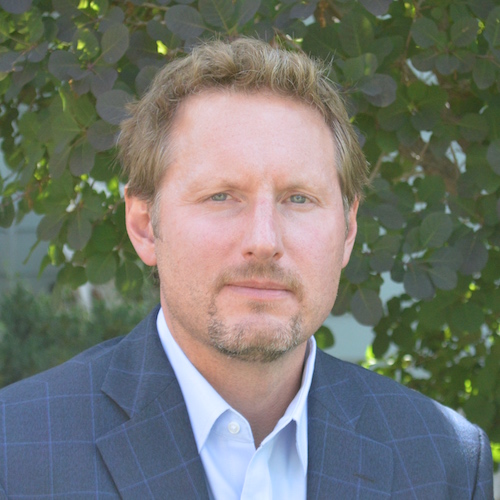
Joshua Dunn is executive director of the Institute of American Civics at the University of Tennessee, Knoxville. The opinions expressed are those of the author and do not represent the views of the Institute of American Civics or the University of Tennessee.
Suggested citation format:
Dunn, J. (2026). “More First Amendment Folly in Colorado: Oral argument in case excluding Catholic schools from universal pre–K program does not bode well for state.” Education Next, 26(4), 4 November 2026.