


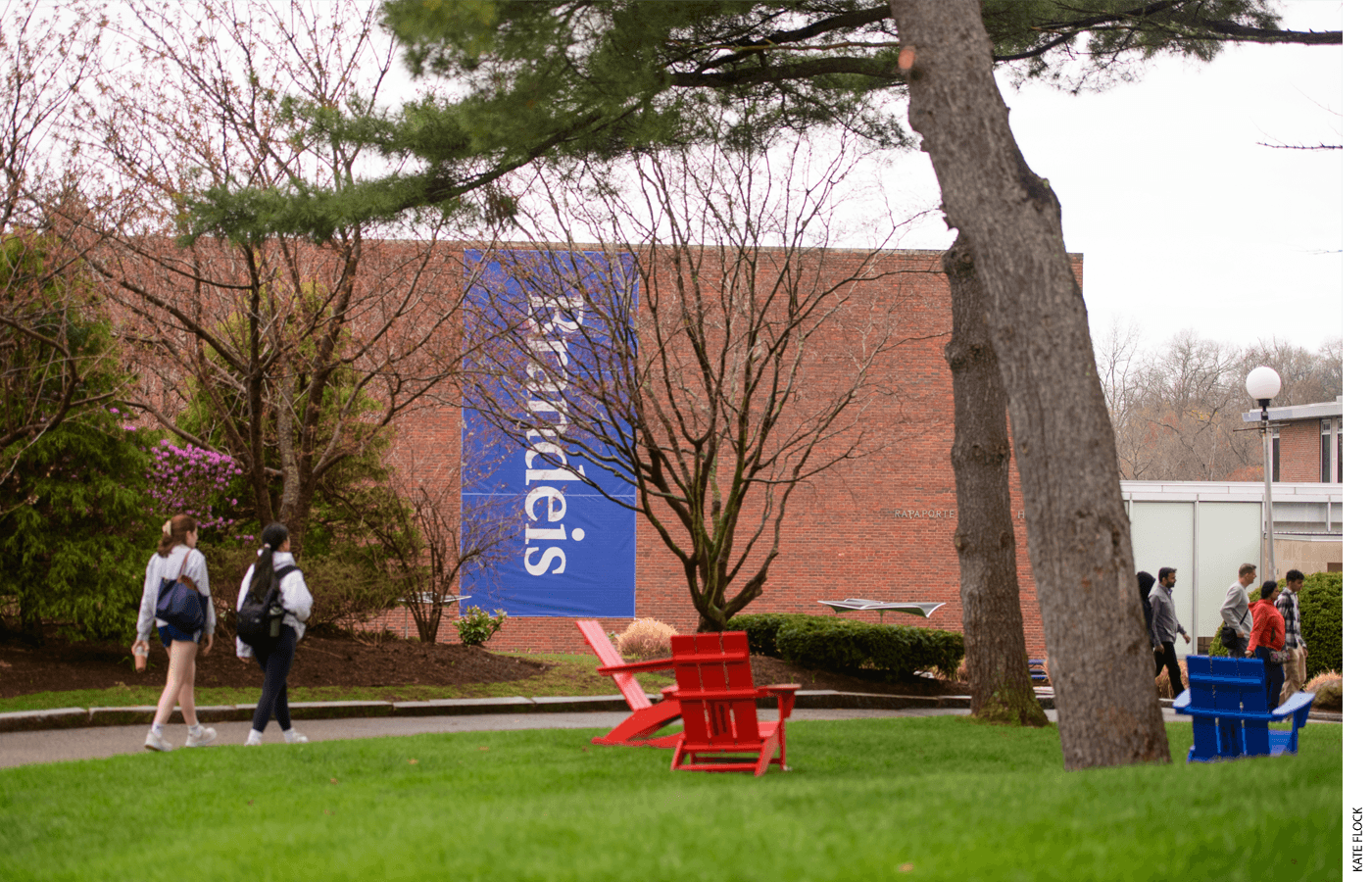
Maintenance employees buzz around outside the admissions building, sprucing up the campus for commencement as, inside, a new crop of prospective students and their parents take their seats for a presentation from a recruiter.
It’s a typical scene in the longstanding cycle of American higher education. But at many institutions—including Brandeis University, where this group of 42 potential applicants has gathered—this once straightforward process has been stood on its head. Instead of waiting for new students to show up and make their cases, universities and colleges are in the uncharacteristic position of having to plead their own.
The problem, myriad surveys over the last 10 years have shown, is that consumers are increasingly questioning the return on an investment in a higher education. This poses a particular challenge for liberal arts schools such as Brandeis, just outside Boston, whose annual sticker price will reach nearly $98,000 for residential students in the new academic year. Yet most have done little to effectively respond to it.
Until now. As the crisis becomes existential, some colleges and universities are finally confronting this threat by doing the seemingly simplest possible thing: setting out to make good on their implicit promise that specific classes and majors lead to jobs. And few are doing that as aggressively as Brandeis.
“You may have read about our plan to reinvent the liberal arts,” the undergraduate admissions officer begins, smiling confidently as his audience settles in.
By the fall, the university will have reorganized itself into four new schools that bring together existing professional programs in areas such as business, technology, and public policy with liberal arts disciplines including history, biology, philosophy, and sociology. Before the first semester starts, each arriving student will be assigned not only an academic adviser, but also a career counselor. And in what has become the most prominent symbol of the strategy, graduates will leave with “career-competency” transcripts alongside their conventional ones, listing what skills they have learned that employers value, from communicating and writing to proficiency with AI. This second transcript also will include internships and jobs students have held as well as microcredentials, which the university now gives them a chance to earn, at no additional cost, in digital-knowledge-economy subjects such as data analytics and statistical analysis.
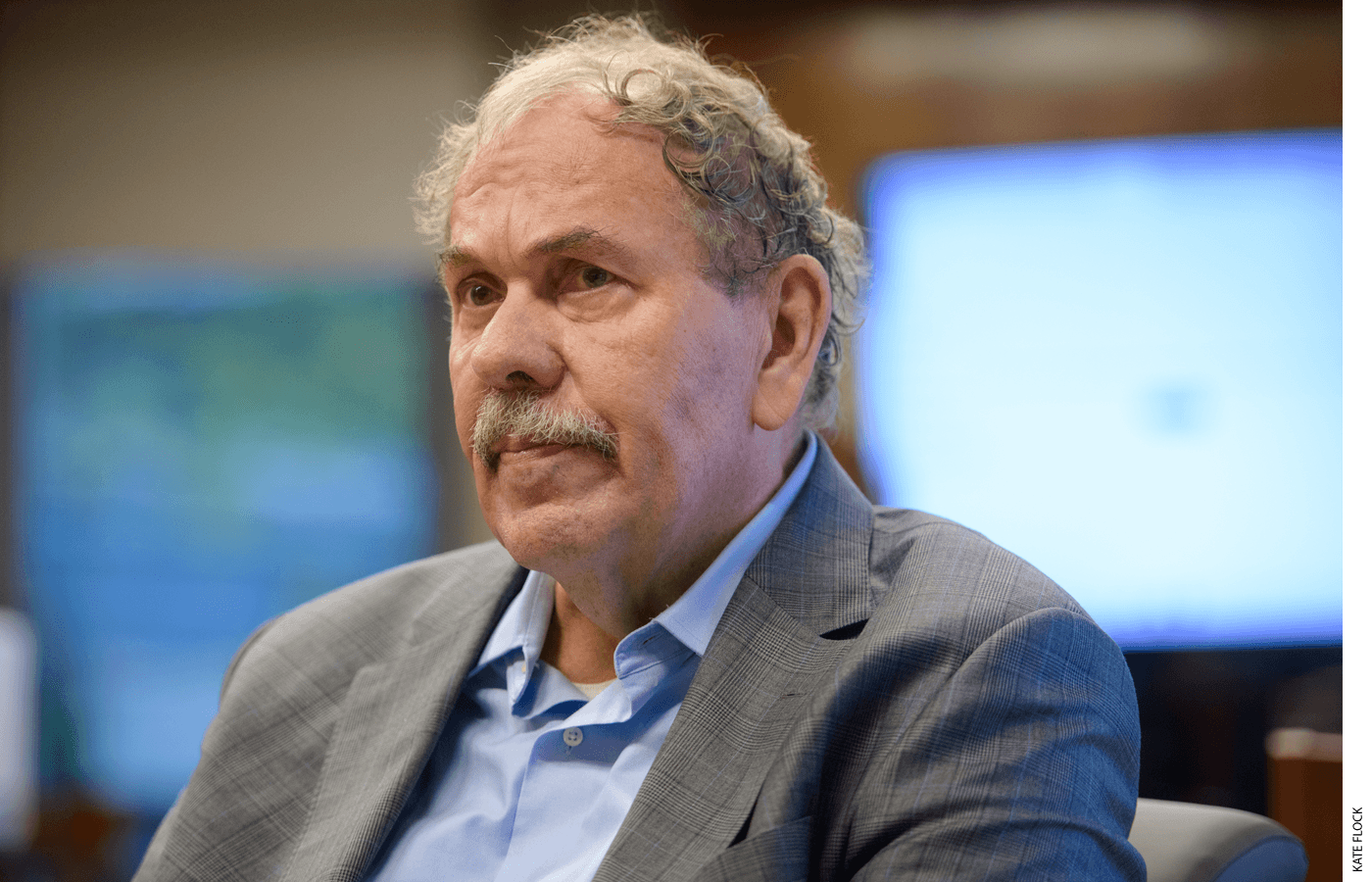
Until now, “we have tended to teach the liberal arts at many institutions as if they were something apart from the real world,” says Arthur Levine, an alumnus who has taken the job of president of Brandeis after a long career of studying and writing about higher education. Instead of merely counting what and how many courses students take, Levine says, universities need to “tie them into competencies. Let’s record the durable skills. Let’s record the life skills. Let’s record the career skills.” That way, employers will understand exactly what students have been taught to do—as will students themselves.
The board of trustees has agreed to gamble $25 million on this new so-called Brandeis Plan, and it’s being closely watched across the higher education spectrum. It’s also attracting additional financial support from the likes of the Carnegie Corporation—important for a university founded only in the late 1940s whose endowment is comparatively small, at less than $1.4 billion.
Institutions such as Brandeis “have to move. We don’t have time to wait,” Levine says, referring to the surprisingly ominous financial strains that his and many other universities and colleges are up against—especially small colleges and universities in the Northeast and Midwest that are hemorrhaging students and money, taking on debt, and struggling to stay relevant. Many of them command endowments closer to the half-billion-dollar mark or lower.
Back at the admissions building, Dean of Admissions Emily Roper-Doten watches the morning’s visitors file out of the reception area and fall in behind the student guides standing by to take them on a campus tour.
The number of applications for the fall rose by 40 percent over last year, according to the university. There’s no way to know whether that increase stemmed from the publicity around the Brandeis Plan, since early action was also offered for the first time; later, when deposits come due, the number of incoming students will wind up about the same as in the year before. But there’s optimism on this sunny morning, after a long and unusually cold and snowy winter.
Brandeis is making these changes to directly confront what’s been souring many Americans on college, Roper-Doten says. The kinds of students who might apply to the school —sometimes borrowing to do it, while feeling increasingly anxious about their prospects in a fast-changing labor market being disrupted by AI—“are committed to education at this level. But they want to really make sure they’re going to have options at the other end of it,” she says.
Other universities are watching, Roper-Doten says. “The thing I hear is, ‘Good for Brandeis for doing something.’”
Downward Slide
Founded by American Jews at a time when other local institutions wouldn’t accept them, or quietly imposed quotas, Brandeis University opened in 1948 on the site of the former Middlesex University, which had closed the year before because of financial and accreditation problems. Brandeis was championed by Eleanor Roosevelt, Leonard Bernstein, and Albert Einstein, who declined an offer of having it named for him; instead, the founders named it after Louis Brandeis, the first Jewish U.S. Supreme Court justice.
In its relatively short history, the school of about 5,000 undergraduate and graduate students has produced such notable alumni as political activists Angela Davis and Abbie Hoffman, journalist Thomas Friedman, novelist Ha Jin, Friends co-creators David Crane and Marta Kauffman, TV writer and producer Gary David Goldberg, music producer Jon Landau, Philadelphia Eagles owner Jeffrey Lurie, and actors Tyne Daly, Gates McFadden, and Debra Messing. Fields Medal and Nobel and Pulitzer Prize winners serve or have served on the faculty. Photos of prominent alumni line the halls of the administration building.
But over the last decade or so, the university has been buffeted by the same headwinds as much of the rest of higher education. “Not just headwinds,” says Steven Shulman, an alumnus and former Brandeis budget director who is now a higher education consultant. “A gale-force hurricane.”
Enrollment nationwide is down by 1.6 million since 2010, or about 8 percent, and the number of 18-year-olds—the principal supply of undergraduates—is projected to decline by 13 percent through 2041. Brandeis has 12 percent fewer students than it did 12 years ago, federal data show, and the trend is even worse at the important revenue-producing graduate level. It posted eight-figure operating deficits in seven of the eight years ending in 2024, the most recent year for which it has submitted financial documents. That adds up to a collective loss of more than $250 million. The university is also nearly a quarter of a billion dollars in debt. Since 2023, it has fallen 25 places in the U.S. News & World Report national college rankings.
In response, Levine’s predecessor started in 2024 to make cuts, eliminating 60 positions, freezing hiring, putting programs on hiatus, postponing building projects, and drawing more money from the endowment than is standard for nonprofits. The faculty voted no confidence in that president, who abruptly quit. “Brandeis, we are so embarrassed,” read an editorial in the student newspaper, which decried “our quickly crumbling campus.”
The board of trustees had by then approached Levine, who since graduating from Brandeis in 1970 had gone on to become the president of Teachers College, Columbia University, and authored or coauthored 14 books about exactly what was happening to colleges and students, including The Great Upheaval: Higher Education’s Past, Present, and Uncertain Future, co-authored by Scott Van Pelt of the University of Pennsylvania Graduate School of Education. “It’s what I’ve been thinking about forever,” Levine says.
But not even he wanted the job. Levine, who is 78 and walks with a cane, says he turned it down twice before accepting the position of interim president. He agreed last year to stay through 2027, on condition that the board approve his plan and give him the money he needed to put it into practice. It did.
“Great universities don’t get built by cutting,” says Levine, who now has a real-world university as his laboratory. Besides, he says, Brandeis “doesn’t have a spending problem. It has a revenue problem.” It needed to reverse its long enrollment slide and attract back more tuition-paying students.
That required actually responding to the question that Americans have been raising loudly but universities have done little to concretely answer: What are consumers of higher education getting for their money? Americans say the top outcome that would justify the cost of college is financial stability, with other career benefits rounding out the top five, according to a Strada Education Foundation survey released in May. The most important measure of value among students, a separate survey by the higher education consulting firm EAB shows, is landing a job after graduation. But almost two-thirds of registered voters don’t think colleges teach the skills their students need to get jobs, an NBC News poll reports.
“It’s no longer enough for us to say, ‘You’re going to live the life of the mind,’” says Alain-Philippe Durand, dean of the University of Arizona’s College of Humanities and an outspoken advocate of the humanities. “We need to be much more specific than that.”
What colleges and universities are grappling with now is how to make their case persuasively, at a time when there are two words that seem to attract even more scorn than “higher education.” Those two words are “liberal arts.”

Reviled—But Surprisingly in Demand
The liberal arts are in a quiet crisis of their own. The number of bachelor’s degrees awarded in the liberal arts—generally defined as a broad education offering majors in humanities, social sciences, natural sciences, and math—fell to a 30-year low in 2024, the latest period for which data are available, according to the American Academy of Arts & Sciences. That was 30 percent below the peak in 2012. Students have instead been choosing majors in subjects they consider tied directly to careers, including business, management, and health professions.
Graduates who majored in humanities and social sciences tend to believe they’re at a disadvantage. Fewer than one in five language, philosophy, and social science majors think their educations are directly relevant to their careers, Gallup polling finds, compared to more than one in four majors in science, technology, engineering, and math, or STEM. Nearly half say they would have picked a different major, compared to 40 percent of business and 28 percent of STEM grads.
This skepticism is misguided, people who teach the liberal arts contend. Chairs of humanities departments think their disciplines are undervalued and are being “persecuted,” a new survey by the American Academy of Arts & Sciences finds. They want their universities and colleges and national associations to do a better job of marketing the field. Liberal arts graduates right out of college may not make as much as classmates in some other subjects, say these chairs and other supporters of the liberal arts, but they catch up over time.
What data exist suggest that things aren’t so clear-cut. Liberal arts majors never earn as much as their counterparts who majored in STEM disciplines, Strada finds, and they make slightly less than college graduates in general. Eventually, their incomes do substantially outpace those of workers with only high school diplomas. And about 40 percent go on to get graduate degrees, further increasing their pay (though also their education costs and, for many, their indebtedness). At Brandeis, more than half of degree earners go on to graduate or professional schools.
Many bachelor’s degree graduates in the liberal arts begin their careers underemployed, meaning working in jobs that don’t necessarily require those degrees, Strada has also found by analyzing millions of online work histories. Though many eventually move into degree-level jobs, they’re more likely than classmates with other majors to remain underemployed a decade after graduation. At that point, according to separate research by the Georgetown University Center for Education and the Workforce, the median return on the investment for graduates from liberal arts colleges and universities is about 40 percent lower than for graduates who went to other kinds of schools.
But then their incomes do, in fact, begin to rise. Forty years after they enroll, students who go to liberal arts schools have realized a median lifetime return on the investment of more than $900,000—just below the return for graduates of the highest-level research universities. At the 47 most selective liberal arts institutions, the lifetime earnings payoff is more than $1.1 million.
Liberal arts graduates are in surprising demand in the technology industry, where they actually outnumber graduates from technical programs, a study by the Strada Institute for the Future of Work found. LinkedIn discovered that more liberal arts than computer science and engineering graduates were being hired by tech employers—mostly to work in sales and marketing but also as software developers. And when Google put its analytical proficiency into studying the qualities of its best managers, they turned out to be soft skills often associated with the liberal arts, including solving problems, thinking critically, and communicating. STEM expertise came in last, the tech company learned. It would later reach the same conclusion about its engineering and sales employees.
Many of these findings came in the mid-2010s, after which the research trail largely runs cold. And there remains some skepticism that the durable skills Levine and other say their students learn—critical thinking, communicating, problem-solving, flexibility, resilience, and leadership—can be measured. Still, an analysis released last year of more than 75 million job postings by the labor analytics firm Lightcast found that 76 percent explicitly asked for those skills. And advocates for the liberal arts now argue that the advent of AI makes them more important than ever.
That’s among the reasons liberal arts deans from the nation’s top technology schools met in April in Atlanta to create a network to promote the liberal arts at universities and colleges like theirs. They include Virginia Tech, MIT, and the Georgia Institute of Technology.
In the age of AI, what students learn from the liberal arts “is future-proof and timeless,” says Amanda Murdie, dean of Georgia Tech’s Ivan Allen College of Liberal Arts, which hosted the meeting. “You can act as a translator in a rapidly changing AI environment.”
Nearly 90 percent of employers are seeking evidence that job candidates can solve problems, and nearly 80 percent want people good at working in teams, according to a survey last year by the National Association of Colleges and Employers; technical skills come in sixth out of 20 kinds of attributes employers say they want, below a strong work ethic and communication skills.
These things are what innumerable assessments show that liberal graduates are good at. But just because it’s true doesn’t mean consumers are aware of it.
“Advocates for the liberal arts argue that it’s obvious—if you learn to think critically, you learn to think broadly, that’s going to pay off. I agree with the argument, but they haven’t made the case,” says Richard Detweiler, former president of Hartwick College, the Global Liberal Arts Alliance, and the Great Lakes Colleges Association, a consortium of liberal arts schools.
That’s a particular problem at a time when the job market has become so volatile, thanks in part to the rapid evolution of AI. The unemployment rate among new bachelor’s degree recipients at graduation time was 5.4 percent, according to the Federal Reserve Bank of St. Louis, higher than in any spring since 2022, when the economy was still recovering from Covid.
“Right now is kind of a weird time to be a college student. There’s a lot of anxiety,” says Eli Richardson, an economics major who graduated in May from Brandeis. “Finding a job is hard,” says Richardson, who did find one in financial services.
Anya Ionis, a Brandeis freshman business major, says her parents often ask about how practical her academic choices are. She’s thinking about also studying psychology, she says, “and they keep asking me, ‘What are you going to do with psychology?’”
That’s the kind of question universities have to finally answer, says Detweiler, author of The Evidence Liberal Arts Needs.
“Just being able to tell good stories worked for a long time,” he says. “But this is a more skeptical era, and we’ve been driven by the economists’ view of the world that the thing that counts is money earned. That’s never been an argument that the liberal arts have tried to make.”

Measuring What Students Know and Can Do
Persuading his board of trustees to support him was Levine’s first step in shaking things up at Brandeis. The next one would be tougher: convincing the faculty.
He met individually with 100 of the university’s 492 faculty, Levine says. These were not the friendly get-acquainted sessions professors might expect from a new university head. The usually affable higher education scholar didn’t mince words. “I always tell presidents, ‘Frighten your faculty. Tell them the truth,’” he says. “I think they found it compelling.” Levine was even more blunt when he spoke during the winter in Washington at the annual conference of the American Council on Education. “Scare the hell out of your faculty,” he told the university administrators gathered there. “Tell them the truth. We’re at a terrible, terrible time. And then invite them to help you reinvent the institution.”
Though some were troubled by the speed at which Levine proposed to implement his plan, the Brandeis faculty voted overwhelmingly to go along with it. One reason is they realized they were already teaching many of the job skills that Levine was proposing to measure, says Jeffrey Lenowitz, a professor of politics and chair of the faculty senate. “We just weren’t making it visible. If employers are saying, ‘You need critical thinking and communication skills,’ well what do you think a seminar is?”
But there was an additional reason for their support: Faculty had seen the layoffs on their campus in 2024, and many more at other universities that were eliminating whole departments or closing altogether. “It’s impossible to not notice that,” Lenowitz says, adding that faculty are facing “a lot of multifaceted challenges” they hadn’t originally expected in their chosen profession.
This harsh reality makes it likely that reforms in higher education will speed up, Detweiler notes. “The stresses of these days are economic, demographic, and now political,” he says. “Faculty are starting to recognize that business as usual is no longer going to work.”
Brandeis rolled out its first microcredential programs in the spring, and 130 students promptly registered for them. Consisting of a sequence of courses followed by a test, these programs equip students with in-demand vocational specialties and make the case that the liberal arts teaches what students need for careers. Levine likes to paraphrase the social reformer Jane Addams by saying that the liberal arts should have one foot in the library and one foot in the street, a line that echoes around his campus now in everything from presentations to prospective applicants to TV commercials promoting the university.
To keep track of these skills—applied and theoretical —the university is piloting a new product from Educational Testing Service, or ETS, best known for developing and administering standardized assessment tests. Called Futurenav Compass, it uses AI to measure what students know and can do, which can be listed on that second transcript; the results can be reported to prospective employers for hiring purposes, to universities that want to know what and how well their students are learning, and to students themselves. The tool has also been picked by American University, the University of Tennessee at Knoxville, and the 23-campus California State University system.
“It enables us to go into student resumés, coursework, durable skills assessments, and the like, to help capture some of the vital skills that industry really cares about,” says Ken Eisner, managing director of higher education to workforce at ETS and previously global director of education programs at Amazon Web Services. “We’re making the invisible visible.”
Conventional academic transcripts “are anachronisms,” Eisner says. “They don’t create an integration of meaning for employers. It’s a dead document. We haven’t been measuring the things that matter.” Even if the liberal arts do impart career skills, he says, “if we don’t measure it, if we don’t capture it, if we don’t show it to employers, it’s meaningless. And I think that’s what we’re all waking up to.”
Futurenav Compass provides an important new business stream for ETS, too, which makes about a quarter of its revenue from SAT parent College Board. In an era of test-optional admissions, those payments dropped by 24 percent from 2019 to 2024, according to College Board’s most recent available financial documents. ETS’s total annual revenues between 2019 and 2023—the last year for which the organization has reported them—declined by nearly $200 million.
To help develop the second transcript, Brandeis got $1 million from Carnegie, which sees the idea as something that might well catch on at other schools. “It will be increasingly important for universities to give a full picture of what their graduates can do,” says James Kvaal, the foundation’s vice president for national programs and former U.S. undersecretary for higher education. “There is a lot of benefit to four-year college degrees that goes beyond just the academic content of what’s learned in the classroom, and that’s likely to be more and more true as AI changes the skills that are needed in jobs and puts more emphasis on critical thinking and communication skills.”
Making the Connection
Other institutions are also working to persuade prospective students of this connection between the liberal arts and jobs.
The University of Arizona’s College of Humanities lets its graduates tell the story, in a video featuring successful alumni who majored in the humanities there, from executives at Netflix and Blue Apron to a NASA scientist to Golden State Warriors head coach Steve Kerr. “You can go anywhere” with a liberal arts degree, Kerr says in the video. “It helps you find your way.”
There’s a deliberate strategy behind which graduates are featured, says Durand, the dean, who is also a professor of French. “I ask my team to try to focus on those students who are in a variety of jobs, not somebody who works at a museum—not because we don’t think it’s a good thing to work in a museum, but because that’s the usual thing that people associate with the humanities,” Durand says. “Let’s put a physician in action in the video,” he says he tells his marketing staff. “Let’s put an engineer with a hardhat.”
EdNext in your inbox
Sign up for the EdNext Weekly newsletter, and stay up to date with the Daily Digest, delivered straight to your inbox.
Like a growing number of other schools, the university has rebranded the humanities as the “applied humanities,” introducing bachelor’s degrees that connect traditional liberal arts disciplines with programs in business, engineering, medicine, and other fields and enlisting faculty to do a better job of showing students how such degrees lead to jobs. “Maybe on your syllabus you have a little more information that by taking this course you’re going to acquire some of the most important requirements in the job market today,” Durand says.
Undergraduate enrollment in the College of Humanities has more than doubled since the plan was put into effect, university data show. Employers today “are looking for workers who can think critically, who can work well with others, who can communicate well,” Durand says. “All of that we do in the humanities, but we need to say that.”
Getting faculty on board can still pose a challenge, people doing this work say. Murdie, at Georgia Tech, says she’s talked to “really well-meaning liberal arts professors who object to using the word ‘skills.’” The same thing happened at American, says Provost Vicky Wilkins. “You should have heard the roundabout synonyms we played with,” Wilkins says.
In a new strategic plan, American has promised to deepen career preparation with internships and other kinds of in-person learning, also using ETS’s Futurenav Compass to measure students’ job skills.
“We think about our work as not strictly about career outcomes. But we understand now that families have that expectation, and we’re drawing that line for them: ‘Here’s our pledge to you. Here’s what you can expect from us,’” says Wilkins.
Even Dartmouth is investing $94 million in a new Center for Career Design to not only give students more hands-on experience through internships and case studies, but also help them explain the skills they’ve learned.
“There’s a really perfect storm that we’re seeing, with this rising cost of higher education and people saying, ‘Wait a minute, what am I getting for this?’” says Joe Catrino, the center’s executive director. “We’re thinking about how students can step back and understand who they are. What we want them to do is be able to articulate their skills. There’s a societal need to bridge major to career. You can do anything with the liberal arts, but society doesn’t see that.”
That has to change, says Levine, back in his office at Brandeis, where he keeps an antique radio, a manual typewriter, and a gramophone. The last time there was so much change in the labor market, he likes to say, was at the start of the Industrial Revolution. He quotes the historian Henry Adams, whose 1907 autobiography, The Education of Henry Adams, criticized universities at the time for failing to keep up with that era’s technological, scientific, and political transformations.
“The old system wasn’t what an industrial society needed, and the same is true today,” Levine says. “We have to prepare students for a new economy, a digital knowledge economy. What we’re doing is tying them into the real world again.”
Jon Marcus is senior higher education reporter at the Hechinger Report. He writes about higher education for the New York Times, the Washington Post, NPR, and others.
Suggested citation format:
Marcus, J. (2026). “The Reinvention of Liberal Arts Colleges: To remain relevant amid evolving attitudes toward higher education, Brandeis University and institutions like it are redefining their purpose.” Education Next, 26(3), 1 September 2026.