


The world of TV and film is rich with insight for education. Writers, producers, and directors tell stories and deliver moral instruction, work under intense practical constraints, and must forge a relationship with an audience that may not be receptive to what they’re putting out there. It’s like teaching but with a much bigger budget.
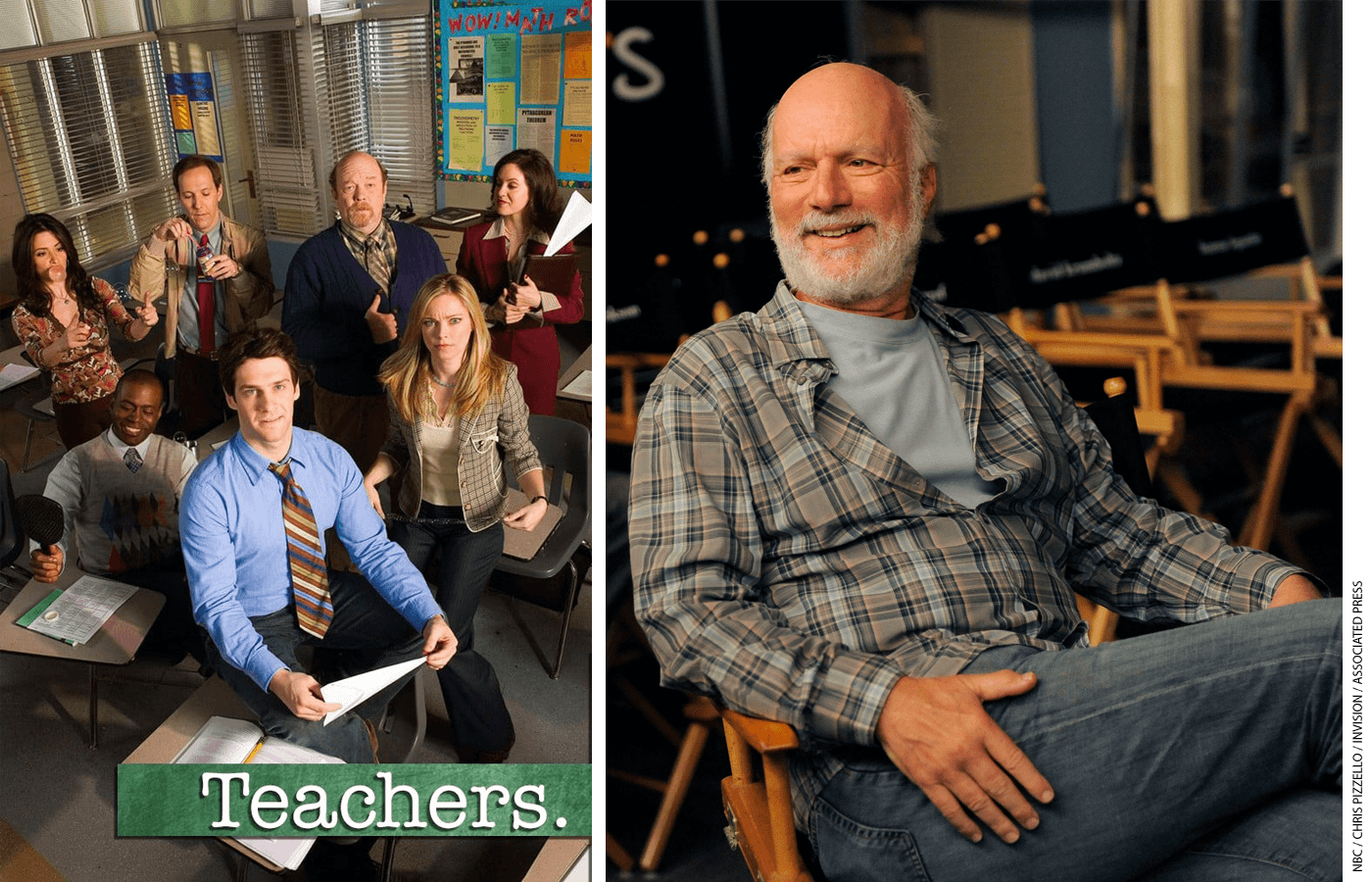
That’s why I was stoked to pick up James Burrows’s 2022 autobiography Directed by James Burrows. A legendary sitcom director, Burrows was instrumental in the success of a ridiculous number of classic TV series, including Cheers, Frasier, Taxi, Friends, and Will & Grace. As a general matter, television isn’t a director’s medium. When it comes to making movies, directors call the shots, but TV production is typically a writer’s domain—in no small part because show running requires a steady stream of stories and narrative arcs. Burrows’s success as a TV director made him unique.

That success reflected Burrows’s knack for building strong cultures and fostering a sense of community on his sets. He was known for cultivating remarkably close relationships with his writers, lending his series an added dimension of craft and care. I was curious to see what Burrows had to say about his aptitude at managing relationships, creating culture, and maintaining technical acumen—a juggling act pregnant with implications for education leadership. After all, his autobiography was marketed as a source of “advice for aspiring directors, writers, and actors.”
What did I learn from it? Not much.
Don’t get me wrong: Burrows (who died in June at age 85) seems like he was a lovely man who cared deeply for his colleagues and family. But he managed to fill hundreds of pages without revealing much about the secrets of his success. I pick up books like this in search of insights that I won’t encounter in the bland education works that fill my shelves. Whoops.
Burrows traces his career from its modest beginnings directing local theater. There are some cute anecdotes, delivered in an admirably genial tone, and much recounting of all the famous people he befriended as his television career took off. When it comes to explaining the artistic leadership that won him such acclaim, though, the takings are sparse.
At one point, Burrows muses on the need to “foster a community among the company, and to train a new set of actors to behave as a group and respect one another.” Great, this is a challenge for leaders in education, too. So, how did he pull it off? His first step was to “make sure the cast had every opportunity to become friends in real life.” To illustrate, he tells of flying the nascent Friends cast to Las Vegas on the corporate jet for an evening of dinner and gambling. And the second step? He never says, nor does he explain how to help maximize the value of those opportunities.
Burrows reports it took just two episodes to build rapport among the Friends cast, with the six core actors becoming “real friends [who] would play poker in my dressing room.” He adds, “It was about bonding. They genuinely adored one another.” As someone who’s been in plenty of classrooms and environments where familiarity bred contempt, not adoration, I was hoping for a word from Burrows about how he’d used his veteran wiles to tip the scales. No such luck. What do you do if you let the cast play cards and they don’t “genuinely adore” one another? No clue.
At another point, Burrows notes that a cast should “work something until it works.” He’d rehearse until the actors were so skilled that it didn’t “take much more effort for them to work with one another.” He also explains, though, that he took care not to over-rehearse for fear of spoiling spontaneity. Boy, could I relate. I mean, anyone who’s been in front of a classroom has sought to craft lessons that are polished while still leaving room for discussions to breathe, teachable moments to be seized, and students to surprise you. How do you find the right balance? There’s an instructive tension lurking there, but it’s never addressed (or even acknowledged).
Burrows was famously intolerant of jerks. He declares: “This idea that people who are difficult are worth it is a myth predicated on the belief that acting involves some mysticism, that it’s magic and not a craft.” He writes that there was “no place for anyone like a prima donna on my set” even if, early on, he lacked the gravitas and courage to “set the tone.” Okay. I like it! For anyone lacking his stature and charisma, maybe he’d have a tip for setting that tone. Crickets. He moved on to talking about the “fun clause” he’d been able to insert in his contract, which allowed him to quit working on a project if he wasn’t having fun.
Subscribe to Old School with Rick Hess
Get the latest from Rick, delivered straight to your inbox.
In the end, I did come away with an education insight, but it wasn’t of the sort that I’d been hoping for. Burrows’s book helped me better understand what I find so frustrating about so many treatises on education leadership.
Before picking up Burrows’s autobiography, I’d just read Stupid TV, Be More Funny (about the creation of The Simpsons) and All the Pieces Matter (on the making of The Wire). Those books offered insights into writers’ rooms, corporate intrigue, and public criticism that provided funhouse-mirror parallels to the work of K–12 and higher ed. Battles with short-sighted networks and opportunistic pols brought a different perspective on clashing incentives and public pressures.
Burrows’s book offered no funhouse mirrors, just bland vistas of good cheer. And that got me thinking about most books on education leadership. They, too, specialize in happy bromides. There are no messy challenges or uncomfortable trade-offs. Red tape and bureaucracy don’t merit much mention, because good schools are about building “strong cultures.” Big problems can be cheerfully chased away through “courageous conversation.”
Many years ago, in his popular book Leadership for the Schoolhouse, Thomas Sergiovanni argued that “corporate” models of leadership don’t work in education. He explained that talk of budgets, staffing, and accountability belonged in the private sector. Education leaders needed to “invent [their] own practice,” he argued, one in which schools were understood as moral communities that embraced a “politics of virtue.”
Sergiovanni had a lot of imitators, spawning an extensive oeuvre of quick fixes and easy answers. How do you build a strong academic culture? Just follow these four banal tips. Colleges can answer public distrust with principled, inclusive leadership. How? Just embrace these five platitudinous recommendations.
When applied to the real world, this vacuity translates into a leadership style that shrugs at bureaucratic dysfunction, talk of efficiency, or responsibility for outcomes—instead reifying consensus, buy-in, and the “specialness” of education. As I wrote more than a decade ago in Cage-Busting Leadership, this has fostered a passive style of education leadership that hesitates to cut programs, fight unions, or discipline poor performers. I’ve spent a lot of years teaching K–12 leaders and sitting tête-à-tête with college administrators, and I’ve always been struck by the degree to which learned helplessness is a professional norm.
So, I guess I did learn something: All those trite, overconfident books I read on education leadership aren’t really modeled on facile, how-to business management texts. Rather, they seem to have more in common with the self-laudatory stylings of the Hollywood autobiography. There’s a discomfiting thought.
Frederick Hess is an executive editor of Education Next and the author of the blog “Old School with Rick Hess.”