


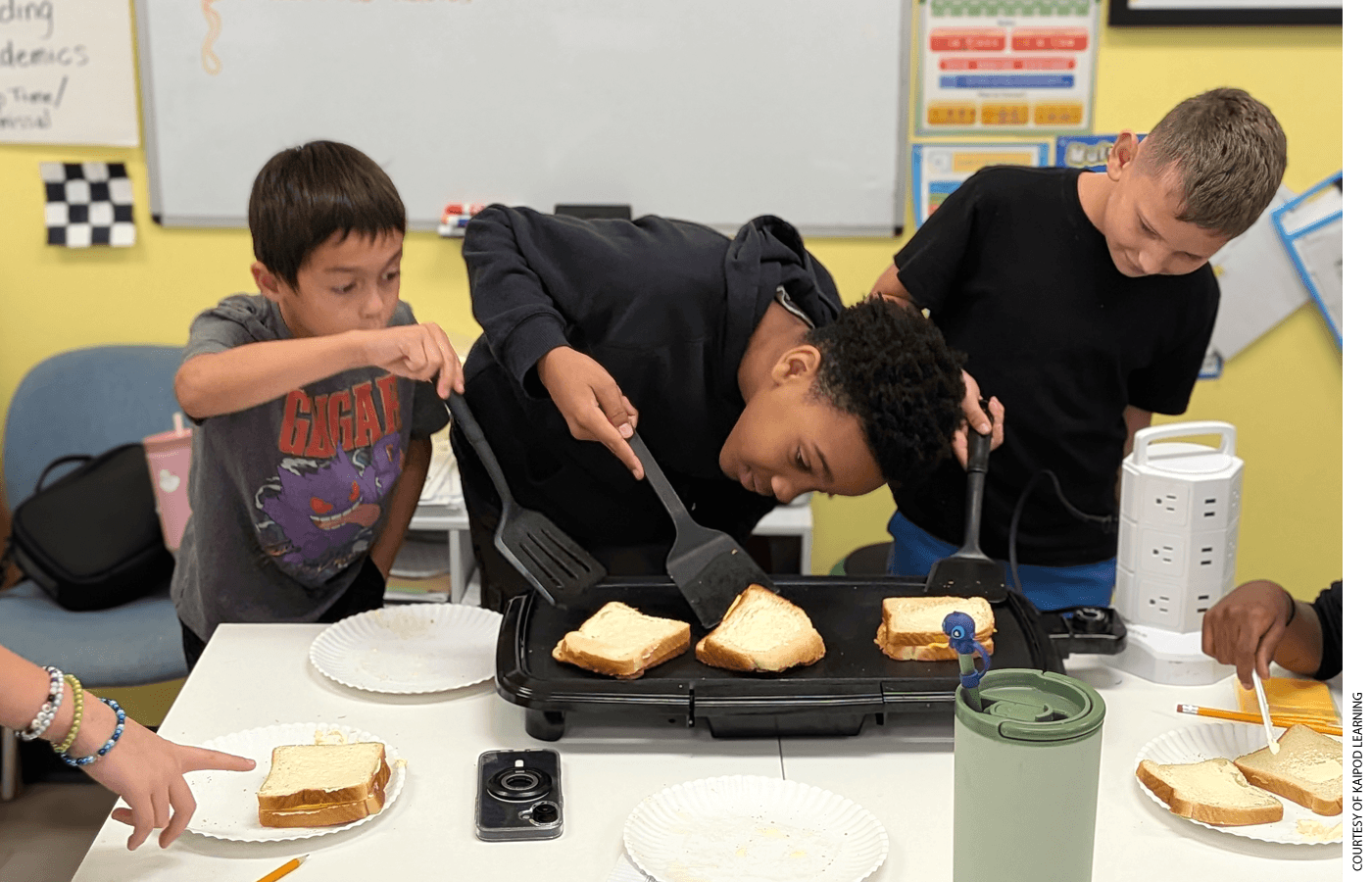
While declining enrollment in America’s traditional public schools is turning into a slow-moving crisis, participation in microschools is set to blast off. The 21st century answer to one-room schoolhouses, microschools are typically private-pay and serve fewer than 20 kids each. The Covid-19 pandemic turbocharged this trend, multiplying the number of microschools to over 100,000 across the U.S., according to the National Microschooling Center, with more coming online each season. Microschools have reached an estimated enrollment of 1–2 million students, and those numbers are poised to grow as the federal tax credits from the Trump administration’s One Big Beautiful Bill hit the system, and local school districts get into the act.
While national networks such as KaiPod, Prenda, and Primer account for some of the multiplication of microschools, especially in school choice–friendly states like Arizona and Florida, one defining characteristic of today’s microschools is their astonishing diversity. I have spent the past three years researching unconventional education and the families that choose to leave the traditional public school system for options like microschools. I have visited living-room learning pods and mini-farm schools, centers for LGBTQ+ kids, and strict faith-based academies, micro play-schools for early learners, and micro STEM academies for teenagers. One observation I could not escape is that these tiny schools have a big concentration of neurodiverse learners and boys—and plenty of kids who are both.
National data lends some credence to the idea that the traditional classroom is not a happy place for many male students. Year after year, the National Assessment of Educational Progress shows boys lagging girls on reading and writing, with any advantage they once had in math and science eroding quickly as girls catch up.
Analysis by the National Center for Education Statistics shows that boys typically earn lower grades throughout elementary, middle, and high school, and girls are more likely to graduate from high school, enroll in college, and earn a college degree. While in school, a much higher percentage of boys (18 percent) than girls (10 percent) are diagnosed with learning disabilities and other special education needs. The conventional classroom expectation that students must “sit quietly and self-regulate” is at odds with the need of many boys to move around and vocalize, while gender socialization often pushes boys to hide attributes like curiosity and vulnerability, necessary elements of school learning.
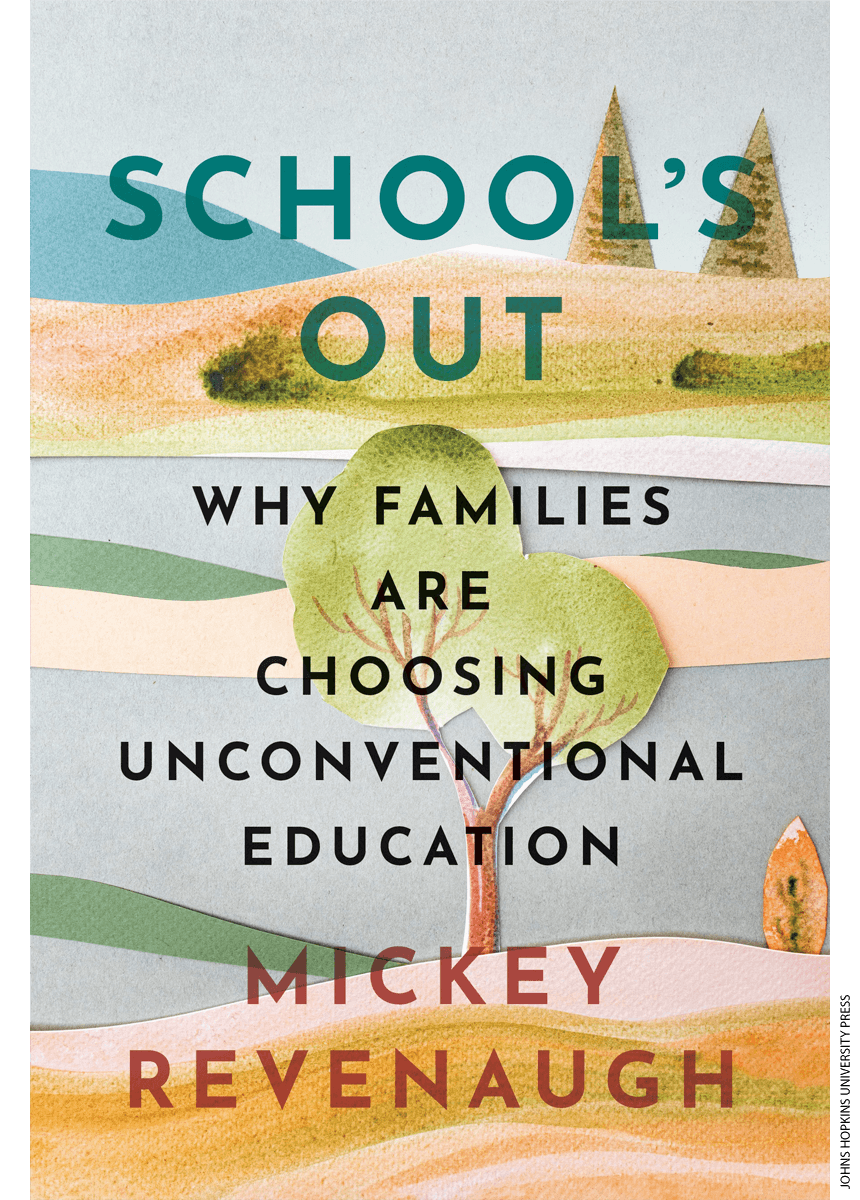
by Mickey Revenaugh
Johns Hopkins University Press, 2026, $32.95; 288 pages
It’s perhaps not surprising, then, that parents might seek a more fruitful path for their sons in microschools, whose intimate scale promises flexibility of space and relational bonds as recommended by the American Psychological Association’s Task Force on Boys in School.
Then there’s the crossover with neurodiversity. Based on observations in the field and annual sector analysis from the National Microschooling Center, there’s a high concentration in microschools of students with ADHD, dyslexia/dysgraphia, anxiety, and autism, along with those who are also gifted, and therefore doubly exceptional. Microschool leaders report working extra hard to accommodate such students through adaptive classroom arrangements such as flexible seating, “sensory zones,” and indirect lighting. Online curricula used in many microschools offer opportunities for very personalized pathways. For example, the Ignite Academy online curriculum used by many students in the KaiPod network offers both a Fire option with built-in supports for students with disabilities and, for gifted learners, an accelerated pathway called Spark.
For those concerned about the proliferation of private-pay options outside the usual regulatory framework, the flight by so many neurodiverse students into the microschool ecosystem is alarming. Tiny schools with tiny staffs would not be expected to provide the kinds of “wraparound” therapeutic and academic support services for kids with special needs that a traditional school system would be required to. Even students who qualify for extra voucher-like Education Savings Account (ESA) funds because of their disabilities may find themselves underserved, some advocates argue.
Families choosing the microschool path clap back that there’s an immediate benefit to simply getting their boys and “neurospicy” kids out of traditional classrooms that too often restrict their movement and punish their way of learning. “I’d be in trouble all the time for not thinking or acting the way the teacher wanted me to,” recalls Jed, a boy with ADHD at KaiPod Gilbert. “It’s much less stressful here where I can work on what I want when I want and sit wherever I feel comfortable.”
The idea that traditional school offers better support for neurodiverse learners is outdated, according to Kenneth Mims, executive director of Science Prep Academy, a STEM career- focused microschool for students on the autism spectrum. “Instead of pulling kids out of the classroom and forcing them to miss out on teaching and learning, we build our therapies right into the school day,” he says.
One of the arguments against the proliferation of microschools is also the argument for it: that for all intents and purposes, anyone can start one. Those who prize parental freedom and the power of the market to weed out subpar choices believe microschooling should be essentially “permissionless.” Other than basic fire safety and criminal background checks, these advocates say, microschools should be able to operate without a red-tape-heavy process around physical location, personnel, or curriculum. (Finding themselves subject to local ordinances meant for day care centers is enough to make most microschool founders weep.) And parents should be able to choose such schools without getting the okay from anyone at their school district or state.
On the other hand, folks who are already a bit squeamish about certain states’ light-touch homeschooling requirements—“unregulated” is the term you hear in these circles—are even more worried about this approach for microschooling. “Ambiguity surrounding the definition of microschools and the regulations that govern them has raised questions about their need to comply with standard education regulations,” the Center for American Progress argues in its February 2025 broadside, “The Importance of Holding Microschools Accountable.”
EdNext in your inbox
Sign up for the EdNext Weekly newsletter, and stay up to date with the Daily Digest, delivered straight to your inbox.
So in exchange for the public funding streams provided by ESAs and similar mechanisms, many microschool advocates readily embrace accountability for outcomes. Microschool networks like KaiPod and Prenda, as well as standalones like the Black Mothers Forum and Science Prep Academy, conduct norm-referenced testing, with parent permission, to chart student growth. Schools like these concede that their small sample sizes and ease of testing opt-out make it difficult to compare with regular public schools. Nonetheless, the individual attention and instruction focused on specific learning gaps available in microschools seem to add up for many students, with Prenda reporting 35 percent greater growth in math and language arts than similar students in traditional schools, and Science Prep Academy documenting two years of growth in one year for many of its students. Results like these may help quiet larger questions among policymakers about microschool effectiveness while providing additional comfort for parents whose instincts drive them toward this more personalized yet social education option for their kids.
These tensions are likely to take center stage as federal tax credits passed as part of 2025’s One Big Beautiful Bill come online next year. Led by New York and Colorado, more blue and purple states that previously offered no funding for private-pay education choices like microschools may opt in to the tax credit scholarship program. At the same time, public school systems facing declining enrollments and choice competition are finding ways to offer new learning models themselves.
Will microschools at some point be within reach of every family who might want one? KaiPod founder Amar Kumar thinks so. “I predict that within a decade most public school districts will have microschools in their portfolios,” he says. “That may sound crazy, but I wouldn’t bet against parents who see their kids learning and happy at school for the first time. There’s a unique power in that.”
Mickey Revenaugh is a global digital learning pioneer, advocate, author, and co-founder of Connections Academy.
This text is adapted from the forthcoming book School’s Out: Why Families Are Choosing Unconventional Education by Mickey Revenaugh (Johns Hopkins University Press).