


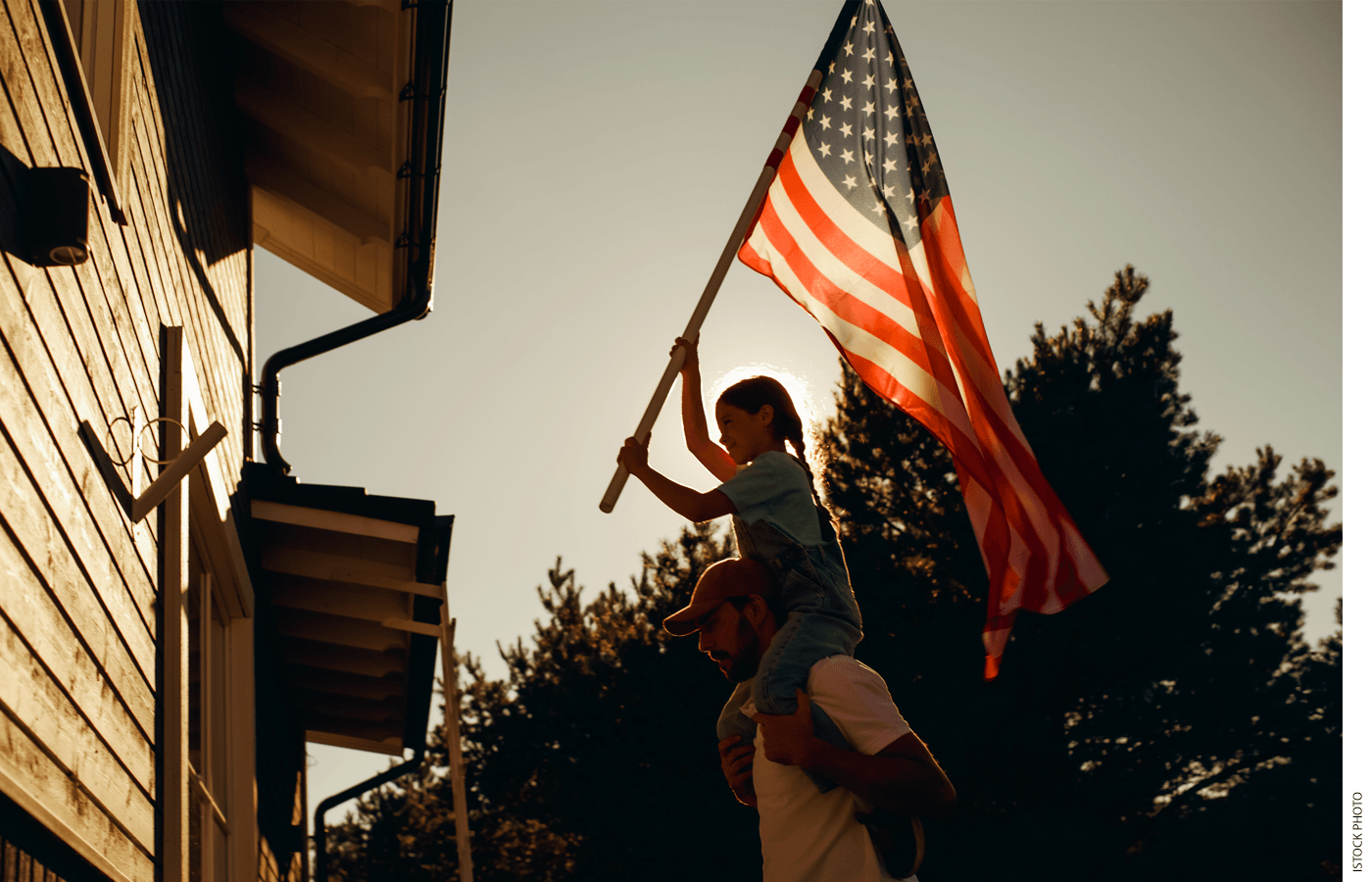
As part of my preparation for America’s semiquincentennial, I have been reading about our nation’s founding and visiting as many historic revolutionary sites in my adopted home state of Virginia as possible. I am learning far more than what was in the bicentennial-era textbooks I was assigned as a child. One of the more interesting discoveries is how often our founders disagreed. They vigorously debated almost every aspect of the creation of this exceptional country.
There was one issue, however, on which the founders were wholeheartedly aligned: the importance of an educated populace to the health of our new democracy. “Educate and inform the whole mass of the people,” wrote Thomas Jefferson. “They are the only sure reliance for the preservation of our liberty.” George Washington was more specific about the role of civic instruction in the nation’s long-term viability: “A primary object should be the education or our youth in the science of government . . . (W)hat duty is more pressing than communicating it to those who are to be the future guardians of the liberties of the country?”
Two hundred and fifty years later, it is clear that we as a nation consider quite a lot of things “more pressing” than preparing our youth to be informed and engaged democratic citizens. Recent data are disheartening: The latest results from the 2022 National Assessment of Educational Progress Civics test showed the first decline since the test launched in 1998; only one-fifth of today’s 8th grade students have mastered fundamental knowledge of civics. The picture from the 2022 NAEP U.S. history assessment is even worse—13 percent of 8th graders scored at or above proficient. It is not too strong to say that we are facing a crisis of civic ignorance.
Yet this is also a moment of opportunity. The 250th anniversary of our nation’s founding needs not be only a great day of fireworks, barbecues, and reflection on our beginnings and blessings. The year 2026 can also mark the start of a prolonged period of national rediscovery of our shared history, our founding ideals, and the rights and responsibilities inherent in American citizenship.
That’s the lesson I take from my recent tenure as secretary of education in the Commonwealth of Virginia, where until this January I had the honor of representing Governor Glenn Youngkin on the Commonwealth’s VA250 Commission and leading its Education Steering Committee. Our tag line, “America: Made in Virginia”, was admittedly bold—but it’s not bragging if it’s factual! I am proud of all that Virginia has done to ensure this important anniversary is celebratory, inclusive, and educational. A core principle of the VA250 effort has been collaboration—both within Virginia and nationally. Since its inception in 2020, the VA250 Commission has coordinated with over 130 local commissions and with states across the nation to build momentum for the “big day” and beyond. Critically, we envisioned this commemoration not as just a one-off event but rather the start of a decade or more of civic renewal.
In that spirit of “out of many, one,” I highlight some of our work—and the lessons I took from it—to inform educators, policymakers, and citizens across our country in the hope that together we can spark a civics renaissance to strengthen our democracy for the next 250 years.
The Virginia 250th Story: Lessons for Other States
With the goal to engage, inspire, and educate Virginians in every corner of the Commonwealth, our state and local 250th commissions launched a robust combination of statewide programming and locally planned events, activities, and museum exhibitions. This was an all-hands affair, with Governor Youngkin challenging every state agency to find a unique way to commemorate Virginia’s role in the nation’s founding. Two of my favorite examples involved bourbon and bugs. Virginia’s 250th whiskey releases honor both the founding of the nation and our legacy as the birthplace of American distilling (sorry, Kentucky—you were part of the Commonwealth back then). And the bugs? The Virginia Museum of Natural History hosted a series of exhibits about Virginia’s early leadership in expanding knowledge of natural history and Jefferson’s lesser-known role as the “Father of Paleontology.”
Important milestones are natural moments to celebrate but also offer the opportunity to reflect, engage, learn, and grow. As part of the bicentennial festivities in 1976, thousands of local community initiatives and hundreds of new museums and historic preservation projects were launched. Fifty years later, we have a deeper and broader knowledge of our history that incorporates more rich stories beyond just those of our founding fathers. In the bicentennial commemoration I experienced as a nine-year-old, all the girls were forced to compete for the only spot for a girl in the Independence Day Pageant. We wore our red, white, or blue Keds, sang patriotic songs, and savored staying up late with sparklers and fireworks. But the picture we were shown of our nation’s founding was filtered through a far smaller aperture than should be available to students today. How do we help more Americans—especially our youth—listen, learn, and reflect on how our messy, inspiring, revolutionary, and odds-defying past not only changed the world but continues to impact our present and future? This was the heart of the VA250 endeavor.
To engage, inspire and educate all Virginians about the nation’s founding, we created a VA250 Education Steering Committee comprising over 70 education leaders—including the Virginia Department of Education, our colleges and universities, Chickahominy Tribe, civic organizations, and Virginia museums and historical institutions. Our shared goal over the past four years was to create a series of programs, activities, and engagement opportunities that make history come alive.
Make History Come Alive
The cornerstone of our efforts to increase historical and civics knowledge was the 2023 Update of the History and Social Studies Standards of Learning for Virginia Public Schools by the Commonwealth’s Board of Education. These standards remind us of why expecting every student to master core knowledge of our history and our government is critical to our future. As the document’s Guiding Principles state, “The teaching of history should illuminate insights from the past and inspire current and future generations to lead lives that are informed and inspired by those who walked this journey before them. . . . This comprehensive story of the United States and the world will prepare every student for the rights, opportunities and responsibilities of Americans.”
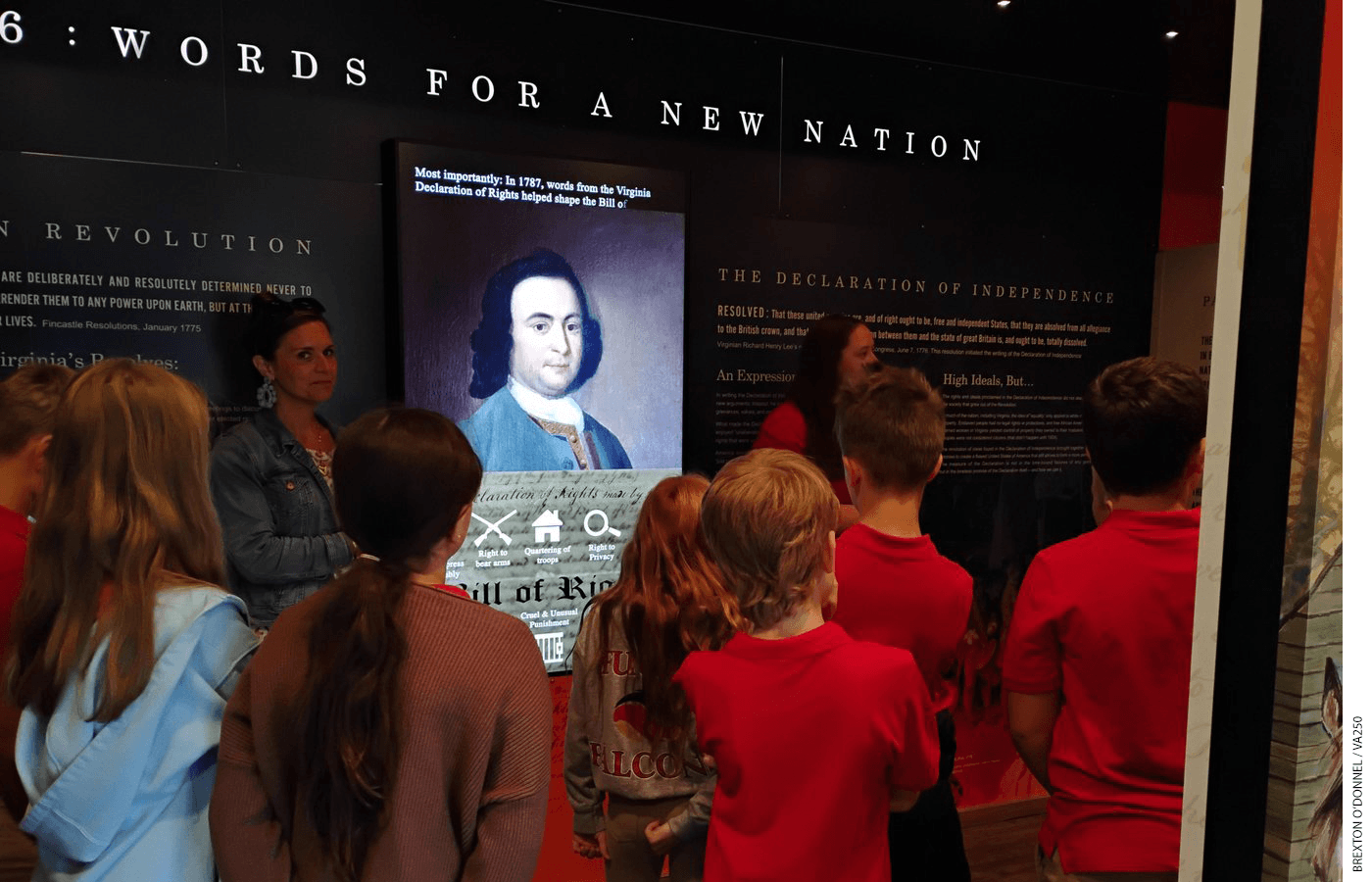
The adoption of the standards fulfilled Governor Youngkin’s campaign commitment to teach all of our history—the good and the bad—and to ensure that the stories of more Virginians are told. We ensured not only that George Washington was restored as “Father of the Nation” but also that, for the first time, every Virginia elementary student will learn that slavery was the primary cause of the Civil War. To make this content “come alive,” the Virginia Department of Education is working with our historical institutions and museums to link specific standards to videos, tours, artifacts, and lesson plans so that students from Abingdon to Arlington can experience the history of our state and country through multimedia tools.
In addition to changing the what and how of history teaching in the classroom, we are literally taking the show on the road with a hands-on, interactive, and immersive “museum on wheels” that illustrates how America was made and shaped by Virginians. Traveling to every corner of the Commonwealth, the goal is to provide as many people as possible—including every middle school in the state—access to the exhibit. A student I met on the tour shared that it was his first time in a museum and he loved it—a sweet affirmation of why expanding access to knowledge matters.
Our annual Independence Day holiday acknowledges the power of ideas and words. Our commission encouraged every community to have a public reading of the Declaration of Independence each Fourth of July, and the education department launched an annual Reading Revolution during which community members partner with local elementary schools to join classrooms to read and discuss books about our nation’s founding.
Celebrate Democracy
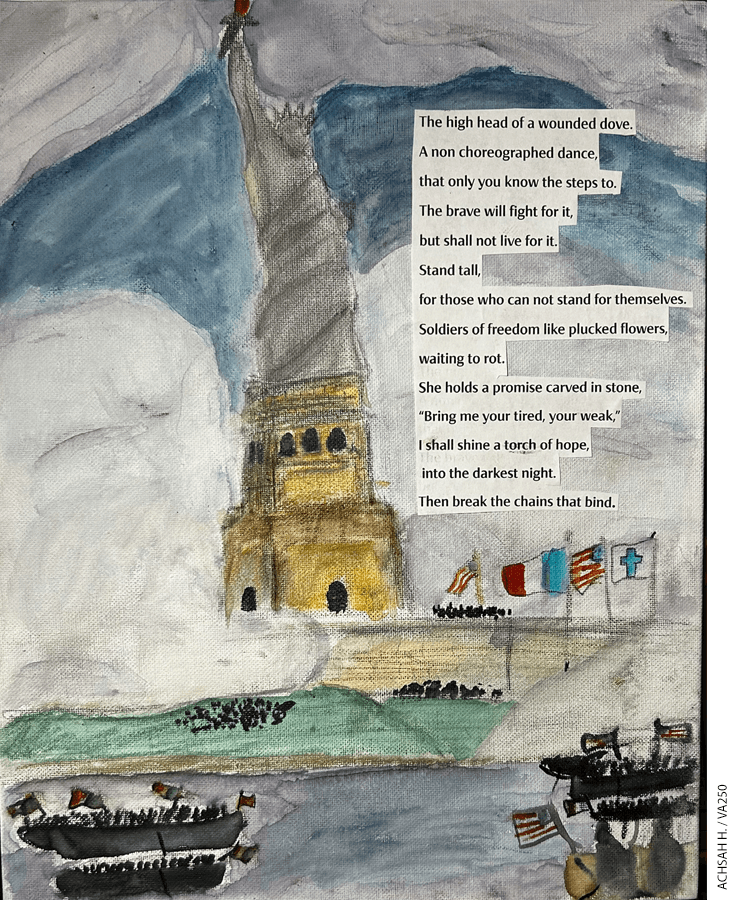
Virginians, like all Americans, are great at throwing a good party—and we will do so once more this Fourth of July. But VA250 also worked to provide new opportunities for students to reflect on and celebrate what our country means to them. Established in 2023, the Expressions of Freedom contest invites all K–12 students in Virginia to share their personal beliefs about freedom through poems, paintings, essays, and videos. To engage our college students, a statewide oratory contest to write and present their speeches; this past year’s topic was “tell the story of an American who embodies the Declaration of Independence.”
Some Virginia students also had the opportunity to experience firsthand the meaning of becoming an American through federal judge David Novak’s naturalization ceremonies. Judge Novak partnered with colleges in his district to host breakfasts for local elementary school students to learn about the naturalization process from his law clerks and participate in the ceremony. Every person I know who has taken part in a naturalization ceremony says it is a beautiful (and tearjerking) reminder of how extraordinary the United States is and how fortunate the citizens are who are gifted that privilege at birth. We can and should give all American students that experience.
Spark a Civics Renaissance
Making our history come alive and celebrating democracy are core parts of sparking a civics renaissance. Additionally, our nation must prioritize robust civic knowledge and a culture that values and practices freedom of expression, diversity of thought, and civil discourse—both in and out of classrooms. Government has a role—such as the revision of our history and civics standards—but this renewal requires the leadership of public, private and non-profit civic organizations.
Working together, Colonial Williamsburg, the Virginia Chamber, the Governor’s office and VDOE launched the Virginia Civics Bee, and every middle school student in the Commonwealth is eligible to participate. We have sent two state champions to the national competition and have celebrated the outstanding teacher who taught both of them! The VDOE—in partnership with the Virginia Museum of History and Culture (VMHC)—is providing resources, instructional guides and training around our new civics and history standards so that every teacher is prepared to nurture in their students a curiosity about and love of history. The VMHC is now the largest and preeminent hub for K–12 civics education in Virginia with a coalition of organizations working together under one shared mission: strengthening constitutional literacy, civic engagement, civil discourse, and Virginia students’ understanding of their rights and responsibilities as citizens. In addition to providing free access to the Civics Connects standards-aligned curriculum, VMHC and its coalition are also expanding access to debate programs. Students with this training not only are more civically engaged but also show up in college more open to new concepts and are better able to articulate fact-based arguments (see “Resolved: Debate Programs Boost Literacy and College Enrollment,” research, Summer 2024).
The Council of Presidents (our four-year and two-year college leadership) and Governor Youngkin’s administration prioritized building vibrant learning environments which nurture civil discourse and free inquiry. Together, we hosted the Summit on Free Expression and Diversity of Thought to explore how colleges can better prepare every graduate to be responsible and constructively engaged members of our increasingly pluralistic campuses and society. The Virginia Plan for Higher Education (2026–2032) calls for an enhancement of civic knowledge, civil discourse, and service learning in the college experience throughout the Commonwealth. To support these goals, our colleges are partnering with leading national organizations such as the College Discourse and Debate Alliance (who sponsor Braver Angel debates at our campuses), the Heterodox Academy, and Citizens and Scholars, the latter of which is working with a growing number of our institutions to “cultivate talent, ideas, and networks that develop young people as effective, lifelong citizens.”
EdNext in your inbox
Sign up for the EdNext Weekly newsletter, and stay up to date with the Daily Digest, delivered straight to your inbox.
This Too Can Become Political
The data, unfortunately, continue to reinforce the urgent need for this civics renaissance. Gallup polling shows that a record low—53 percent of Americans—are extremely or very proud to be an American. Newly released survey results reveal a wide partisan gap in enthusiasm around the country’s 250th anniversary: twice as many Republicans (74 percent) as Democrats (35 percent) are excited about this milestone. The nation is doomed if civics education starts to become another partisan matter. Our efforts to build stronger civic knowledge and action will be stymied if they are perceived to be associated with one political party. Commitment to knowing our history and ensuring every American understands how our government works and their responsibility and role as citizens can’t be viewed as a Republican or Democratic issue.
Patriotism and national pride are increasingly split not only along party lines but also by age. Eighty-three percent of the Silent Generation feel strong pride in the country compared to 41 percent of Gen Z. Patterns like these differ starkly from the almost uniform pride U.S. adults took in being American at the start of the 21st century.
The Gallup pollsters provide reasons for this erosion of national unity over the past 25 years: greater pessimism about economic prospects for younger generations, general dissatisfaction with the state of the nation, greater divides between parties, and partisan rancor. I would add to this list another change that took place in this same period: the de-prioritization of history and civics education in our nation’s public schools.
Without a thorough understanding of America’s exceptional story and how revolutionary (and nascent) our governing model is, it is tempting to judge the country by the failed politics of today rather than by the founding ideals that that have sustained it for 250 years. Teaching those ideals through a robust civics and history education is critical for every student. I am an unabashed defender of the federal No Child Left Behind Act and the decade of strong student learning gains in math and reading it spurred, but those gains too often came at the expense of history and civics education. Knowledge of history and civics is as important as mastery of math, reading, and writing for future success—not only as a skilled worker who contributes to our economy but as an informed citizen who participates in our democracy.
Love of country is like anything else—the more effort you put into it, the more you get out of it, and your support and admiration increase. Too often our disposition is more about the rights we feel we deserve as citizens and less about the responsibilities we owe as partakers in a free society. We must constantly remind ourselves and teach our children that we are the people in “WE THE PEOPLE”. WE are the ones responsible for ensuring our democracy works.
Signs of Hope for the Next 250 Years
I am thrilled to see flags and bunting appearing on our streets. I am excited for the celebrations happening this weekend. But most of all, I am heartened by signs of growing commitment to civics education. NAGB’s recent decision to revise the Civics Framework and allow states to opt in for state level results in the 8th and 12th grade civics assessments will provide actionable data that can inform policy and practice.
Other green shoots abound: Every state will participate in this year’s National Civics Bee. Attendance at the Jack Miller Center’s National Summit on Civic Education has quadrupled over the past four years. And increasing numbers of colleges are launching Schools of Civic Thought and Leadership, as well as requiring students to take courses in American history and civics.
As we celebrate this Fourth of July, let’s make a shared commitment to focus not just on the single day but to launch a multi-year period of civic renewal and education. In Virginia, the programming will continue to commemorate the efforts of our founding that happened after the ink was dry on the Declaration through the anniversary of the Yorktown victory that ended the War for Independence in 1781. Think about what could happen if this nation came closer together over the next 13 years, in the lead-up to the 250th anniversary of a fully functioning representative democracy under the U.S. Constitution in 2039, and focused on civic education, engagement, and renewal.
Our classrooms are critical to this effort to spark a civics renaissance, but it also needs to happen at our dinner tables, in our break rooms, and during our book clubs as. Read the Declaration of Independence on the Fourth of July before you head out to the festivities. Attend a naturalization ceremony. Visit museums and historic homes. Challenge your trivia friends with the citizenship test. Read the newspaper and become a more informed and active voter. Volunteer in your community. Run for office. Talk to your children about the responsibilities—not just the rights—that come with citizenship. Embrace the next 13 years as a period during which our communities celebrate democracy. Help make our history come alive and spark a civics renaissance.
These activities are not only educational and enlightening—they’re also fun. To ensure the next 250 years of the United States of America are defined by strength and vibrancy, let’s commit ourselves to such actions in an effort to build a “more perfect union” together.
Aimee Rogstad Guidera served as secretary of education for the Commonwealth of Virginia from 2022 through 2026.
Suggested citation format:
Guidera, A. R. (2026). “250 Reasons This Is the Time for a Revival in Civic Education: Virginia embraced an effort to renew students’ patriotic zeal that could be a blueprint for other states.” Education Next, 26(3), 2 July 2026.