


Politicians of both parties have decided to do something about the $1.7 trillion in outstanding student loan debt. Democrats and the Biden administration saw mass forgiveness as the solution. By contrast, Republicans have asked whether—given that student debt has gotten so out of control—the federal government shouldn’t take steps to reduce how much gets lent out in the first place. After all, the first thing you do when your house starts to flood is turn off the tap.
Hence the higher-education provisions included in the One Big Beautiful Bill Act (OBBBA), President Trump’s signature domestic-policy bill. Passed in summer 2025, OBBBA imposes new caps on federal loans to graduate students and parents of undergraduates, who have historically had the highest debt burdens. A new accountability system will cut off loans to programs whose graduates have low earnings that could hamper their ability to repay their debts.
All of this has administrators at schools of education wondering about possible collateral damage. Loan limits may prevent excessive debt accumulation, but might they also block some students from even seeking education degrees? Moreover, education doesn’t exactly have a reputation for lucrative pay. Might the accountability system knock some education degree programs out of the student loan program entirely?
For the most part, these administrators have little to worry about. Most students in education programs, even at the graduate level, don’t borrow excessively. And almost all education degrees pass the new earnings-based accountability test.
But there are exceptions. Schools of education with exorbitantly high tuition are likely to see their students’ borrowing constrained under the new loan limits. This isn’t an accident but the intent of the policy. Congress has asked why the government should finance top-dollar programs when inexpensive options exist. The affected programs—which include some of the nation’s most elite education schools—will need to seek solutions such as lower tuition or alternative financing. Otherwise, they may lose students to programs with more reasonable prices.
OBBBA Eliminates Grad PLUS, Caps Loans to Parents
OBBBA made four major changes to federal student-loan limits that will directly impact schools of education:
- Grad PLUS, which allowed graduate students to borrow effectively unlimited amounts from the federal government, will end. Going forward, graduate students in education programs may borrow only from the Stafford loan program, which caps annual lending at $20,500 ($100,000 lifetime).
- Parent PLUS loans, which parents may take out on behalf of dependent undergraduate children, will be capped at $20,000 per year per child ($65,000 lifetime).
- Students enrolled part time will see their loan limits reduced on a pro-rated basis: For example, a student enrolled half time will have half the loan limit of a full-time student.
- Institutions may set lower loan limits for all students in a particular program.
The changes to graduate lending will have the greatest impact. The end of Grad PLUS loans is scary for some institutions, but most schools of education do not have reason to worry. According to data on loan disbursements made available by the U.S. Department of Education, just 5 percent of students in master’s of education programs took out a Grad PLUS loan in the 2024–25 academic year. In doctoral-level education programs (largely Ed.D. programs), 14 percent of students took out a Grad PLUS loan that year.
But the use of Grad PLUS is not evenly distributed across programs. At some schools of education, the majority of students rely on Grad PLUS—and often find themselves deep in debt.
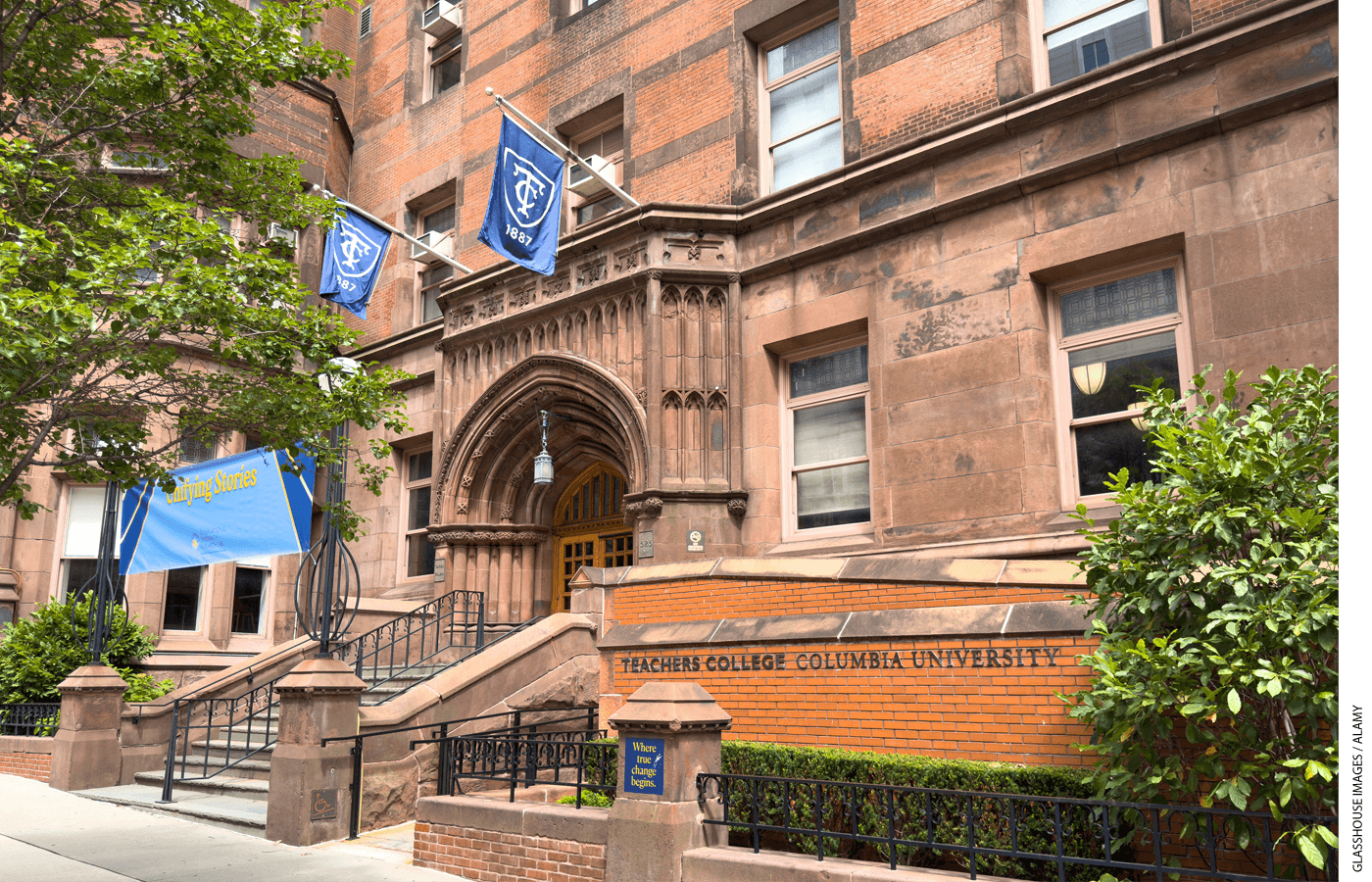
At Nova Southeastern University, in Florida, 81 percent of students in the special education master’s program use Grad PLUS. Among Grad PLUS borrowers, the average student takes out over $25,000 in Grad PLUS loans on top of their Stafford loans, each year. Nova Southeastern isn’t alone: More than half of students in certain education programs at Pepperdine University, the University of Southern California, Teachers College Columbia University, and New York University use Grad PLUS. The reason is simple: These institutions charge tuition that is much higher than average.
Overall, graduate schools of education take in over $500 million in Grad PLUS volume annually—money that stands to disappear under OBBBA. But so concentrated is Grad PLUS funding that just 15 institutions—led by Nova Southeastern, the University of Southern California, and Liberty University—use more than half of all Grad PLUS funding disbursed to graduate schools of education each year.
End of Grad PLUS Mostly Hits High-Debt Ed Schools (Figure 1)
More than half of all Grad PLUS funding disbursed to graduate schools of education each year is used by just 15 institutions.
The impact at the typical graduate school of education, by contrast, is likely to be minimal. In most graduate education programs, a single-digit percentage of students use Grad PLUS loans, and Grad PLUS accounts for only a small slice of revenue (see Figure 1). The disappearance of this lending stream will certainly affect graduate education programs, but most will be able to manage the impact. In fact, the effects may well benefit students. If certain students in these programs have extreme financial need, the institution should think about how to support them with institutional aid rather than point them to more borrowing through Grad PLUS.
In assessing OBBBA’s impact, administrators at some schools of education have fretted that their degrees are not being classified as “professional” under a new definition promulgated by the Education Department to enforce the law’s loan provisions. Not classifying education as professional “fundamentally misunderstands the education field,” according to a statement from the University of Pennsylvania’s Graduate School of Education, and “treats education as if it were a field without specialized training, licensure, or advanced expertise.”
But the label is misleading: The “professional” classification in this context does not carry a judgment on a degree’s worth or the level of expertise an occupation requires. Historically, the term “professional degree” has referred to a handful of high-cost but also high-earning fields such as medicine, dentistry, and law—and that is the understanding of the “professional” classification that the department’s definition seeks to preserve.
In recognition of these higher salaries, but also the higher costs involved for medical school and the like, OBBBA allows students in “professional” programs to borrow up to $50,000 per year, more than twice the maximum at standard graduate programs. The legislation restricts that extraordinary level of borrowing to programs where graduates earn salaries on par with doctors, dentists, and lawyers—and unfortunately, education doesn’t fit that description.
Thankfully, current levels of borrowing are low at most graduate education schools, so most of their degree programs will likely not need the “professional degree” classification. At a handful of programs (including several at the University of Pennsylvania), a large share of students do currently borrow above the new limits, but this level of debt is wildly out of line with the average for similar programs. Congress simply decided not to give the students of such programs access to loans designed for doctors and dentists.
Judging from the law’s design, Congress’s goal in drafting OBBBA was not to cut off loans for the majority of graduate students. Rather, the law’s loan limits recognize that a disproportionate share of the student debt crisis flows from a relatively small number of institutions charging excessive prices.
Since the federal government will no longer back those programs with unlimited loans, high-cost institutions have several options. Most obviously, schools could cut their tuition (or provide more financial aid) and thereby reduce students’ need to borrow. Or schools could try to help students get private loans. But these changes would require institutions to either put up the money themselves or convince third-party lenders that students’ expected financial returns for attending their programs justify the high tuition they charge. Either way, institutions will need to take more responsibility for their own high costs.
The same logic is evident in OBBBA’s caps on Parent PLUS, the loan program for parents of dependent undergraduate students. The new limits allow parents to borrow up to $20,000 per year—preserving Parent PLUS as a financing option but recognizing that unlimited Parent PLUS loans have led parents to take on debt they cannot afford. A recent investigation showed that many wealthy, prestigious colleges steer a disproportionate number of low-income parents to Parent PLUS loans while also providing aid to students without financial need.
As with Grad PLUS, the Parent PLUS problem is concentrated. Among undergraduates majoring in education in 2024–25, just 6 percent had parents who borrowed a Parent PLUS loan on their behalf (see Figure 2). The share borrowing above the new annual limit of $20,000 was even smaller. For education students, the average Parent PLUS loan (among borrowers) is under $12,000 annually.
But at certain schools, typical Parent PLUS borrowing is far higher. At one of New York University’s teacher education programs, 22 percent of families use Parent PLUS loans, and the average borrower takes out $46,000 per year. At a handful of universities, more than half of education majors have parents using PLUS loans.
Most Education Majors Aren’t Using Parent PLUS (Figure 2)
Only 6 percent of undergraduates concentrating in education had parents who took out a Parent PLUS loan in the 2024–25 academic year. Among those, the average loan was just $12,000—well below the new annual limit.
Clearly, expensive schools like NYU tend to have more students using Parent PLUS because tuition at such institutions is exceptionally high. Indeed, part of the goal of loan caps is to force expensive schools to either reduce tuition, offer more financial aid, or seek out alternative funding sources, rather than simply sticking families with Parent PLUS loans that can easily run to six digits over a four-year college career.
OBBBA introduces another significant change to education lending by pro-rating loan limits for part-time students. Overall, part-time students will likely borrow closer to their new limits than full-time students: Among borrowers, the median master’s of education student takes out $10,250 per year, exactly the new limit for half-time students. Graduate students in education are somewhat more likely to enroll part time than other graduate students, though a majority still enroll full time. Education schools with a high number of part-time students may wish to pay closer attention to this aspect of the changes.
Overall, education schools that charge reasonable prices have little to fear in the new loan limits. Congress has also now stipulated that if a school wishes to rein in its own students’ debt, it is welcome to reduce loan limits below the statutory maximum; schools that do so could further mitigate the student loan crisis.
Loan limits, however, are not the only change to student lending in OBBBA. Congress also cut off loans to programs with poor student earnings outcomes. Yet schools of education have even less to worry about here.
“Do No Harm” Test Holds Schools Accountable for Students’ Earnings
Under OBBBA’s “Do No Harm” test, programs whose graduates have consistently low earnings will eventually lose their right to enroll students using federal student loans. Specifically, if graduates’ earnings fall below a benchmark for two of three consecutive years, the program is kicked out of the federal student loan system. The Do No Harm test generally works as follows:
- For undergraduate programs, the median earnings of graduates four years after leaving school must exceed the median earnings of people ages 25 to 34 in the same state as the institution who have only a high school diploma. This benchmark averages around $35,000 nationally but varies from state to state.
- For graduate programs, the median earnings of graduates four years after leaving school must exceed the median earnings of comparable bachelor’s degree holders (generally defined as people ages 25 to 34 in the same state as the institution, with a bachelor’s degree in a similar field of study). Usually this means graduate programs in education are compared to the earnings of people with a bachelor’s degree in education. Nationally, workers in this comparison group earn around $47,000.
In most cases, failing the Do No Harm test results solely in the loss of student loan eligibility; “failing” programs can usually maintain access to Pell Grants. The school will not be forced to shut down a program that fails the test—if the institution believes it can operate a program with Pell Grants and other funding sources, it is welcome to do so. But Congress has deemed that it is inappropriate for students to borrow to attend a program where their expected earnings fall below these thresholds, since graduates will not likely have the means to repay their debts in full.
Education has never been known as the highest-paid field of study—but most programs in education produce graduates who earn enough to clear the applicable benchmark (see Figure 3). Among more than 1,000 bachelor’s degree programs in education nationwide, just three are likely to fail the Do No Harm test, according to preliminary data from the U.S. Education Department. At the master’s degree level, just eight programs out of 2,000 nationwide are likely to fail. No doctoral programs are expected to fail.
“Do No Harm” Test Spares Most Education Programs (Figure 3)
Very few degree programs in education fail the Do No Harm test, which simply makes them ineligible for student loans under new OBBBA provisions.
Do No Harm takes a larger bite at the sub-baccalaureate level. About 80 undergraduate certificate and associate degree programs in education (slightly less than a third of these programs overall) have earnings outcomes that fall below their benchmarks. Most of the “failing” programs are in early childhood education.
While a third of sub-baccalaureate education programs failing Do No Harm is striking, most of those programs will likely endure. Most are offered by community colleges where low tuition means few students need to take out federal loans to begin with. Among students enrolled in education programs that are likely to fail the new standard, just 21 percent took out a federal student loan in 2024–25.
Even if their students can no longer borrow, most of these programs will probably continue operating with Pell Grant funding and subsidies from their state governments. After all, student loans account for only a small share of these programs’ revenue today, and most students can enroll without resorting to borrowing.
EdNext in your inbox
Sign up for the EdNext Weekly newsletter, and stay up to date with the Daily Digest, delivered straight to your inbox.
Early childhood education may have social value, even if the field doesn’t always pay well. But the Do No Harm standard reduces the risk that students will borrow excessively for programs that lead to such low earnings. Students in “failing” education programs earn just $31,000 at the median.
If states want students to pursue these programs, the withdrawal of student loan subsidies could force them to find ways to finance such programs without the need for federal loans. Better yet, states could soften (often onerous) licensing requirements for early childhood education workers to make this profession accessible without debt. Unconditional subsidies from the federal government through the student loan program have effectively allowed states to sidestep these decisions. Now they will have to step up.
OBBBA’s Reforms Will Bend the Student Debt Curve Downward
Education schools have watched with trepidation as changes to the student loan system have developed. Most institutions, however, have little reason to worry. The student loan limits of OBBBA mostly affect very expensive institutions, and that’s by design. Why should a school charging $50,000 tuition have access to unlimited loans when other schools are offering a similar product at much lower cost? Similarly, the Do No Harm test will not impact the vast majority of education degrees. The exceptions are mostly sub-baccalaureate programs in early childhood education, and states should find ways to develop this workforce without forcing students to take on debt.
OBBBA will require some adjustment from institutions in the short run, but that’s true of most consequential policy reforms. When OBBBA’s changes are fully implemented, fewer students will take on unaffordable loans, bending the student debt curve downward and making $1.7 trillion a number for the history books.
Preston Cooper is a senior fellow at the American Enterprise Institute.
Suggested citation format:
Cooper, P. (2026). “New Caps on Federal Student Lending Could Impact Some Schools of Education: Expensive institutions may need to reckon with OBBBA’s effort to rein in the nation’s $1.7 trillion in student loan debt.” Education Next, 26(2), 5 May 2026.