


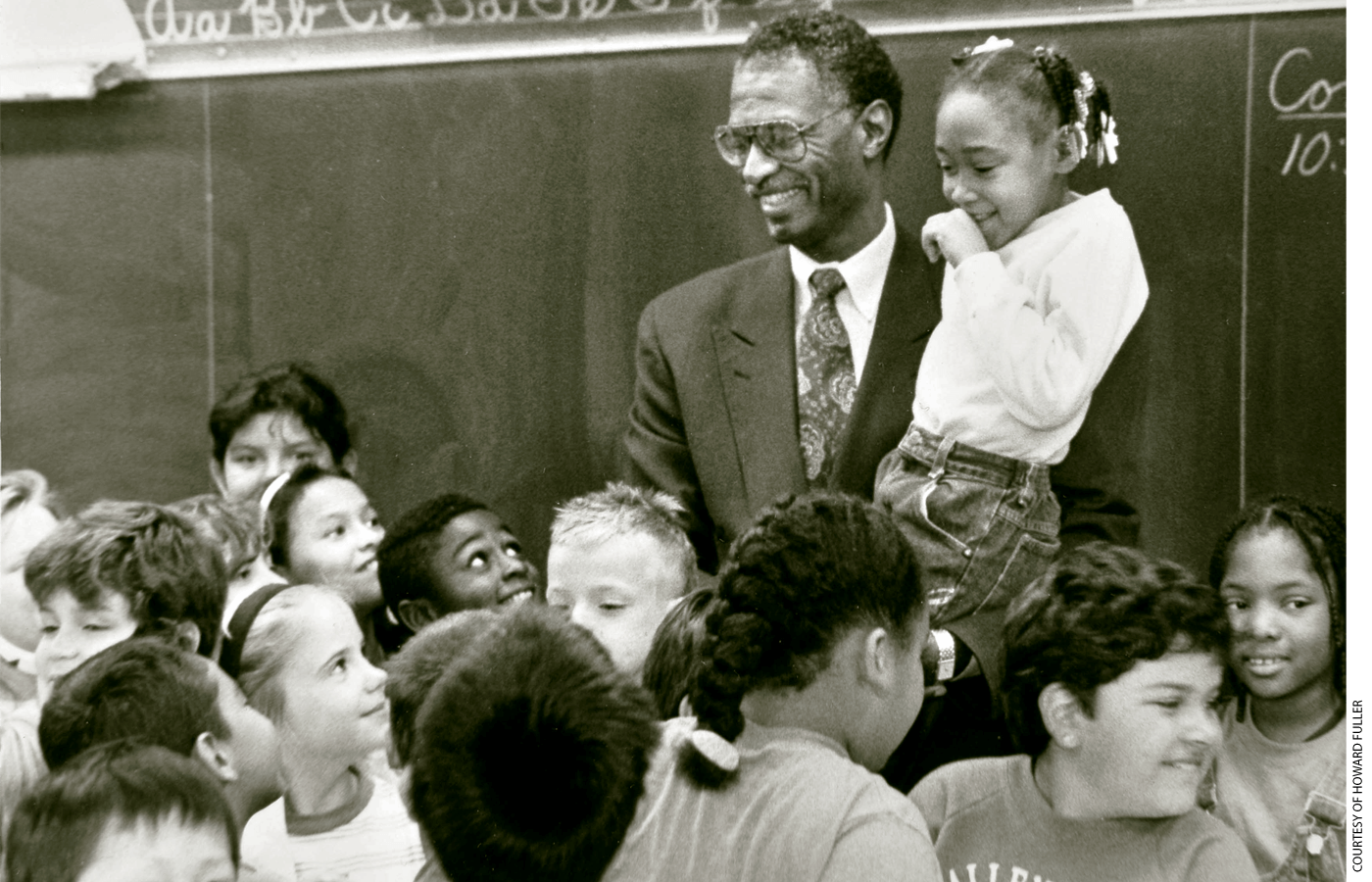
Howard Fuller burst onto the national stage in 1990 as a political organizer when he joined forces with the late state assemblywoman from Wisconsin, Annette “Polly” Williams, to pass the nation’s first school voucher law. Their objective was to provide the mostly Black low-income children of Milwaukee with a chance to escape the chronically failing public schools to which they were routinely consigned and allow them to attend private schools of their choice.
It was not Fuller’s first foray into politics. He previously had manned battle lines to promote desegregation and community control of schools, and to oppose police brutality, poverty, and substandard housing. His furious journey on behalf racial justice had taken him back to the Jim Crow South where he was born and to the distant shores of Mozambique, where he traveled with guerilla fighters who fought colonial oppression. But he would always return to Milwaukee, where he graduated from the public school system, spoke out against its failures, and eventually got to run it when he served as superintendent between 1991 and 1995.
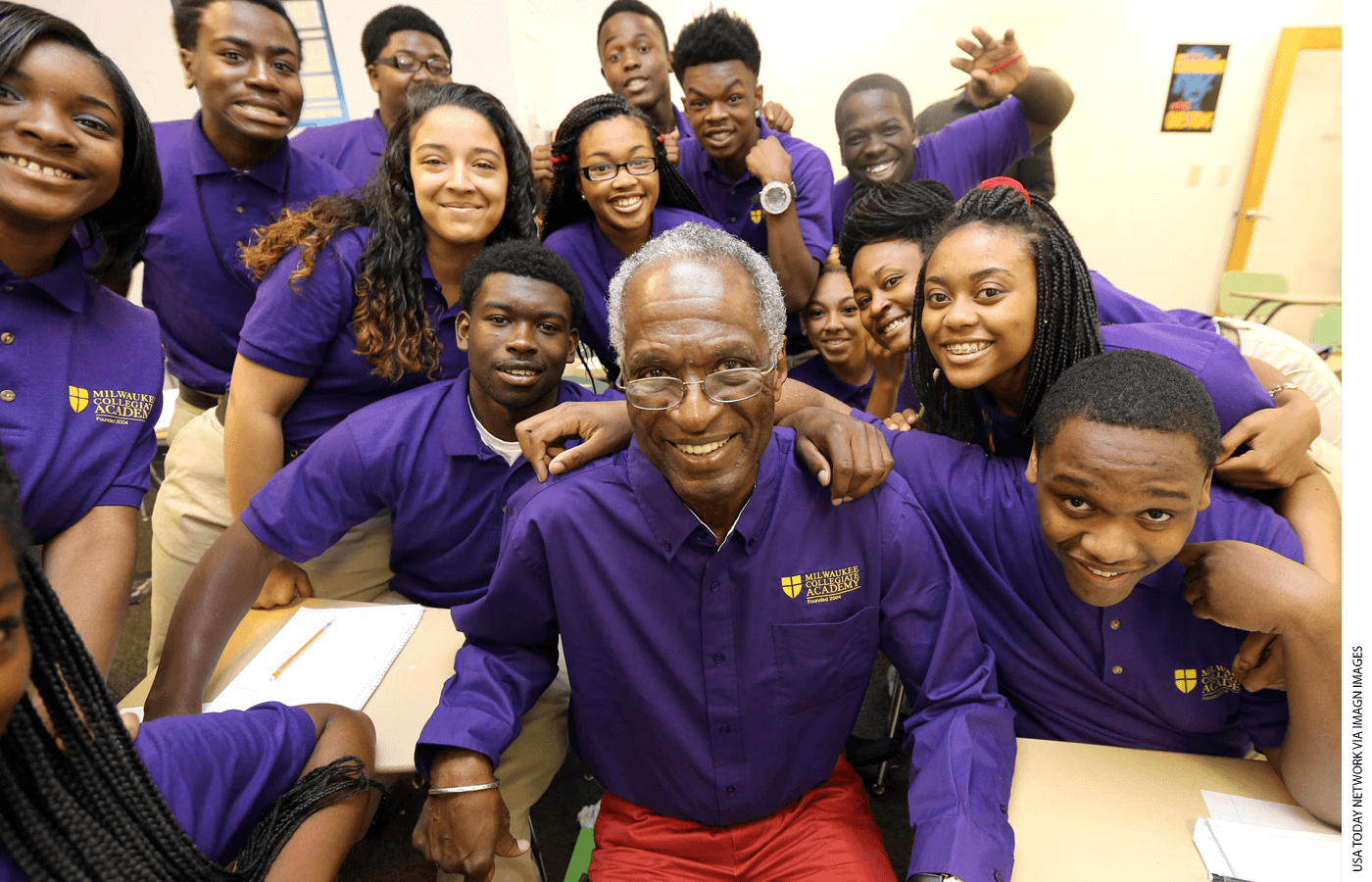
Today, at the age of 85, Fuller remains active in Milwaukee at the Dr. Howard Fuller Collegiate Academy. And now he is the subject of a new PBS documentary.
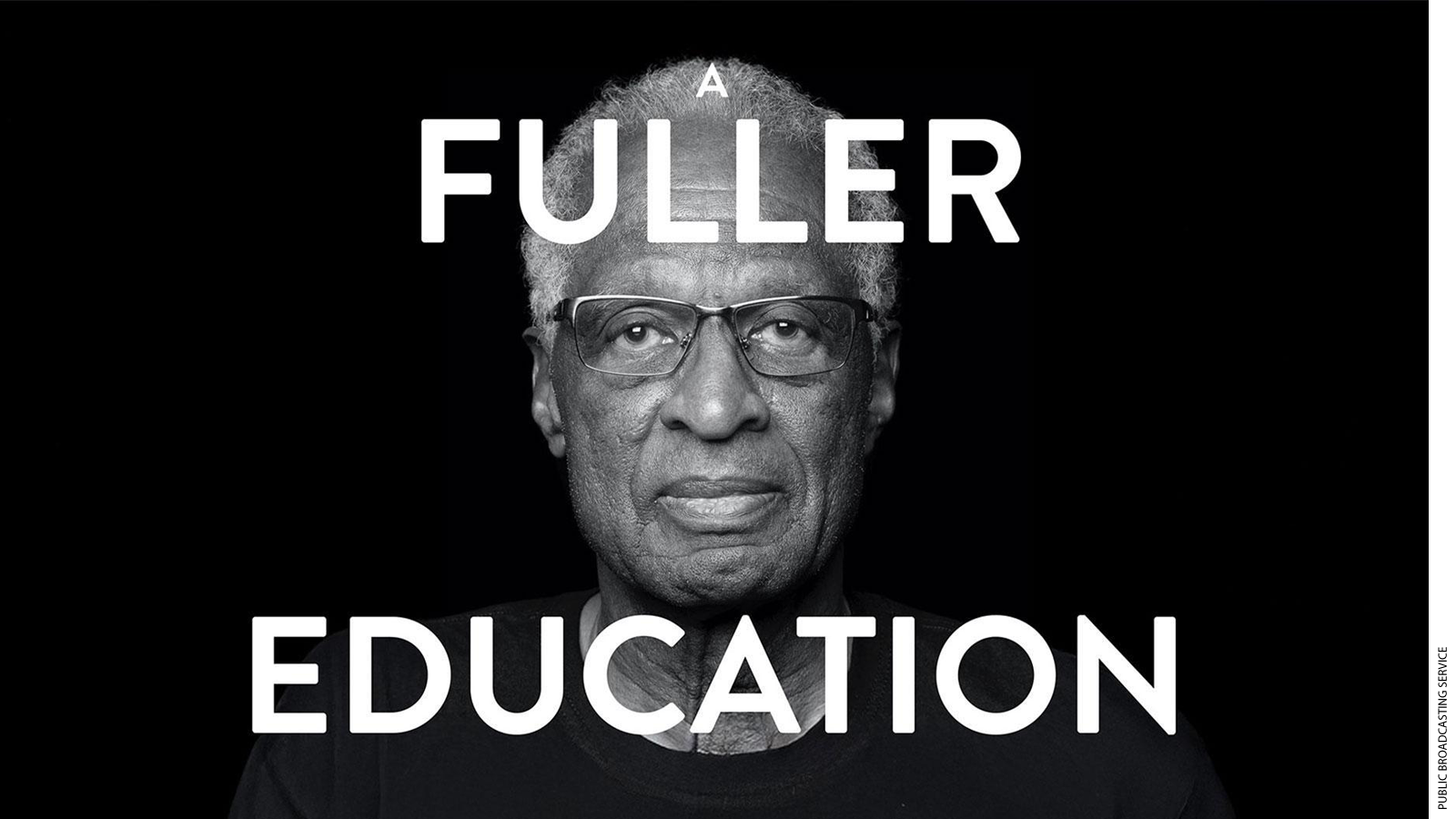
A PBS Documentary, 2026, 57 minutes
A Fuller Education, produced by a team of Emmy-Award winning filmmakers, tells Howard Fuller’s story from his beginnings in Shreveport, Louisiana, where he was raised by his mother and grandmother, to the present day in Milwaukee. We hear from the colleagues and friends who know him best, such as Lisa Frazier Page, who co-wrote Fuller’s 2014 autobiography; Alan Borsuk, a Milwaukee-based journalist and friend; and Sam Carmen, the former executive director of the Milwaukee Teachers Education Association. We see Fuller on display in various settings as a young man, in middle age, and in his later years—angry, somber, defiant, discouraged, cynical, unrelenting, thoughtful, reasonable, calculatingly strategic and sometimes almost satisfied with what he has accomplished. One might be tempted to conclude there are many Howard Fullers, but as the film evolves it becomes apparent that these all are aspects of the same singular character.
Fuller’s lifelong journey on behalf of racial justice can be understood as a measure of America’s own incomplete journey. His childhood exposure to Southern segregation, racial violence, lynching, and a hostile public school system were for him early lessons on the penalties imposed by racism. He relates how his mother, a factory worker, had drummed into his head the value of education as a ticket to a better life. Decades before school choice became a form of political action, she sent her young boy to Catholic schools—first by scraping together money for preschool in the South, and later with the help of scholarship aid to attend St. Boniface’s elementary school after they moved to Milwaukee. Is it any wonder why the rebellious character at the center of the film conceives of school choice as a “rescue mission?”
At North Division High School, located in a Black community of Milwaukee, a teenage Howard got his first taste of public schooling and saw firsthand that segregation was not an entirely Southern disposition. Fuller proved himself to be a strong student and a gifted athlete. He became captain of a winning basketball team and was elected president of the student council. It was at North Division where the promising young upstart began to demonstrate leadership skills. It was also where a well-seasoned Fuller would later apply those skills and instigate a revolution in school governance that had a national impact.
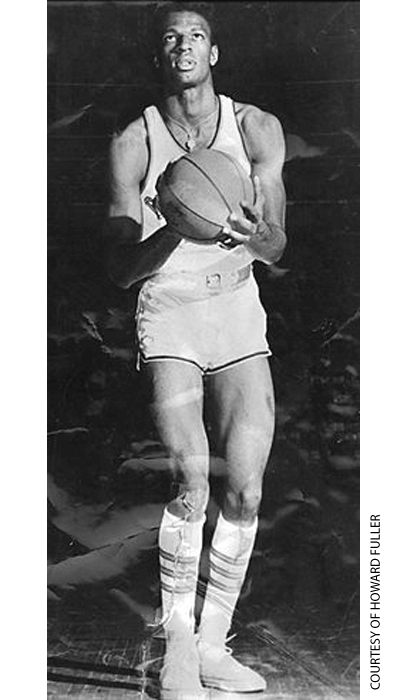
Fuller’s talent on the basketball court, combined with his impressive academic record, won him a full scholarship to Carroll College, just outside Milwaukee. A photo displayed of him with his teammates reveals he was the only Black player on the squad. In fact, he was the only Black student on the entire campus; yet again, he was chosen as team captain and president of the student body. If not for the availability of a generous scholarship, Fuller would not have been there at all—perhaps not at any college, for that matter. His prodigious gifts could have been squandered like those of so many other capable Black men and women denied opportunities.
After Carroll, with the benefit of another scholarship, Fuller earned a master’s degree in social administration at Case Western University, where he studied community organizing. It was there in Cleveland that he began his work as an activist committed to improving public schools. Like many of his generation who admired Martin Luther King Jr. and mainstream civil rights organizations like the NAACP, he embraced a moderate political agenda involving non-violent protests, voter registration drives, fair housing initiatives, anti-poverty programs, and continued efforts to integrate schools.
I wish the film had more time to delve into Fuller’s activities from 1964, when he completed his graduate studies, to his return to Milwaukee in 1976. These years were formative and prepared him for a more consequential career ahead.
After Cleveland, Fuller spent a year in Chicago running a jobs program, then moved to North Carolina, where he remained for the next 11 years. By the time he got there, he had already begun to discover another path in the struggle for racial equality. The seed had been planted at a church meeting in Cleveland in 1964, where he heard a talk by Malcolm X about the future of the civil rights movement.
Ten minutes into the PBS documentary, a white-bearded Fuller looks into the camera to relate the life-changing experience he had listening to the Black Muslim leader’s famous “The Battle or the Bullet Speech,” where he was exposed to the language of Black Power, militant protest, and self-determination. These appeals became more meaningful to Fuller when he himself experienced beatings by the police and jail time for organizing activities that would disturb the racial order in the South.
In 1969, Fuller founded Malcolm X Liberation University (MXLU) in Durham. It attracted students from a network of Pan African primary and secondary feeder schools who absorbed a revolutionary curriculum dedicated to the liberation of African people in America and around the world. Two years later, Fuller traveled to Africa to learn more about the colonial roots of racial oppression and became even more radicalized. Upon his return, he used contacts across the country to organize a march in Washington recognizing the anniversary of African Liberation Day.
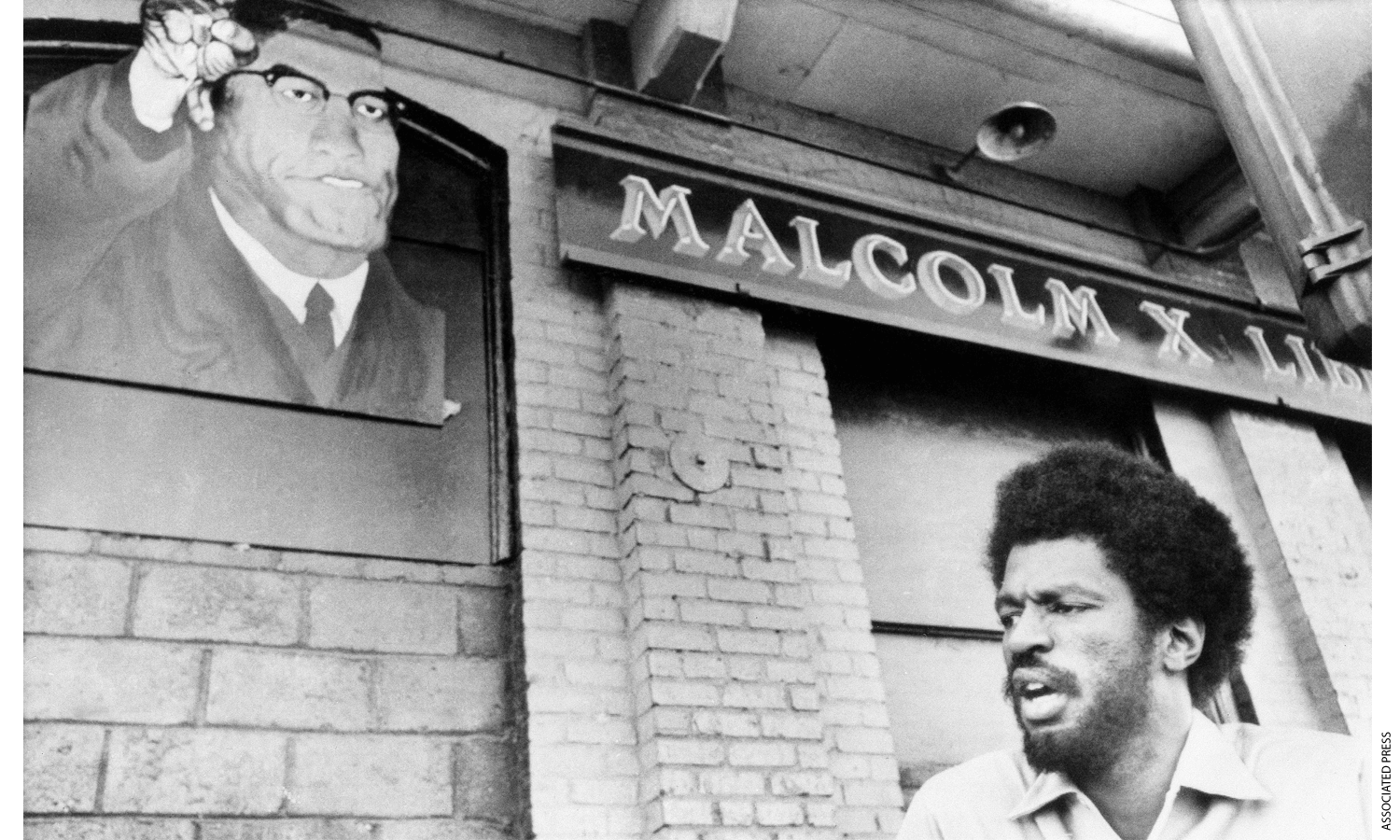
By the mid-1970s, Fuller had exhausted much of his personal and political capital in North Carolina. He had gained a reputation as a troublemaker who was despised by leading politicians across the state. MXLU closed its doors in 1976. An undone Fuller returned home to Milwaukee and sold insurance for a year.
Then, adapting to the political climate of the Midwestern city, Fuller got involved with an ongoing campaign to desegregate the schools, but he soon discovered such efforts were not well received by white residents. It was then that he joined with Polly Williams to set up an independent school district in the racially isolated North Division community. When that effort failed, they turned to vouchers.
Fuller and Williams pursued school choice in Milwaukee out of frustration with a public school system that refused to do what was necessary to educate Black children. They and other Black leaders realized their families needed to take control of their children’s education—if not by running the public schools in their own communities, then by leaving the public schools for better alternatives. That opportunity finally came when Fuller and Williams allied with Republican Governor Tommy Thompson and conservative members of the legislature who were able to overcome staunch opposition by white Democrats to enact the voucher program.
Fuller speaks passionately in the film about how painful his journey on behalf of choice was. He recalls how liberal Democrats called him a sellout for meeting with President George W. Bush and collaborating with Republicans. Yet it was Bush and the Republicans who supported programs to create needed opportunities for poor Black kids, while liberal Democrats consistently opposed them.
Fuller’s story is an object lesson on practical politics at a time when our country is so divided. He appreciates the value of talking to those with whom one may disagree. He understands that such alliances may be temporary but useful to advance the nation’s slow march towards education equality.
EdNext in your inbox
Sign up for the EdNext Weekly newsletter, and stay up to date with the Daily Digest, delivered straight to your inbox.
Howard Fuller also knows what he is about. Market-oriented economist Milton Friedman, considered by many the progenitor of school choice, makes a cameo appearance in the film, but Fuller is quick to emphasize that he does not support the kind of universal choice programs championed by Friedman at the time and by many Republicans today. His rescue mission is targeted at those students with the greatest needs, who are disproportionately Black and economically disadvantaged. He insists that choice programs should be held accountable by public authorities.
Fuller is unapologetic about his focused commitment to Black children, but he acknowledges that race cannot be separated from class as a contributing factor to generations of inequality. At the film’s opening, he reminds viewers that children who are hungry can’t learn. He denounces excessive wealth in the face of extreme poverty, but he welcomes wealthy supporters to his cause. He refers to the late John Walton—the Walmart heir who sponsored several of his projects—as “one of the finest human beings” he had ever known.
Throughout his storied life, Fuller could effortlessly switch between an insider and outsider political role. The once dashiki-clad young radical who could be seen with a raised Afro shaking his fist to chants of Black Power was among the first Black organizers to get behind the 1982 campaign of Democrat Tony Earl for governor of Wisconsin. He went on to work in Earl’s administration. After mounting the choice initiative in Milwaukee, Fuller expanded his efforts nationwide in 2000, founding the Black Alliance for Educational Options that continued to thrive for seventeen years.
I regret the film does not give more attention to Fuller’s intellectual side. He wrote his doctoral dissertation on school desegregation. He held a distinguished university professorship at Marquette University before retiring. Dr. Fuller can discuss the scholarly literature on politics, race, education—even Marxism—with genuine authority. He was influenced by the late Ronald R. Edmonds, a Black scholar whose research and activism held that “all children can learn” regardless of race or class. Fuller, like Edmonds, understood that the denial of that claim had served as an implicit excuse for perpetuating the racial gap in learning. And like Edmonds, he insisted that reform needed to focus on academic achievement.
Fuller was also a friend and follower of Derrick Bell, the “Father of Critical Race Theory,” who argued that racism is a systemic and perpetual feature of American society. He saw his own career as an illustration of Bell’s “interest convergence dilemma,” which claims that white political actors will support Black causes only so long as they coincide with their own interests. For Fuller, that dilemma explains the contradictions and fleeting alliances he encountered throughout his struggle for meaningful change.
Even having known and observed Howard Fuller for more than three decades, I saw something in this film I had never seen before: a bright smile across his face that seemed to emerge from the depths of his soul. It flashed on the screen each time he was pictured with the children at the public charter school in Milwaukee that bears his name. Students at the Dr. Howard Fuller Collegiate Academy admire the namesake as a hero and role model, and he showers them with love and pride. This mutual appreciation exhibits what Howard Fuller has understood all along and underscores the main message of this moving documentary: It is all about them.
Joseph P. Viteritti is the Thomas Hunter Professor of Public Policy at Hunter College and recently the author of Radical Dreamers: Race, Choice, and the Failure of American Education, which profiles the life and career of Howard Fuller among others.