


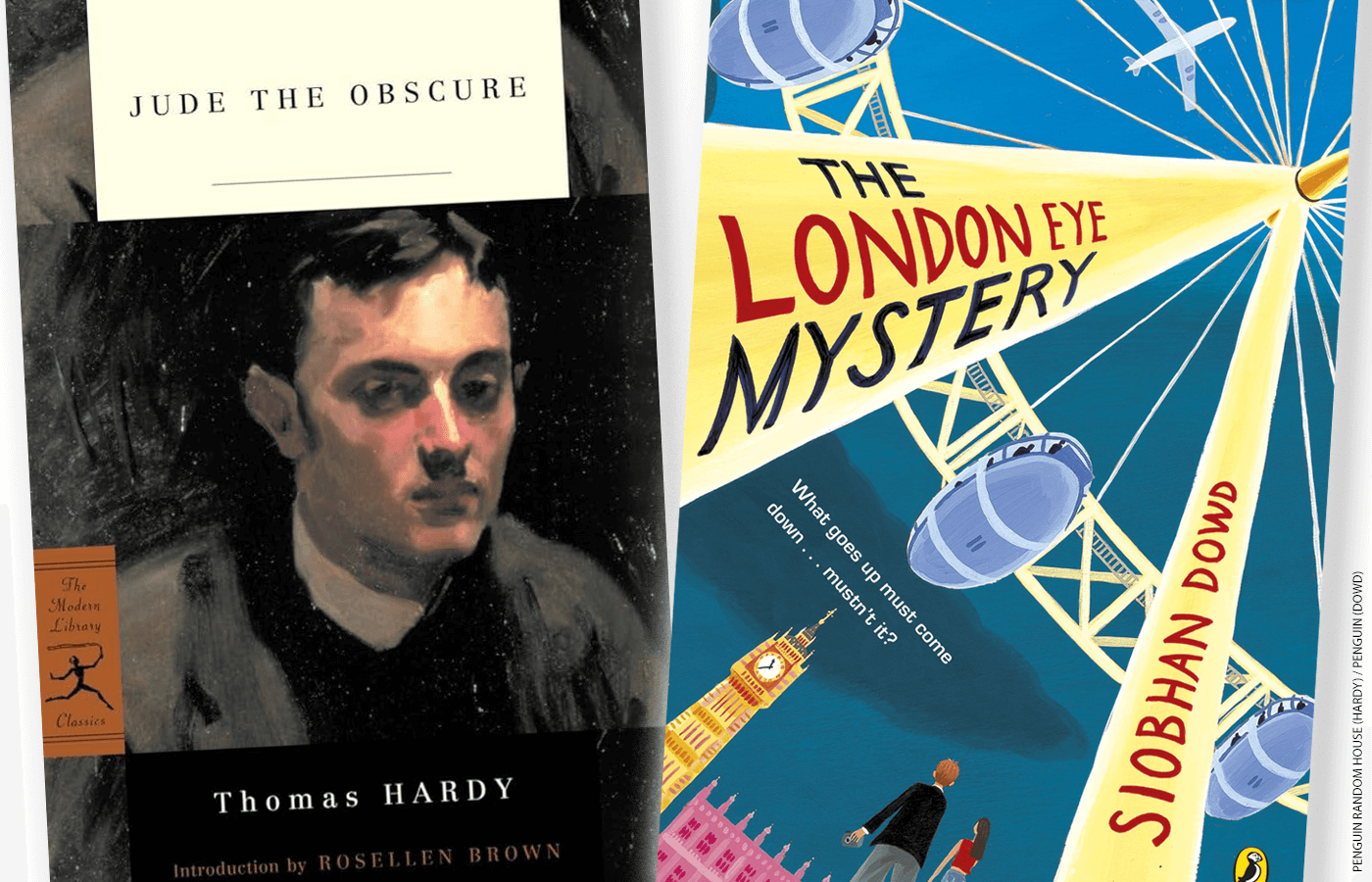
Kids read a lot less than they used to (the same goes for adults). This is a problem. The first step for parents and educators is to demand more. But which books should kids read? On that question, there’s a longstanding debate between stewards of the literary canon and champions of the contemporary “young adult” (YA) hits.
I’m not the guy to referee that debate. I’ve mixed feelings about both the classics and huge swaths of YA literature.
Truth is, I’ve never been a fan of Hardy, Austen, Hawthorne, Melville, Joyce, or many similarly heralded authors. In my student days, I’d routinely wake up at 3 a.m. to do my scholarly duty, only to end up face-planted in their treasured works. In the years since, I’ve occasionally cracked them open again to see if they’d finally click for me. The only thing clicking was my jaw as I’d yawn my way into the same wall.

But don’t think that means my struggles with elements of the canon make me a cheerleader for contemporary, “relevant” YA works. That’s doubly true given that YA publishers have seemingly concluded that angst is an adequate substitute for character development and identity for plot.
This is on my mind because, a few weeks back, I finished reading one of these acclaimed YA books with my elementary-age boys. The 2007 novel The London Eye Mystery has starred reviews from Publishers Weekly, the School Library Journal, Kirkus Reviews, and Booklist. They praise it as a “well-constructed puzzle” with “fleshed-out characters” and a “unique narrator.”
That wasn’t my take. I found the 300-page volume to be mind-numbingly slow and weirdly tedious. The paper-thin mystery got bogged down in go-nowhere narration. And my reaction was charitable compared to that of my kids, who mocked it with increasing relish as it dragged on.
The story is about a boy’s search for his visiting cousin, who goes missing while riding the London Eye. The plot’s defining device is the narrator’s omnipresent autism. I suspect it’s his “unique operating system” that won the book all its plaudits. Indeed, I can’t help but wonder if empathy for the narrator short-circuited reviewers’ critical judgment. For our part, we found the narrator less than endearing, his ceaseless allusions to the weather wearying, and the payoff for his off-kilter brilliance laughably weak.
Okay, it wasn’t our taste. So what?
Well, The London Eye Mystery has been judged a “good” YA book by influential tastemakers who have articulated the reasons they like it. Cool. I disagree and can articulate my own reasons why. This is the crux of what it means to engage with literature (or cinema or theater or art). We wrestle with creative works and form judgments that we’re expected to defend.
But I’m struck at how little room there is for that when it comes to youth engaging with books, whether they’re YA or canon. I’m troubled that discussion of just what it is that makes a book good constitutes a remarkably small slice of our debates over literature and an even smaller slice of instructional time. Here’s what we have instead.
On the one side, the canonites insist that their preferred books are brilliant and foundational to the Western tradition, period. They’re to be admired, not subjected to critique. Yet they have little interest in unpacking the merits of these texts to explain why that is, or inviting students into a genuine back-and-forth about why these works are supposedly so profound or important or evocative or entertaining. Unsurprisingly, many students walk away unconvinced these towering works are all they’re cracked up to be.
Across the aisle, the anti-canonites rail against books penned by “dead white males” while celebrating the “diversity,” empathy, and contemporary relevance of their YA faves—also with little evident attention to literary merits or storytelling mechanics. The quality of the actual book takes a back seat to its sociopolitical statements, to its inclusivity and messaging. Students are expected to read these works to cultivate empathy and understanding. Pushback against their virtues is not encouraged but rather often deemed a troubling sign of bigotry or wrongthink.
In different ways, the two camps are less interested in why a given text is good and more in whether the reader is virtuous enough to appreciate it. If anything, the “wrong” sort of criticism is seen in these circles as a mark of unseriousness or narrow-mindedness. It’s reading as a moral litmus test rather than as a matter of intellectual engagement.
I’m not suggesting a book is only good if self-indulgent, screen-addled 15-year-olds like it. But I am saying that teachers should be engaging students in an ongoing dialogue about literary quality. It’s good and appropriate that teachers make the case for a given work, but the arguments should be discussed rather than presumed.
Subscribe to Old School with Rick Hess
Get the latest from Rick, delivered straight to your inbox.
When I taught 9th- and 10th-grade social studies, my students read (in part or in toto) a variety of texts from The Wealth of Nations to The Communist Manifesto to The Federalist Papers to The Wretched of the Earth. These are significant works. They make important arguments, sometimes in high style (sometimes not). But I didn’t expect students to fawn over them. To my mind, respectful engagement meant teaching students to unpack the authors’ arguments and assess their claims, not obsequiously echo their assertions.
I mean, I can’t recall the last time I saw a champion of the canon make the case for one classic novel rather than another, or a YA enthusiast acknowledge that even some of the most celebrated works in that oeuvre are poorly written dreck. Instead, they tend to protect the whole flock, reluctant to allow that it contains its share of black sheep. Much of what passes for literary discourse feels more like a clash of worldviews and tribal affiliation than a discussion of literary merit.
In all the years I’ve spent struggling with the classics, I recall precious few conversations about what it was, exactly, that made them great. Such discussions need to begin with personal tastes that not everyone may share. I mean, I loved Crime and Punishment but never got more than fifty pages into The Brothers Karamazov. In the YA catalogue, I find Holes to be terrific but A Wrinkle in Time painful. Others may have contrary opinions. That’s healthy. More importantly, that tension should be at the center of our discussion of what students read and how these books are taught. Too often, it’s not.
To be clear, I’m absolutely fine with students having to read books they might not like. Don Hirsch long ago convinced me that students need to be familiar with Homer, Dickens, or Shakespeare simply to be culturally literate. Exposure helps students appreciate new things, and wrestling with books they don’t enjoy can cultivate critical faculties. So whether a kid “likes” a book shouldn’t be a litmus test.
But students would benefit mightily if educators spent more time and energy delving into just why a given book is worth reading. The analysis of assigned works is not an either/or. Teachers should both teach students why a book is deemed good in a literary sense and encourage students to form their own judgments about it. The London Eye Mystery got good reviews and features a “diverse” narrator. That may start a conversation, but it shouldn’t end it.
Going through The London Eye Mystery with my boys did leave me with one other thought about the joy of family reading: Even books we don’t like can land when they’re part of a shared experience. My boys weren’t fond of The London Eye Mystery, but they had a wonderful time ridiculing it. The odd details have become go-to jokes around our house. I mean, it’s not often that you can crack your kids up by saying “cheese-and-tomato sandwich.” The boys may have had more fun than with books they actually liked. Knowing that kids will come away with fond memories, even when a book is “bad,” is just one more reason to keep reading to your kids.
Frederick Hess is an executive editor of Education Next and the author of the blog “Old School with Rick Hess.”