


As of 2024, at least 20 states and countless districts had initiated “Portrait of a Graduate” reforms. In California alone, at least 100 districts have joined the trend.
The idea is simple: High school graduates should possess a set of essential skills beyond mere academics, decided by state education agencies or school districts. These portraits offer standards-setting frameworks that expand beyond traditional academic skills and knowledge to include affective competencies such as collaboration, critical thinking, social awareness, and “being an active citizen.”
While educating the “whole child” is an old idea, modern technologies may make this current trend a novel endeavor. The Education Testing Service and the Carnegie Foundation have teamed up to develop tests that would allow the public education system to measure a student’s progress along these affective dimensions just as it quantifies a student’s mastery of math and reading.
It’s easy to dismiss the Portrait of a Graduate phenomenon as a relatively innocuous exercise that will probably fade away within a few years, as many edu-fads do. Who in their right minds could oppose “critical thinking” or “collaboration”? But that misses the point.
These frameworks extend the scope of traditional standards from academic content and skills to personality traits, fundamental beliefs, and patterns of thought. Portraits of a Graduate change the question facing policymakers from “What should we teach our children?” to “What kind of people do we want to create?” In so doing, they extend the goals of schooling from traditional academics to values and character traits. That represents a seismic shift.
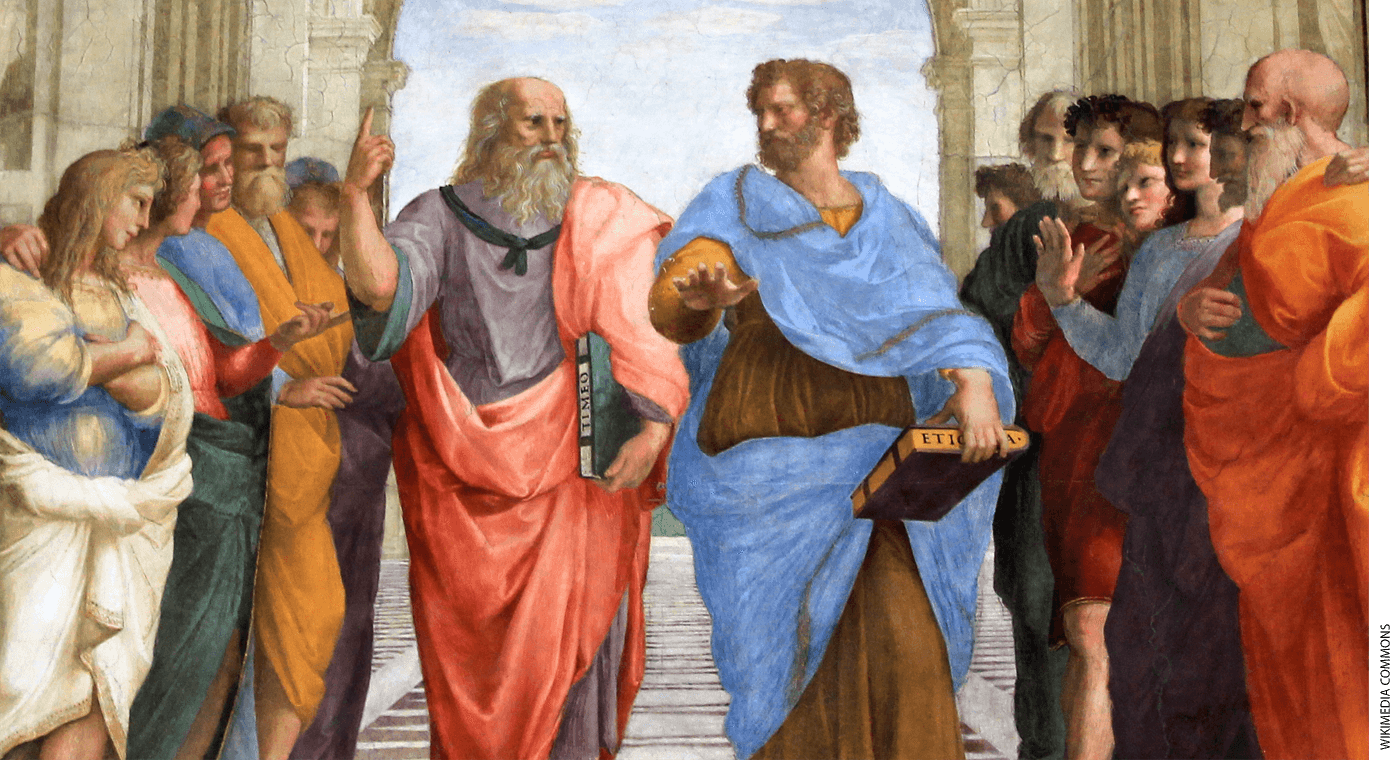
“What should we teach our children?” is a question that has generated heated disputes since Plato penned his Republic. Common Core, which focused on just the “what” of schooling, initiated notoriously contentious, even vicious, arguments. Whether students should first experience algebra in 8th grade or freshman year, whether they should read Harper Lee or Toni Morrison, whether schools should frame America as a positive or negative force in world history—these debates have sparked nationwide campaigns, swung the outcomes of elections, ended political alliances, and triggered policy changes across states.
If Portraits of a Graduate are truly intended to address Plato’s question, they deserve a level of scrutiny and debate that would make arguments over Common Core look like playground scuffles. More realistically, they’ll remain so vague and insipid that they create a permission structure for schools to prioritize most everything except academics and to excuse themselves when they fail at their responsibility to teach even basic literacy and numeracy. Whichever outcome proves true, the portraits raise questions that have so far gone largely unasked as more states and localities roll out their frameworks.
An Old Idea
A 2024 report by the ed-tech nonprofit Digital Promise looked at more than 60 graduate portraits from districts and states around the country and found significant overlap in content. The organization devised a model for districts to follow that it says incorporates 90 percent of the specific competencies that appear across school-, district-, and state-level frameworks. From the opening salvo, there’s cause for suspicion. The authors assert that “education must shift” in response to “a world that is rapidly changing due to emerging technologies and globalization.”
Why modern technological advances would compel us to rethink all of education is left to the imagination. In reality, the question of whether societal change necessitates reinventing education is an old, storied fight.
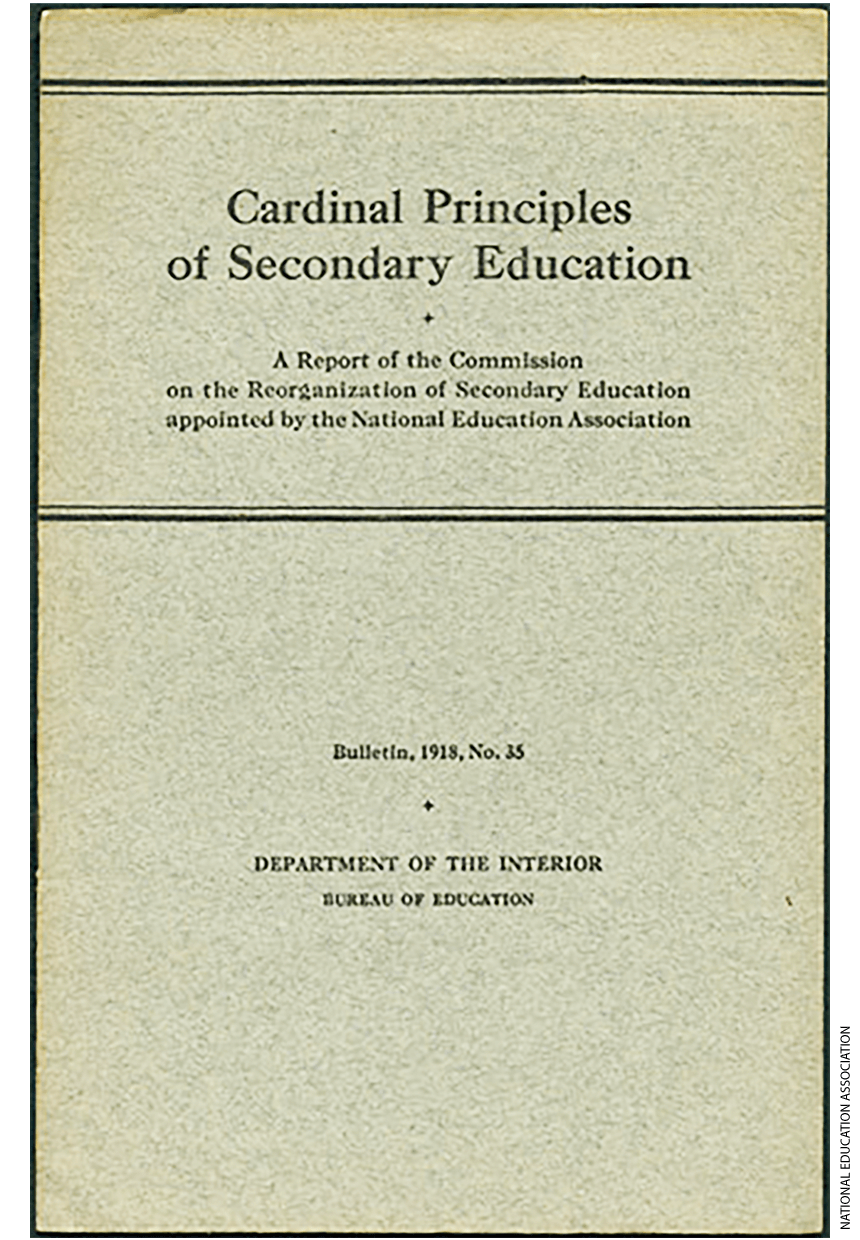
At the turn of the 20th century, for example, the National Education Association was engaged in an internal struggle over this very question. First, in a foundational report from a panel called the Committee of Ten, the association argued for a standardized, college-prep high school curriculum founded on a classical, liberal arts tradition. Then, two and a half decades later, the same NEA published its Cardinal Principles of Secondary Education, rebuking the previous report. The education goals in the new report, released in 1918, could almost be copied and pasted (with some updating of the language) onto a current-day Portrait of a Graduate:
1) Health
2) Command of fundamental processes
3) Worthy home membership
4) Vocation
5) Citizenship
6) Worthy use of leisure
7) Ethical character
Even the justifying language mirrors the contemporary movement. “Within the past few decades,” the NEA authors wrote, “changes have taken place in American life profoundly affecting the activities of the individual.” The problems of community life, the increasing connectedness of the international order, and a more complex economic order all but demanded that schools “broaden their scope,” the report said. Notably, “command of fundamental processes” (by which they meant math, reading, and writing) is the only reference to traditional academics.
In the ensuing decades, these recommendations sometimes spiraled off into fantasy and wish-casting. Wouldn’t it be great if schools could teach children every important thing? A 1930s Harper’s essay on “What the Young Man Should Know” recommended a grab bag of skills including horseback riding, proposing a toast, reloading a firearm, heckling a windbag politician, climbing trees, driving, dancing, drinking, cooking, repairing ceilings [this author takes a breath], setting a broken leg, surviving in the wild, camping, and introducing a stranger (among others).
Such earnest optimism is appealing, but the cold, hard facts of scarcity cut down the aspirations. With a limited number of hours a day, for only part of the year, interrupted by many holidays and breaks, and with only 13 years of a student’s life to influence, schools simply cannot do it all. To include a course on camping or setting a broken leg would necessitate removing other content.
Digital Promise has not provided a new idea but only resuscitated an old one: Do schools exist only (or at least primarily) for academic instruction, or does their duty extend to something greater?
Should We?
Most concerningly, these Portrait of a Graduate frameworks are undergirded by ideology. By necessity, they emphasize certain competencies and traits over others, a process involving value judgments. The “foundational mindsets” in Digital Promise’s model framework read like a celebration of modern, humanist values—perseverance, adaptability, curiosity, and agency—over the classical virtues of prudence, justice, fortitude, and temperance.
Political activism is one of the values that many of the frameworks promote. Digital Promise would see students “participate in a cause to make an impact.” But the goal of such activism is not stated, nor are the bounds on acceptable causes. Would a California school district be expected to give high marks to a student praying outside of Planned Parenthood, or would only the students who marched for Gaza be considered graduation ready?
Vermont’s portrait envisions graduates who can “communicate through a variety of digital media and create a positive digital footprint.” Does this not contradict the wishes of parents who don’t want their children on social media? South Carolina prizes creativity, collaboration, and innovation. What about adherence to the tried and true, rugged individualism, and respect for tradition? Portland wants students who “embrace diversity.” Does that include ideological diversity? There is no way to avoid thorny questions if states continue down this path. Their frameworks will only invite more controversy into our K–12 school system at a time when Americans’ trust in education is at historic lows.
The political bias infecting these portraits becomes clear when they are compared to an explicitly religious or conservative version. For example, here are some of the core competencies expected of graduates of Hillsdale Academy, a private, classical K–12 school affiliated with Hillsdale College:
- Understand their Judeo-Christian Heritage
- Love the Lord their God with all their heart, soul, mind, and strength
- Love their neighbor as themselves
- Recognize that freedom requires discipline and use their freedom responsibly
- Embody the four cardinal virtues: prudence, justice, courage, and temperance
- Pursue the Good, the True, and the Beautiful
- Have a storehouse of memorized Scripture, poetry, speeches, and drama
- Have mature reading, thinking, writing, and speaking skills
- Develop and cherish deep friendships
- Lead and serve those around them in word and deed
Were a state like Oklahoma or Wyoming to adopt such standards, no doubt a public outcry would ensue, and rightly so. So, why do we allow states to adopt standards that celebrate political activism and other left-coded values?
Fundamentally, political disagreements always simmer beneath the surface of public education. There’s no such thing as a values-neutral, apolitical education. Whether students should read Shakespeare or Salman Rushdie is a value-laden question. Whether adults or students should select the curriculum is likewise. Most of the time, practitioners, policymakers, and parents accept a noble lie that schools can focus on just the three R’s—reading, writing, and arithmetic—and skirt the culture war questions most of the time. But the flare-ups at school board meetings in recent years indicate that parents are starting to lose faith in schools’ ability to do that.
To avoid such parental ire, most portraits remain bland and imprecise. Instead of self-discipline, we get “self-regulation.” Instead of “Pursue the Good, the True, and the Beautiful,” we get “learner agency.” These replacements won’t trigger a wave of parental complaints, but they bring with them their own problems.
Will We?
It seems likely that states and policymakers, seeking to avoid controversy, will make the standards so fuzzy that they incentivize only mediocrity. Across Portrait of a Graduate frameworks, vague terms such as “critical thinking,” “lifelong learning,” and “problem solving” pop up like dandelions—superficially appealing but little more than invasive weeds.
If leveraged appropriately, even frameworks grounded in such banalities could bolster rigorous instruction. Rightly understood, the academic competencies outlined in the standards depend on traditional instruction and curriculum. But it seems improbable that the frameworks will in fact spark a return to rigor.
Most readers of Education Next are likely familiar with the shortcomings of a concept such as “critical thinking.” There is probably no such thing as generalizable, content-agnostic critical thinking skills. Cognitive scientist John Sweller has noted the “paucity of data from randomized, controlled trials” finding that interventions intended to improve critical thinking do anything of the sort. Sweller argues that “the only way in which critical and creative thinking can be enhanced is by increasing the domain-specific knowledge base to which the innate and random generate-and-test engine of creativity is applied. Accordingly, the function of education is to enhance a knowledge base. With an extensive knowledge base, critical and creative thinking will follow naturally and automatically.”
Sweller allows that “just because we have not found any teachable, general, critical and creative thinking skills does not mean that they do not exist.” But he cautions that “until a theoretical framework with empirical supporting results appears, advocating for the introduction of critical and creative thinking skills in educational contexts is premature.”
In other words, our ability to think critically about a topic depends not on trainable skills but rather on our breadth and depth of knowledge. A surgeon can think critically about an upcoming surgery because he knows much about biology, human anatomy, and surgical procedures. A historian can analyze primary source documents because she knows much about the historical period from which they come.
Creativity works similarly. Master artists and musicians know vast amounts about their field and techniques. Moreover, they’ve put in hours upon hours of rote practice to learn their craft. An expert pianist would flounder on a flute, and even a classical master might struggle with jazz. Precise technical training and domain-specific knowledge make them masters of a specific area within the broad field of music. As with critical thinking, no amount of loose association, mind mapping, or other so-called creativity-enhancing exercise can achieve its aim.
This same dependence on knowledge applies across the most common competencies listed in the Digital Promise model framework. Thus, in an ideal world, the Portrait of a Graduate frameworks would allow for a renewed emphasis on traditional academics to foster the development of knowledge and skills. But given the already widespread move away from traditional academic instruction, that seems highly unlikely.
Instead, what is much more likely is that these frameworks will become yet another justification to do everything except academics. With poorly defined, unmeasurable goals, teachers can justify most any activity as a means of developing the preferred competencies.
How to foster collaboration and teamwork? Have students build towers with marshmallows and toothpicks. How to foster lifelong readers? Give them comics and have them watch movies based on pop fiction. Digital Promise notes that spaghetti tower challenges and board games are means through which students can demonstrate that they’ve met expectations. When the nonprofit research agency WestEd reviewed 54 graduate profiles across California, “content knowledge” appeared in only 5 percent of them. Not an encouraging proportion.
A journalistic report for The 74 tells of how these portraits are “spurring innovation” in schools. The supposed innovation cited as an example is a presentation on an endangered species, a project I myself did in my student days.
Much of this happy-clappy pedagogy already goes on in schools. Peter Liljedhal’s popular book Building Thinking Classrooms in Mathematics deemphasizes the need to memorize math facts and standard algorithms and encourages teachers to perform card tricks to get students thinking critically. The Jo Boaler–influenced California Math Framework recommends that teachers show up to school in scuba gear and ask kids to discover how to do math for themselves. Lucy Calkins famously said that “every minute you spend teaching phonics (or preparing phonics materials to use in your lessons) is less time spent teaching other things.” As more schools adopt Portraits of a Graduate the affective elements would provide all the justification such education gurus would need to continue these dubious practices.
And as a natural corollary, the portraits also provide a justification for schools when they fail at teaching fundamental academics. During the pandemic, the teachers union leader in Los Angeles, Cecily Myart-Cruz, said, “It’s OK that our babies may not have learned all their times tables. They learned resilience.” Perhaps that was an understandable sentiment during the pandemic, but it’s easy to see how this line of reasoning could become a universal explanation for failure. Students may not have learned about the Civil War or mastered basic text decoding, but they learned collaboration and developed well-being.
Replacing rigorous academic instruction with spaghetti towers incurs an opportunity cost. But that cost is only lost academic instruction. When these frameworks direct educational institutions toward tinkering around with students’ psyches, schools risk even more serious consequences.
Can We?
Even if we accept that schools should explicitly try to foster affective competencies and that they will indeed try to in a meaningful way, there’s a final question: Can they even do so?
A number of graduate portraits include elements that touch on mental health. San Francisco prioritizes development of a healthy “sense of self.” Scroll through a Portrait Gallery created by Battelle for Kids, and you’ll see “resilience” is a common element. “Well-being” is less common, but it shows up in Vermont’s state-level portrait and 5 percent of California districts.
At best, any interventions that angle at these affective competencies will amount to nothing. At worst, they will do damage. When schools try to influence mindsets or emotional competencies, they largely fail. Perhaps the most famous example is growth mindset, the idea that we learn more if we believe that intelligence is malleable and growth possible. Two meta-analyses threw a wet blanket on the concept by demonstrating that interventions to increase growth mindsets accomplish little. Intelligence may indeed be malleable, but our beliefs about it are largely fixed, and there’s little schools can do to unstick them.
But when schools enter the realm of mental health, they risk negative effects. A handful of recent studies examined interventions that focused on improving adolescent well-being through school-level programs. Collectively, they found that these programs led to students reporting more anxiety, greater depression, worse relationships with their parents and peers, and less ability to manage their emotions.
EdNext in your inbox
Sign up for the EdNext Weekly newsletter, and stay up to date with the Daily Digest, delivered straight to your inbox.
Educators have the expertise to teach their content areas, but one adolescent psychology course in ed school does not equip teachers to ethically play therapist in the classroom. As surgeons wouldn’t attempt anesthesiology, so teachers should refuse to act as counselors, tinkering around with adolescent psyches, or assume the role of parent or religious leader, imparting moral instruction.
The primary telos of a traditional school is intellectual development. Schools may adopt or carry out other functions—providing meals and after-school childcare or hosting community events, for example—but these serve as add-ons to academic instruction. To ask schools to explicitly adopt any other primary functions overburdens them and assigns them a job that is outside of their main purpose. It’s like using a screwdriver to hammer in a nail. It works, but inefficiently, and with a few extra dents in the wall.
Likewise, some amount of character instruction inevitably does take place in school. When supervising lunch detention, a teacher might naturally talk with a student about what they did wrong, why it was wrong, and how to do better next time. But researchers have yet to produce evidence that any discrete program angled toward affective aspects of a student’s character accomplishes its stated ends. The collective influence of family, peers, and culture dwarf a school’s ability to affect a student’s sense of well-being, resilience, and growth mindset.
* * *
Plato’s question “What should we teach our children?” is the most fundamental one that educators and policymakers need to ask. With limited time in the day and year, and because we can’t teach everything, we have to make choices both for and against certain skills and competencies.
The best-case, realistic scenario for these portraits comes by way of Indiana. In conversation, the Hoosier State’s Secretary of Education Katie Jenner told me that through numerous listening sessions with business leaders, parents, educators, and industry leaders across the state, common concerns about graduating students arose: Too many young adults couldn’t shake a hand, students rarely made eye contact, and too few would even square their shoulders when talking to you. Policymakers shared a broad consensus around a relatively solid core of competencies:
- Academic mastery
- Career and postsecondary readiness (credentials and experience)
- Communication and collaboration
- Work ethic
- Civic, financial, and digital literacy

Work ethic, civic literacy, career experience—these are useful things that truly do benefit our children. In practice, the Indiana portrait has allowed a stronger emphasis on career and technical education as well as required courses in civic and financial literacy. And Indiana hasn’t placed the responsibility for such instruction solely on schools. It has also partnered with business and industry for hands-on, work-based learning.
Ironically, it may be rigorous academic instruction that most effectively accomplishes the goals that animate most Portraits of a Graduate. Adolescents will roll their eyes at a lesson on how “collaboration is key.” But assign them a demanding project and they’ll have no option but to collaborate. Students will tune out another lecture on the importance of self-control. But, facing a grueling academic gauntlet of final exams, they’ll have no choice but to adopt productive, self-controlled habits. An article on the importance of loving learning might persuade a happy few. But to crack Shakespeare or learn the dramas of history from an instructor with a passion for their subject will inspire even more students to love the content.
Digital Promise argues that students need “new skills and mindsets” in order “to thrive” in the modern world. On the contrary, for the modern student facing the future, there’s no better time than the present to return to old-fashioned instruction: physical books, structured practice, classroom discussion, and academic essays.
At the very least, the Portrait of a Graduate fad may renew age-old debates. Such conversations may be contentious. They may cut to the very deepest values and beliefs—but perhaps they are right, good, and necessary arguments to have.
Daniel Buck is a research fellow at the American Enterprise Institute and director of the Conservative Education Reform Network.
Suggested citation format:
Buck, D. (2026). “Mis-portraits of a Graduate: Latest edu-fad lets schools shift focus from traditional academics to subjective student attributes.” Education Next, 26(1), 13 January 2026.