


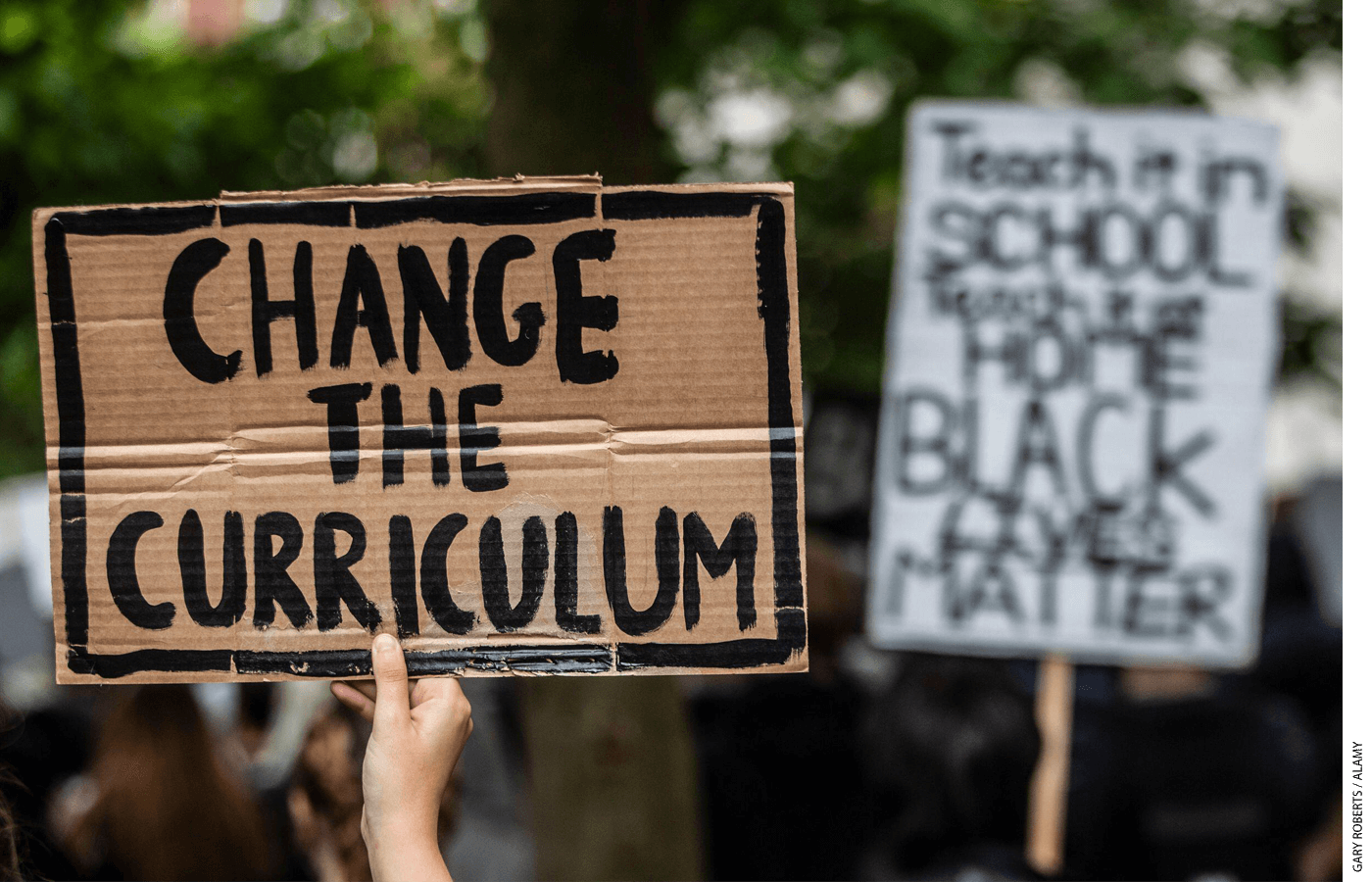
Over the past month, I’ve done a slew of interviews with reporters who are struggling to get their arms around what 2025 meant for education. They’ve particularly homed in on the Trump administration’s rat-a-tat approach to higher ed and on red state legislation addressing DEI and gender ideology.
If I had to boil a score of sprawling conversations down to a single query, it would probably be this: “Isn’t it hypocritical that Republicans are responding to left-wing attacks on free speech with right-wing attacks on free speech?”
Of course it is.
I mean, the new year popped off with a ludicrous bit of performative nonsense from deep-red Texas, where a Texas A&M professor was told by his department head that he couldn’t assign Plato’s Symposium in a philosophy class because it violates the institution’s ban on teaching “race and gender ideology.” Whether this is an instance of malicious compliance or sensible anxiety, it illustrates just how far things have gone.
Rallying to defend free inquiry is feeling very 2024. Now, red states are adopting expansive laws governing campus speech and programming. Meanwhile, in Washington, Team Trump has rapidly pivoted from calling out campus illiberalism to promoting new flavors of it.
But there’s much more to the story.
First off, I’m relieved that reporters are finally acknowledging there really was a left-wing assault on free inquiry and campus discourse. During the peak woke years (roughly 2016–2023), the gaslighting was insufferable. I’d cite a laundry list of illiberal grotesqueries, only to be met with eye-rolling dismissals by higher ed mandarins, Democrats, reporters, and even establishment Republicans. They’d insist I was cherry-picking, that this was just paranoia and right-wing bellyaching. Now, there’s an acknowledgment that, of course, things went off the rails—that everyone knew it (even if, you know, they never acknowledged it then and furiously denounced those who did). Better late than never, I guess.
Given that, why do Republicans now seem hell-bent on charging right past sensible course correction and into right-wing illiberalism? In large part, it’s because many of the voices who might serve as a healthy brake on overreach have been sidelined. Why? During the peak woke era, many voters and activists on the right saw Republican leaders as being too measured (or, less charitably, timid) in their response to DEI, critical race theory, gender ideology, and school closures.
When Covid and the killing of George Floyd rattled the nation’s sensibilities, Republican leaders hemmed and hawed. Republican legislators didn’t want to get crosswise with their local college presidents or superintendents. Fearing they’d be tagged as transphobic racists if they questioned woke excesses, conservative education leaders dismissed ideologically charged fights as a “distraction.”
Reluctant to trash their reputations or professional relationships, Republicans mostly mumbled their concerns to like-minded colleagues and kept their heads down. Indeed, Secretary of Education Betsy Devos praised DEI. In 2020, Marco Rubio co-sponsored legislation creating a national commission to tackle systemic racism. In 2021, even Kristi Noem (Kristi Noem!) backed away from legislation barring biological males from women’s sports. It really wasn’t until 2022, when pandemic-era frustration with school closures, “anti-racist” dogma, and gender radicalism reached a boiling point, that Republican governors besides Ron DeSantis started to forcefully challenge the rising tide of woke dogma.
Moreover, traditional education Republicans already had a credibility problem tracing back to the Common Core years. It didn’t help that they kept seeming to get pantsed by their putative allies on the left. Traditional Republicans had long championed charter schools and Teach For America—only to see prominent charter and TFA leaders dismiss their party as one of cold-hearted bigots. During Trump 1.0, traditional Republicans spent years diligently working to address misguided Obama-era diktats on school discipline or Title IX, only to see DeVos smeared as a cartoon villain—and the Biden administration promptly disregard legal niceties as it sought to erase their handiwork. It gave the impression that old-school conservatives were no match for the woke brigades.
It was the unapologetic culture warriors who spoke up forcefully in response to all this. New activist groups like Moms for Liberty, Parents Defending Education, and the Defense of Freedom Institute took off, leaping into the debates where traditional Republicans tiptoed around them. Chris Rufo made his bones as a crusading journalist willing to call out the craziness. Donors and motivated voters were seeking champions. Here they were. A no-holds-barred coalition sprung up on the right, led by figures that were justifiably credited for courage and the willingness to speak unpopular truths.
Moreover, everyone had to choose a lane. The “serious” education community looked down on the cultural crusaders as misguided yahoos, while the populists looked at the traditional Republicans as a bunch of gutless sellouts.
Subscribe to Old School with Rick Hess
Get the latest from Rick, delivered straight to your inbox.
I experienced this tension in very personal ways. For being an outspoken critic of “anti-racist” dogma and progressive groupthink, I was pushed out of my university teaching positions and out of the K–12 “school reform” world. In reform circles, it was understood that foundations and bipartisan advocacy groups wanted only “serious” conservatives who weren’t “distracted” by divisive cultural fights. (The rules were different for progressives who engaged in those clashes.)
Meanwhile, the right’s insurgents were deeply skeptical of anyone who retained mainstream ties, seeing it as a sign of squishiness. That meant that even the kinds of exasperated missives that got me exiled from polite company (for instance, see here, here, here, here, or here) weren’t enough to earn anything more than provisional membership in the coalition of the outraged. They wanted unyielding, single-minded activists. I can’t tell you how many hard-right funders or activists grilled me about the attention I paid to “secondary concerns” like college costs, program implementation, or teacher evaluation—much less why I wasted time teaching at Ivy League colleges or hosting bipartisan convenings. They saw such activities as a self-serving indulgence and wanted to know why I wasn’t laser-focused on the urgent fight for America’s soul. They were seeking warriors eager to demonstrate an unrelenting enthusiasm for just that.
This isn’t ancient history. It’s all very much with us in 2026. Looking back over the past half-decade, the lunacy of the woke left and the populist right’s demand for performative pushback help to explain why several red states have so readily raced past course correction and into MAGA triumphalism. This dynamic is why many of those driving the Trump administration’s actions in K–12 and higher ed can seem so dismissive of long-standing norms and familiar conservative doctrines.
The centrists have been sidelined by hard-charging insurgents and undercut by their nominal allies. In an era of polarization and distrust, there are big lessons here for those seeking to push back on the illiberal fringes of the right or the left.
I guess the question is whether there’s anyone left who’s still interested in learning them.
Frederick Hess is an executive editor of Education Next and the author of the blog “Old School with Rick Hess.”