
It’s the kind of feel-good story that happens in movies. A school district leader in a high-needs community answers the phone to find out that a massive, unexpected financial gift is on its way. No strings attached.
Three years ago, leaders in over a dozen high-poverty districts got that call. They learned, out of the blue, that their district had been awarded a multi-million-dollar gift from philanthropist MacKenzie Scott. None had applied.
Chicago Public Schools landed $25 million. Another $20 million went to each of the school districts of Cleveland; Fresno; Jefferson County, Kentucky; and Detroit. Durham; Killeen, Texas; and Tacoma districts got $18 million apiece. Grand Prairie, Texas, and Escondido Union, California each got $16 million. Gifts of under $10 million each went to a handful of smaller districts.
District officials enthused: “We just hit the lottery.” “The sky’s the limit here.” “Game-changing.” “Sort of like Santa Claus.”
Three years later, how has it all played out? By any measure, it’s been a mixed bag. The lucky districts tend to fall into one of three groups:
Best case: About a third of the districts made thoughtful plans and spent their money accordingly. Tacoma, for example, is portioning out the funds over a decade on after-school enrichment and jobs programs for students.
Worst case: Another third made plans that were derailed by mismanaged district finances. After dreaming big, each of these districts ended up using remaining grant funds to plug self-inflicted budget holes. In each case, the leader who was responsible for the botched finances is long gone, leaving the community to bicker over the whole experience.
Deferred case: In the final third, the money simply got parked for a few years while leaders attended to other pressing issues. Thus far, no one has benefited.
To be fair, Scott was clear that this was a different kind of giving, one where the grant doesn’t come with any prescribed expectations. “I can share what I have with them to stand behind them as they speak and act for themselves.” Education Week wondered whether this new type of grantmaking would inspire other philanthropies.
If so, there are some lessons from Scott’s giving. She aimed to “advance the opportunities of people in underserved communities,” but giving to a school district isn’t the same thing as giving to a community. Most districts are led by volunteer boards who defer spending decisions to a superintendent (many of whom do not have long-term ties to the region). In Detroit, that arrangement worked well: leaders funded tutoring programs for students, the community seems happy about its impact, and the district’s finances are in order.
But in many large districts, the superintendent is essentially a temporary resident. (All but two of the original superintendents have since turned over.) Take Durham’s supe, who, after accidentally overpaying staff, moved to Buffalo, leaving behind a multimillion-dollar deficit. Now a new supe (from Kansas) has been tapped to clean up the mess.
Some leaders lack the financial skills to manage large one-time gifts. Like lottery winners who overspend and end up bankrupt, district leaders, too, can mismanage funds or underestimate recurring obligations. Cleveland’s superintendent (now gone) overspent so much that his successor had little choice but to use the balance of the gift to cover gaping budget holes.
EdNext in your inbox
Sign up for the EdNext Weekly newsletter, and stay up to date with the Daily Digest, delivered straight to your inbox.
An essential element of financial leadership is careful communication to manage expectations. The “we won the lottery” announcement breeds a false sense of unlimited cash (the grants ranged from about $100 to over $1,000 per student) and a real risk of buyer’s remorse when the money is gone. That happened in Jefferson County: the board was miffed when it found out $7,000 of the gift paid for a billboard praising its outgoing superintendent. In Durham, it was student journalists who were disappointed after hoping the money would pay for art supplies, toiletries, and tutoring.
To be fair, one-time funding is tricky in schooling. Coming up with discrete projects that don’t financially imperil the district is not so simple. Thoughtfully managing a gift the size of Scott’s requires collecting input from the local community, transparent decision-making, oversight, strong communication, proper financial compliance, and significant staff time.
Some districts don’t seem to have the staff time even to get started. In Escondido, the gift sat in district coffers for two years, triggering an out-of-compliance audit finding for what California calls “excessive reserves.” Lack of capacity to manage a large grant may be why some districts like Killeen and Escondido were slow to start spending. Doing nothing with the money may not be a bad outcome, but it isn’t a good one either.
While I appreciate the appeal of Scott’s approach to giving, I imagine she hopes the communities will, at a minimum, not be burdened (or left worse off) by her generosity.
So how could Scott (and others who might follow her hands-off approach to philanthropy) give differently based on these lessons? First, her foundation could do more to screen leaders and organizations for strong financial skills. Or it could pay out gifts gradually over 10 years to give leaders and communities room to make mistakes, recover, and rethink their strategy for the remaining dollars.
If those options are too heavy-handed, perhaps gifts could come with access to financial training or talent to help communities think through their choices. The goal here isn’t to impose an agenda but rather to help leaders avert financial missteps that can erode trust in leadership (and in institutions), which inevitably leave communities frustrated and cynical.
Along these lines, the foundation could invite districts to use a participatory budgeting process in order to represent community interests more broadly. Some districts (and municipalities) already use participatory budgeting tools to enable voting on a concrete set of budget choices. These tools help educate the constituents about the costs of different choices while giving a voice to those not typically consulted in spending decisions.
Truth is, this isn’t districts’ first rodeo with one-time flexible funds. The federal government ran this same experiment with its Covid relief funds. The field learned a lot, including that this type of funding caused complications for some districts.
It’s not clear whether Scott will continue to give to public school districts. But if she does, my hope is that she’ll tweak that giving so that more communities will feel they benefited from those dollars.
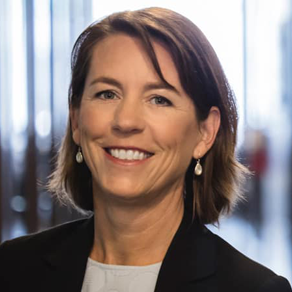
Marguerite Roza is Director of Edunomics Lab and Research Professor at Georgetown University, where she leads the Certificate in Education Finance.