


Five years ago this month, Grant Addison and I published “Anti-Racist Education Is Neither.” It’s been on my mind as I reviewed Adam Szetela’s tale of identity-driven, anti-racist cosplay in That Book Is Dangerous!, and as Nick Fuentes and his fellow Groypers have drawn mainstream notice for their raw, unapologetic racism.
Half a decade on, we’ve yet to put the identity-based caricatures of 2020 behind us. At Indiana University, social work students are still taught that “colorblindness” and the “celebration of Columbus Day” are hallmarks of “covert white supremacy.” The University of Minnesota still boasts a website tagged “Whiteness Pandemic” (flagging “White families” as “one of the most powerful” forces behind “systemic racism”), supported by a fellowship funded by the National Institute on Mental Health. The NEA still offers training to combat “white-dominated, white-identified, and white-centered” norms and insists that bargaining campaigns “must dismantle white supremacy.” Education Minnesota, the North Star State’s largest teachers union, still provides professional development on “Interrupting Whiteness.”
Of course, such examples are but a pale shadow of 2020, when things got truly nuts. Anti-racist activists wanted to strip Abraham Lincoln’s name from schools because . . . racism (I guess). KIPP ditched its slogan “Work Hard. Be Nice.” as a legacy of “white supremacy culture.” The Smithsonian Museum of African American History explained that “hard work” and “rational linear thinking” were manifestations of “white culture.”

Back then, we hadn’t yet seen the backlash against critical race theory, much less the subsequent assault on DEI. The dogma was so pervasive that the original conservative outlet that asked us to take on anti-racist education wouldn’t run the piece, deeming it “a bit too aggressive.” The essay was eventually picked up elsewhere and, while it’s a long piece, I think it’s worth revisiting the highlights today. With the benefit of time, readers can judge for themselves just how aggressive it really was.
The crux of the matter, as Addison and I wrote then, was that:
“Anti-racism,” for all its high-minded claims and surface appeal, proves to be, on close examination, a farrago of reductive dogmatism, coercion, and anti-intellectual zealotry that’s remarkably unconcerned with either improving schooling or ameliorating prejudice . . . Aspiring anti-racists are mounting a misguided assault on the very mores and habits of mind that undergird liberty, equality, and healthy communities.
As we observed at the time, “It’s safe to say that nothing in education today has the same cachet as being, in the words of KIPP, ‘actively anti-racist.’” Bettina Love, winner of the 2020 Society of Professors of Education’s Outstanding Book Award and co-founder of the Abolitionist Teaching Network, explained that “active anti-racism” is “the most important step” teachers can take. “Anti-racist teaching is not a teaching approach or method,” Love instructed, “it is a way of life.” Indeed, she asserted a need for specialists focused on the “undoing of Whiteness in education.”
The consequences for education were devastating. The anti-racist mantra excused classroom chaos (because discipline was an oppressive manifestation of white supremacy culture). It fueled grade inflation in the name of “equity” (because traditional grading was systemically racist). It was used to justify doing away with admissions testing in higher ed (because . . . oh, you know). Worse, it made it that much harder to address bad behavior, chronic absenteeism, or academic malaise by dismissing anyone who championed an academic culture of rigor and responsibility as malefactors of bigotry and white supremacy.
What made this movement so toxic?
The Catch-22
Anti-racism was as capricious as it was all-encompassing. The superintendent of New York’s East Harlem Scholars Academies took to Education Week to instruct “white teachers” not to talk about the individual accomplishments of Black Americans because to do so is to “teach students that ‘really good, really successful’ Black folks are exempt from racist structures.” So, talking about the accomplishments of Black Americans was racist. Of course, ignoring their accomplishments was also racist. It put educators in quite the Catch-22.
In fact, it seemed there was such a Catch-22 anywhere you looked in education. Addison and I recounted:
As one former Teach For America corps member explains, TFA training taught that teachers couldn’t expect families to provide school resources for their (mostly low-income) students, that such an expectation was a matter of imposing privileged “white” norms. However, when she mentioned how disruptive it was to have to continually hand paper and pencils out to students, she was upbraided for not expecting more of students of color. Being strict was racist; so was being lax.
George Orwell explained at great length how the anxious mind, forever fearful of engaging in wrongthink, can be intimidated and manipulated. That is not the way to cultivate equality or democratic citizens. It’s the recipe for illiberalism.
The Racialization of Everything
Addison and I related how anti-racist avatar Glenn Singleton, president of the racial-sensitivity training outfit Courageous Conversation, had told the New York Times Magazine that “scientific, linear thinking” and “cause and effect” were among the “hallmark[s] of whiteness.” We wrote, “Across Africa and Asia, air-traffic controllers and cardiovascular surgeons put a lot of faith in things such as ‘linear thinking’ and ‘cause and effect.’ When they do so, are they practicing ‘whiteness’?”
The same simple-minded racial essentialism that would be deplored if it came from a southern segregationist circa 1950 was suddenly okay when mouthed for the “right” reasons. Indeed, for the anti-racists, racial essentialism wasn’t just permissible; it was commendable—even compulsory.
Brooklyn College professor of math education Laurie Rubel could insist “2 + 2 = 4” is a claim that “reeks of white supremacist patriarchy.” The Orwellian overtones were so blatant that, if her tweet were a high school essay, an English teacher would’ve advised the author to tone it down. I mean, 1984’s Winston Smith had nothing on Matthew Mayhew, Ohio State’s William Ray and Marie Adamson Flesher Professor of Educational Administration. In the depths of the pandemic, poor Dr. Mayhew cheered the return of college football as a unifying civic gift. Five days later, a chastened Mayhew recanted, apologizing for his “uninformed and disconnected whiteness,” for putting “the onus of responsibility for democratic healing on Black communities whose very lives are in danger every single day,” and for imagining “the Black community” would “benefit from ideals they can’t access.”
Dogmatism
As Addison and I noted, “What anti-racists mean by ‘education’ is something more typically understood as indoctrination. Schools and colleges are places where those who may have harbored divergent thoughts are intellectually hobbled and coerced into compliance.” Ibram X. Kendi, the high priest of anti-racism, insisted that “There is no such thing as a not-racist idea . . . There is no such thing as a nonracist or race-neutral policy.” There was no opting out, only confession: “Only racists say they’re not racist,” he explained.
Worse, the illiberalism of the anti-racists was intentional, explicitly rejecting debate and persuasion:
As Kendi explains in How to Be an Antiracist, “I had to forsake the suasionist bred into me, of researching and educating for the sake of changing minds.” Kendi concludes that, “Educational and moral suasion is not only a failed strategy” but “it is a suicidal strategy.” This is why, he writes, teachers must “literally teach their students antiracist ideas”—because anything else “is to effectively allow their students to be educated to be racist.”
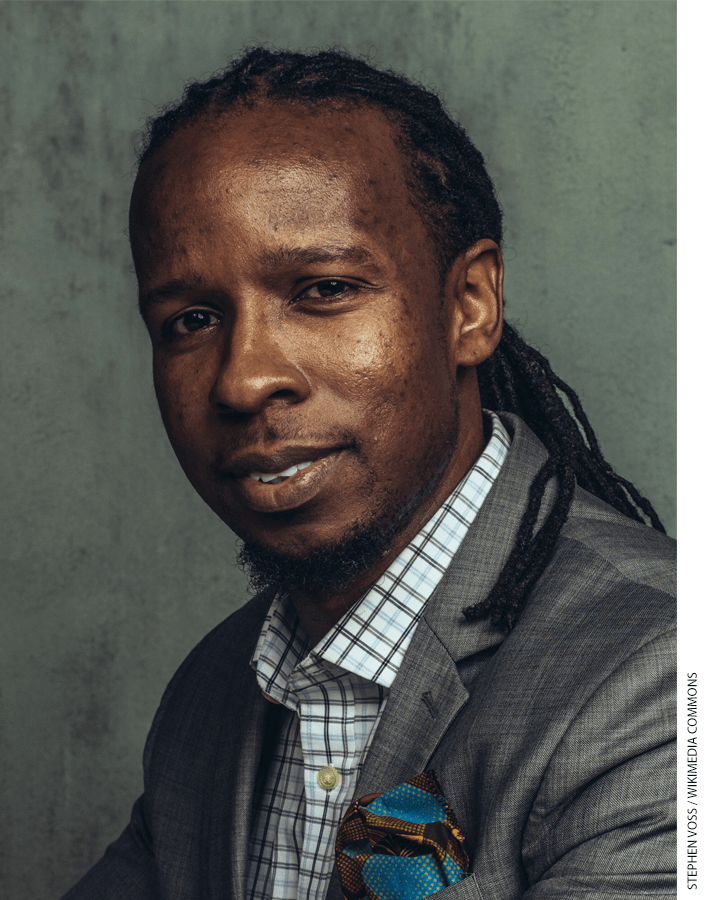
Kendi and his cronies treated their dogma as a permission slip to ignore questions and dismiss criticism. They could issue self-assured, self-serving assertions, confident that few would push back (for fear of being branded a racist). Thus, bestselling anti-racist author Robin DiAngelo could bizarrely claim in chapter one of her book White Fragility, “I can get through graduate school without ever discussing racism. I can graduate from law school without ever discussing racism. I can get through a teacher-education program without ever discussing racism.” As Addison and I wrote,
Each line of this is ludicrous. It’s more accurate to say that it’s virtually impossible to complete a single year of graduate school or teacher education without engaging in such discussions. (DiAngelo, a professor in an education school which offers 9 different classes on race and houses 17 faculty members specializing in “equity studies,” assuredly knows this.) Setting aside race-infused law school orientations, it’s unimaginable that a law student could avoid the 14th Amendment, the Civil Rights Act, Brown v. Board, or the vast archives of American law that address issues of race.
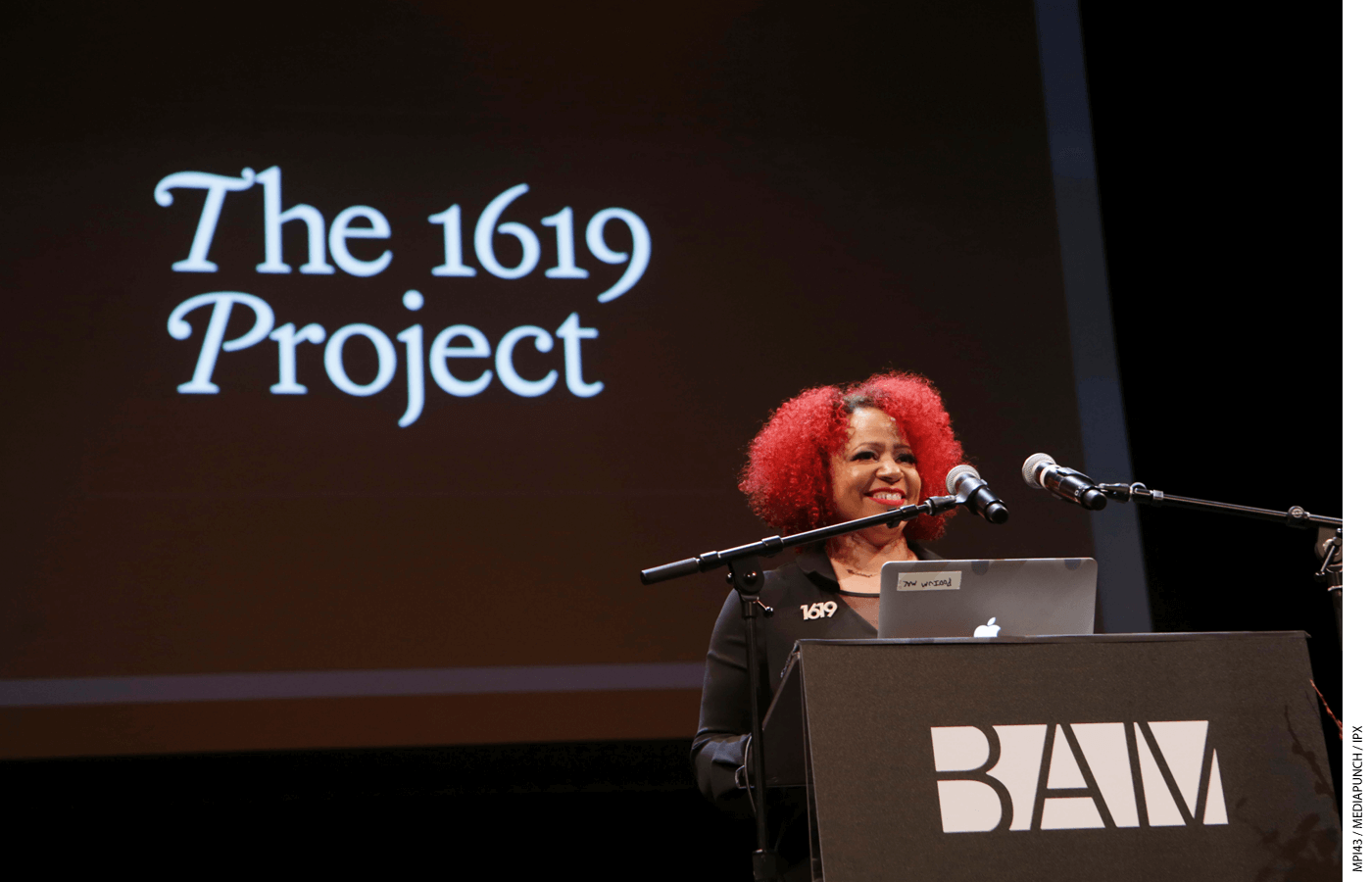
Funders and media outlets hopped on the bandwagon. The Chan Zuckerberg Initiative issued “A Note to Our Grant Partners” pointing to the “systemic racism that is the defining fault line of our country” and told grantees they needed to tackle “racial injustice.” The New York Times invested heavily in its “1619 Project” and aggressively promoted its anti-racist podcast “Nice White Parents.” Education reporting outlet Chalkbeat added “antiracism to the list of core values that guide our work,” quoting Kendi’s assertion that “it is not enough to be ‘not racist.’ We must be antiracist.” It was unclear how this squared with Chalkbeat’s promise that its “commitment to telling the truth without consideration of ideology or advocacy has not changed.”
Distraction
All this pathological cosplay transpired, Addison and I noted, while our schools and colleges struggled with closures, declining rigor, worrisome achievement, and a host of other real ills. We observed,
Anti-racist education doesn’t help address them. The truth is that “anti-racist” education isn’t interested in anything so small as educational improvement. The aim is cultural revolution in the name of an illiberal doctrine that poses a mortal threat to schools and colleges [and] an assault on the very soul of liberal education.
Given the harm the anti-racists caused, it was astonishing how little pushback they received. Traditional conservatives were reluctant to be tarred as racists. Meanwhile, as John McWhorter reported in the Atlantic, center-left scholars said they were “afraid to broach these topics,” were “too terrified to even like or retweet a tweet, lest it lead to some kind of disciplinary measure,” and feared colleagues who became “unspeakably mean and disingenuous once they have you in their sights.” To push back was to be denounced as racist, dropped by funders, squeezed off major platforms, and tagged as an uncouth culture warrior. Thus, even those Republican state chiefs and education reformers who’d quietly lament how crazy things had gotten were loath to speak up.
Subscribe to Old School with Rick Hess
Get the latest from Rick, delivered straight to your inbox.
The result: The culture warriors of the populist right were the only ones who unapologetically battled back. They reveled in being insulted, bonded over the fights, raised money from donors relieved to see someone speak up, and built their own platforms. Why did a relentless effort to combat “racism” and promote “diversity” yield an unapologetic surge of bigotry and tribalism? I suspect it’s because the bullying and silencing of good-faith critics made racist demagogues look like courageous truth-tellers. By dismissing colorblind equality as a nonsensical pipedream and insisting that “blacks” are immutably this and “whites” are unalterably that, the anti-racists breathed new life into the kind of racial caricature that had been slowly dying on the vine.
In education, the anti-racists put traditional conservatives in an impossible position. Their all-out assault on traditional norms and values meant that any response from a conservative other than full-throated condemnation was going to look like craven acquiescence. Conservatives who’ve tried to stay above the fray, focusing intently on reading or student achievement, have been tagged as quislings and dupes (which is why MAGA went so hard at former Tennessee schools chief Penny Schwinn this summer). The Reagan Right’s measured talk of “equality” and “due process” has been dismissed as appeasement, as a tremulous, half-hearted response to Maoist intimidation. In turn, the nativist ranks of the New Right concluded that the only viable answer to those who deem whiteness the root of all evil is to unapologetically embrace whiteness as the fruit of all virtue. The result has profoundly colored how Republicans have approached K–12 and higher education, rarely for the better.
This isn’t complicated. If you want people to treat each other as individuals and not caricatures, you teach them to see individuals and not caricatures. If you’d like people to value character rather than pigmentation, you teach them to value character rather than pigmentation. Each time some ranting Orwellian anti-racist rejects such truisms as unsophisticated, they drag us further into the darkness. Oh, and they embolden wannabe Nazis and other maladjusted, attention-seeking losers to rise in defense of “whiteness.” Good job, gang.
If you wanted to custom design a movement to help a motley crew of identity-fueled bigots rise to prominence on the populist right, you couldn’t have come up with a more effective foil than anti-racist education. Five years on, I feel safe predicting that the toxic, self-serving reign of the anti-racists will be remembered as one of the most self-destructive episodes in the long history of American schooling.
Frederick Hess is an executive editor of Education Next and the author of the blog “Old School with Rick Hess.”